
NEW YORK — Outside Broadway’s Ambassador Theatre, located just west of Times Square, sits an unofficial architectural monument: the white brick "wall of fame." Etched onto its surface are the names of every star who has stepped into the lead roles of Chicago, the longest-running American musical in the history of the Great White Way.
For over two decades, this wall has documented an elite cultural cross-section. It features bona fide theatrical royalty alongside an eclectic roster of pop megastars—including Brandy, Usher, and Ashlee Simpson—and silver-screen icons such as Pamela Anderson, Melanie Griffith, and Sofia Vergara. Yet, in recent years, producers Barry and Fran Weissler have injected a wholly modern demographic into the historic playbill: alumni of reality television.
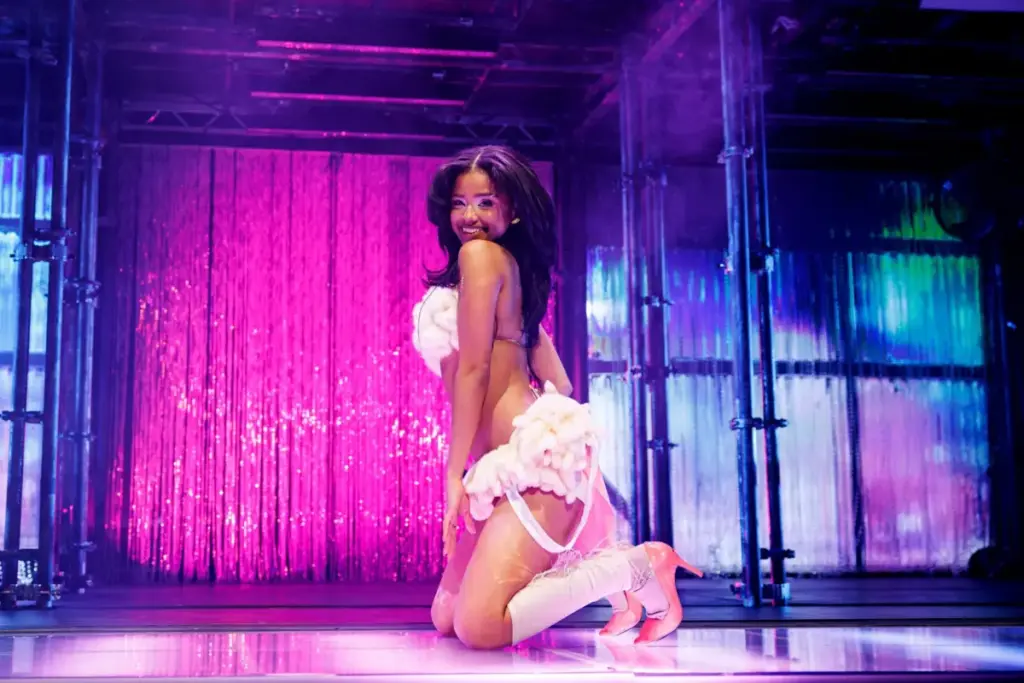
The latest cultural crossover to step into the shiny patent-leather shoes of Roxie Hart is Reece Weaver, a breakout star of Netflix’s critically acclaimed docuseries America’s Sweethearts: Dallas Cowboys Cheerleaders. Weaver’s limited engagement through October 18, 2026, is not merely a novelty stunt; it is the latest calculated stroke of genius in a commercial playbook that has kept Broadway’s most enduring revival profitably humming for nearly thirty years.
Executive Overview
In the high-stakes, financially perilous ecosystem of modern commercial theater, keeping a classic show solvent requires constant innovation. While many productions struggle to recoup their initial investments, Chicago has mastered the art of the marquee pivot. By systematically casting pop-culture figures from outside the traditional musical-theater pipeline, the production team achieves a dual objective: it lures a younger, digital-native demographic to the theater, and it exposes those audiences to the exceptional tier of classical Broadway talent surrounding the guest star.
This strategy has steadily evolved from 1990s stunt-casting experiments into a sophisticated mechanism of pop-culture synergy. From Bravo reality stars and RuPaul’s Drag Race royalty to streaming-platform sensations, the production has converted internet-era micro-celebrity into tangible box office gold. Whitney Leavitt’s recent stint as Roxie—originating from Hulu’s The Secret Lives of Mormon Wives—generated the highest weekly grosses in the show’s history. Now, with Weaver crossing the line from Netflix to Broadway, Chicago demonstrates that the reality-to-stage pipeline is not a fleeting trend, but a cornerstone of contemporary theatrical economics.
Detailed Chronology: The Evolution of Non-Traditional Casting
The roots of this casting philosophy stretch back to the mid-1990s. Fresh off their work reviving Grease, lead producer Barry Weissler and his creative team began to recognize the untapped potential of pairing fresh faces with powerful personal brands—pioneering early modern star-driven casting with names like Brooke Shields, John Stamos, and Rosie O’Donnell.
"Barry started to realize you can bring in someone at the top of the cultural zeitgeist, and that brings people to purchase a ticket," explains Brett England, associate producer on Chicago. "And then they discover all this other Broadway talent surrounding the production."
When Chicago returned to Broadway in 1996 under the direction of Walter Bobbie with choreography by Ann Reinking (re-creating and expanding upon the original style of Bob Fosse), the show’s inherent themes made it uniquely suited for celebrity integration. Set in Jazz Age Chicago, the John Kander and Fred Ebb musical satirizes the media circus surrounding two accused murderesses seeking fleeting notoriety.
"The show is structured as a vaudeville, and it’s about the cult of celebrity," England notes. "We’re satirizing what celebrity is. So when these contemporary cultural figures are willing to play with that, it works on a meta-narrative level."

Over the decades, this philosophy opened doors for unexpected talent. Pop icons seamlessly transitioned into the vaudevillian format. But the leap into reality television began in earnest when casting directors realized that modern reality stars often possess legitimate, unheralded performance training.
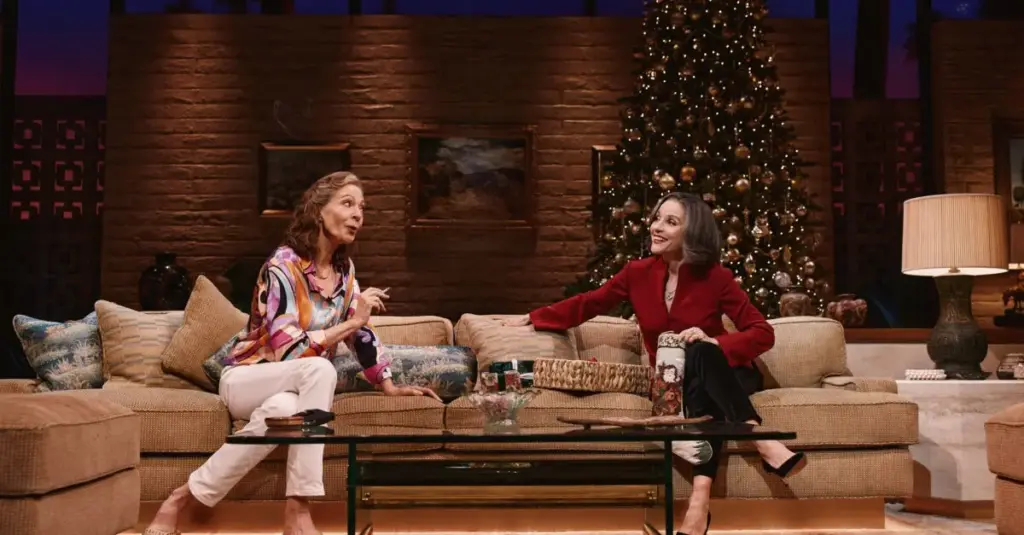
Vanderpump Rules breakout Ariana Madix, for instance, studied musical theater in college before finding fame on cable television, eventually taking on the role of Roxie Hart before transitioning to other marquee Broadway projects. Similarly, RuPaul’s Drag Race winner Jinkx Monsoon shattered box office expectations during a celebrated run as Matron "Mama" Morton, proving that camp, charisma, and classical training could coexist under the Fosse derby hats.
Supporting Context & Metrics: From Stadiums to the Stage
For Reece Weaver, the transition from the gridiron to the Ambassador Theatre stage represents a masterclass in transferable athleticism. While cheerleading and Bob Fosse choreography initially appear worlds apart, Weaver’s background bridges the gap.
A product of a rigorous performing arts high school where she trained classically in multiple dance disciplines, Weaver earned her bachelor’s degree in dance from the University of Alabama. Although cheer may look distinct from Broadway choreography, Weaver notes that the underlying physical discipline is identical.
"Performing in front of 80,000-plus fans compared to, you know, 700-plus people in the audience is different," Weaver shares. "It’s more of a contained energy. But still, the precision, the intensity, and the integrity behind every movement is the same."
According to associate producer Brett England, raw fame alone is never enough to secure a contract at the Ambassador Theatre. The production vetting process is remarkably stringent.
"You’re looking for some sort of star quality," England states. "And then there has to be some grit and dedication underneath it. [Reece] was on a football field in the middle of a stadium, and she knew how to perform to that big crowd. Cheering is all about steps and basics and getting choreography down. So there are fundamentals that you’re looking for, and then you’re just trying to pull them out and make them fit within a Broadway blueprint."
Furthermore, casting a reality star is rarely an overnight decision. Long before stepping foot onto a Broadway stage, candidates often undergo months—or even years—of quiet preparation. Lead producer Barry Weissler notes that celebrity casting requires profound dedication, recalling that Pamela Anderson prepared behind the scenes for "at least seven years before we hired her." Once officially cast, every incoming star undergoes a mandatory four-week intensive rehearsal period to master the lightning-fast, highly specific physical and vocal demands of the show.
Dramaturgically, the role of Roxie Hart is uniquely constructed to support performers who may be stepping onto a theatrical stage for the first time.

"When the show was created, [the role] was created for Gwen Verdon, an aging Broadway star who didn’t have the vocal range she had before," England explains. "So Roxie is written in a way that can support a performer who might be a little bit new, still finding their footing. And dramaturgically, Roxie isn’t a star, right? She wants to be the star. So the role is built to protect that—and I think that’s why it resonates with so many people who come from the reality world."
Official Statements and Industry Impact
Industry observers have taken note of how Chicago maintains its financial equilibrium in an era where Broadway profit margins are razor-thin. By leaning into cross-pollinated demographics—such as the massive, highly engaged fanbases of Netflix docuseries, Bravo reality shows, and Hulu reality-dramas—the production secures a steady stream of first-time theatergoers.
Barry Weissler praises Weaver as "one of the hardest workers we’ve ever had," a sentiment echoed by audiences who watched her execute the intricate choreography with sharp precision and physical comedy during her opening weeks. In a brilliant stroke of metatheatrical irony, lines in the script referring to Roxie Hart as "America’s Sweetheart"—a direct nod to Weaver’s Netflix background—frequently elicit knowing laughter from the crowd, bridging the gap between character and performer.
The economic model is clear: commercial sustainability does not require sacrificing artistic integrity.
"We’re a commercial business, right? We can’t pretend otherwise," England reflects. "Playing in [this] space doesn’t have to mean degrading the art form in any way. You have a whole company of performers showcasing the highest form of this art to [audiences] as well. I just think it’s about finding that balance."
Future Outlook: The Expanding Horizon of Broadway Casting
As Chicago looks toward the horizon, the production team shows no signs of exhausting its innovative casting pipeline. With Weaver’s run concluding on October 18, producers are already eyeing other untapped reservoirs of global talent.
England points out that reality competition platforms like Dancing With the Stars increasingly feature contestants with elite, professional dance backgrounds, making them prime candidates for future theatrical runs. Additionally, the explosive international popularity of the Bollywood and K-pop performance industries presents intriguing new territories for cross-cultural casting.
For now, Reece Weaver’s name joins the storied pantheon of women who have brought ambition, grit, and headline-grabbing allure to Roxie Hart. In proving that reality television stars can master the rigorous demands of Broadway, Chicago has not only future-proofed its own legendary run—it has provided a blueprint for how classic theater can successfully converse with the modern digital age.