
Executive Overview
Following a brief, unavoidable delay prompted by an unexpected wave of cast illness, previews for the high-profile Broadway premiere of Bruce Norris’ incendiary and fiercely debated play, Downstate, officially commenced at the Booth Theatre. The production, which has steadily built an international reputation for tackling one of society’s most radioactive subjects, is slated for its official opening night.
Directed by Tony Award winner Joe Mantello—whose recent credits include a poignant staging of Arthur Miller’s Death of a Salesman—this new iteration of Downstate marks the play’s long-anticipated arrival on Main Stem turf. The work centers on a deeply unsettling premise: four men, all convicted of sexual offenses against minors, are living together in an Illinois halfway house. The simmering, claustrophobic equilibrium of their daily lives is violently disrupted when one of their former accusers returns years later demanding a face-to-face confrontation.
Yet, long before taking its first steps onto the boards of the Booth Theatre, Downstate established itself as a lightning rod for cultural polarization. Its developmental trajectory—stretching from its 2018 world premiere at Chicago’s Steppenwolf Theatre Company to a celebrated run at London’s National Theatre in 2019, and subsequently to an Off-Broadway engagement at Playwrights Horizons in 2022—has been defined as much by artistic acclaim as by external outrage. The Off-Broadway run, in particular, metastasized into a broader national culture-war flashpoint. Conservative political figures, most notably Texas Senator Ted Cruz, launched intense social media attacks against The Washington Post theatre critic Peter Marks following his glowing, nuanced review of the production. Critics accused the publication and the reviewer of "normalizing" pedophilia, a firestorm that ultimately forced Marks to lock his Twitter account and retreat behind privacy settings.
Now, as Mantello and an exceptional ensemble cast—featuring returning originators alongside notable Broadway heavyweights—unpack Norris’ bleak, provocative text for a mainstream theatrical audience, the stakes could not be higher. Downstate arrives on Broadway not merely as a piece of dramatic literature, but as a test of the commercial theatre’s capacity to host uncomfortable, morally complex confrontations without succumbing to reactionary censorship or moral panic. This comprehensive report explores the trajectory of the production, the anatomy of its controversies, the artistic vision driving its current incarnation, and the logistical machinery powering its Broadway debut.
Detailed Chronology: From Chicago’s Steppenwolf to the Booth Theatre
To understand the gravitational pull of Downstate on Broadway, one must trace its deliberate, often bruising evolution across regional, international, and Off-Broadway stages.
1. The 2018 Steppenwolf World Premiere
The genesis of Downstate lay in the uncompromising artistic ecosystem of Chicago’s Steppenwolf Theatre Company, a venue historically unafraid of abrasive, morally grey material. Written by Pulitzer Prize winner Bruce Norris—renowned for his razor-sharp, socially barbed writing in works like Clybourne Park—the play premiered in late 2018. Directed by longtime Norris collaborator Ann Loucks (though frequently associated with the author’s distinctive artistic voice), the production immediately unsettled audiences.
Critics noted that Norris was not attempting to generate cheap shock value or construct a transparent morality play. Instead, Downstate operated as a sociological inquiry into the architecture of banality, isolation, and retribution. Set in a nondescript suburban Illinois group home, the play interrogated what happens to individuals who have committed unforgivable crimes once they have served their legal sentences and been released back into a society that fundamentally despises them. The Chicago engagement established the DNA of the piece: dry, unsettlingly mundane dialogue juxtaposed against an atmosphere of simmering, existential dread.
2. The 2019 National Theatre Transfer
Buoyed by its critical reception in the American Midwest, the production crossed the Atlantic in 2019 for a high-profile run at London’s National Theatre. British audiences and critics, long accustomed to the unflinching naturalism of the Royal Court and National repertoires, embraced the play’s unflinching gaze. Reviewers in the UK praised Norris for refusing to offer the audience emotional catharsis or tidy moral resolutions. The characters were neither redeemed nor caricatured; they were presented with an agonizing, granular humanity that forced spectators to sit in profound discomfort. This international stop cemented Downstate as a significant contemporary drama, paving the way for its eventual return to the United States.
3. The 2022 Playwrights Horizons Engagement and the Culture War
The most volatile chapter in the play’s history unfolded in the autumn of 2022, when Downstate received its New York premiere at Off-Broadway’s Playwrights Horizons. While the production continued to draw respectful notices from theatre critics who lauded its structural daring and psychological depth, the socio-political climate in the United States had shifted dramatically since 2018.
As the production wound its way through its Off-Broadway run, it became caught in the crosshairs of a polarized digital culture war. Prominent conservative commentators and political figures, spearheaded by Texas Senator Ted Cruz, seized upon the production’s subject matter. The focal point of their ire was The Washington Post chief theatre critic Peter Marks, who penned a glowing review championing Norris’ willingness to explore the "untouchable" and the taboo. Marks argued that theatre’s highest calling is to examine the darkest corners of human behavior rather than shying away from them.
In the digital ecosystem of late 2022, however, nuance was rapidly discarded. Marks and Norris were accused by online detractors of sanitizing or "normalizing" child sexual abuse. The relentless wave of online harassment became so intense that Marks felt compelled to make his personal Twitter account private—a watershed moment that highlighted the chilling effect contemporary political pressure can exert on arts criticism. Despite—or perhaps because of—the controversy, the Playwrights Horizons run achieved significant cultural visibility, transforming a niche downtown drama into a national talking point regarding freedom of expression and the boundaries of artistic provocation.
4. The 2024–2026 Broadway Evolution
The announcement that Downstate would make the leap to Broadway under the stewardship of producer heavyweights Scott Rudin and Barry Diller signaled a profound escalation in the work’s profile. Entrusted to the visionary direction of Tony Award winner Joe Mantello, the Broadway staging represents more than a mere transfer; it is a complete artistic reconception designed to test whether a mainstream Broadway audience—traditionally accustomed to crowd-pleasing musicals and comforting revivals—is prepared to engage with Norris’ harrowing material on a grand scale.
Previews at the Booth Theatre, though briefly interrupted by a minor schedule shift due to a passing wave of cast illness, quickly resumed, setting the stage for an official opening night that promises to be one of the most heavily scrutinized theatrical events of the season.
Supporting Context & Metrics: The Creative Engine Behind Downstate
The realization of Downstate on Broadway requires an extraordinary alignment of theatrical talent, both on the stage and behind the scenes. The production bridges continuity with reinvention by bringing back key members of the original creative lineage while injecting fresh blood into the ensemble.
The Ensemble Cast
The Broadway staging features a finely balanced mixture of returning originators and dynamic newcomers:
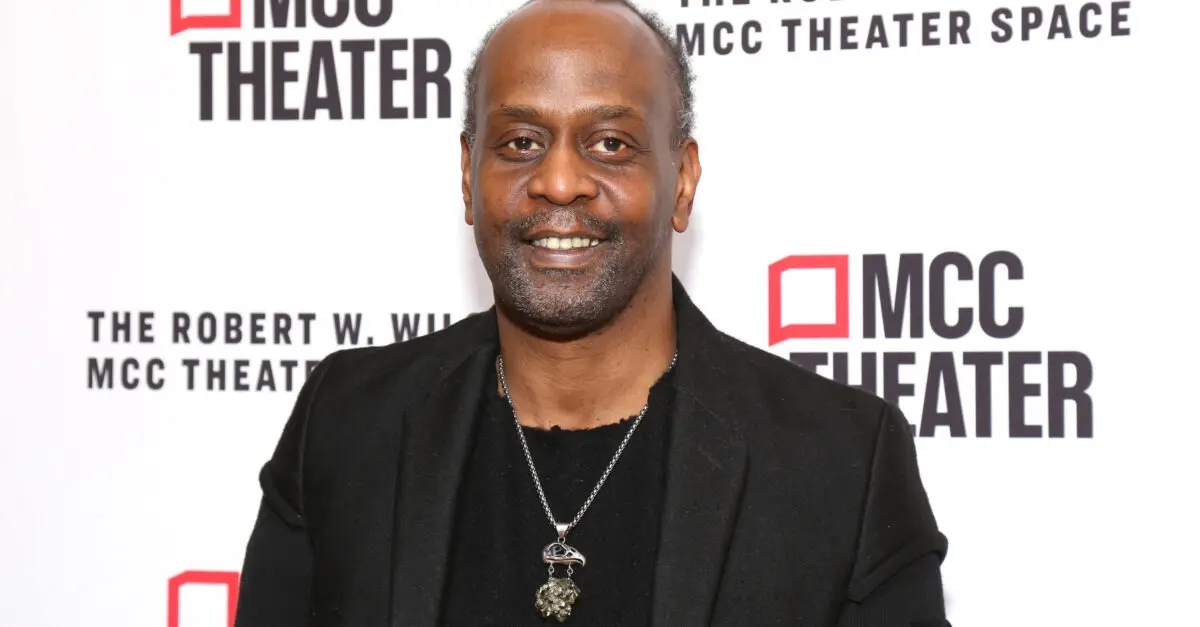
- K. Todd Freeman reprises his acclaimed role as Dee, bringing a seasoned, chillingly grounded gravity to the ensemble.
- Francis Guinan returns as Fred, anchoring the production with his deep familiarity with Norris’ rhythmic, naturalistic dialogue.
- Cassie Beck steps into the role of Em, delivering a layered performance that cuts to the emotional core of the drama.
- Adrian Martinez joins the company as Felix, alongside Al’Jaleel McGhee as Gio.
- Thomas Sadoski, a versatile stage and screen veteran, takes on the role of Andy.
- Ivy Wolk appears as Effie, with Liza Colón-Zayas rounding out the primary cast as Ivy.
The understudy pool—vital for a production demanding intense physical and emotional stamina—features Aubie Merrylees, Ruby Westhoff, Nat DeWolf, Stephen Conrad Moore, Yadira Correa, Richard R. Henry, and Ruby Westhoff. Casting for the production was overseen by Taylor Williams.
The Design and Production Infrastructure
To translate the claustrophobic, demoralizing reality of an Illinois halfway house to the intimate confines of the Booth Theatre, director Joe Mantello has assembled an elite tier of Broadway designers:
- Scott Pask (Scenic Design) crafts a physical environment that mirrors the spiritual and social decay of the characters’ existence, emphasizing institutional sterility and entrapment.
- Ann Roth (Costume Design), a legendary figure in American theatre and film, provides clothing that speaks volumes about the socio-economic marginalization and psychological exhaustion of the residents.
- Heather Gilbert (Lighting Design) utilizes subtle shifts in illumination to underscore the moral shadows and psychological transparency of the narrative space.
- Mikaal Sulaiman (Sound Design) constructs an auditory landscape defined by the low hum of institutional life and the deafening silence of social isolation.
Behind the administrative scenes, the production is marshaled by a powerhouse management team. James FitzSimmons serves as production stage manager. General management is handled by RCI Theatricals’ Danielle Karliner Naish and Kevin Greene, with Mike McLinden acting as company manager. Physical production management is overseen by Aurora Productions, ensuring the seamless technical execution of a complex, dialogue-driven drama on a major Broadway stage.
Official Statements and Artistic Philosophy
Throughout the developmental journey of Downstate, both playwright Bruce Norris and director Joe Mantello have maintained a steadfast defense of the play’s necessity, emphasizing that art must be permitted to inhabit uncomfortable moral terrain.
In interviews surrounding the prior iterations of the play, Norris has consistently pushed back against the notion that dramatic representation equals endorsement. "The function of the playwright is not to provide a moral comfort blanket," Norris noted during the play’s London run. "If we only write plays about characters we admire, or subjects that elicit immediate, uncritical consensus, we abandon the theatre’s primary utility: as a mirror for the complexities, failures, and irredeemable aspects of human society."
While neither Norris nor his supporters have ever condoned the actions of the characters depicted within Downstate—who are explicitly defined by their criminal transgressions and societal ostracization—they have forcefully argued that refusing to look at them dramaturgically is a form of cultural denial. The play does not ask the audience to forgive; rather, it asks the audience to observe the mechanics of human isolation when individuals are cast out beyond the pale of civilized discourse.
Director Joe Mantello, known for his fearless navigation of socially charged material—ranging from Take Me Out to The Boys in the Band—has approached Downstate with an emphasis on rigorous psychological truth. In rehearsal notes and early press briefings, Mantello stressed that the production’s primary objective is to maintain an unblinking focus on the text’s structural architecture. "This is a play that demands absolute fearlessness from its actors and absolute attention from its audience," Mantello remarked. "It doesn’t give you an easy way out. It sits with you long after the curtain falls."
Future Outlook: Cultural Impact and Broadway Legacy
As Downstate settles into its run at the Booth Theatre, its trajectory will likely serve as a barometer for the health and courage of the commercial Broadway ecosystem. In an era where risk aversion often dictates theatrical programming—dominated by jukebox musicals, familiar IP, and lightweight comedies—the presence of a bracing, controversial drama like Downstate is a radical act.
The central question facing the production is whether contemporary Broadway audiences and critics can separate the theatrical exploration of a taboo subject from an endorsement of the subject itself. The digital firestorms that plagued the Off-Broadway run demonstrated that theatre does not exist in a vacuum; it is acutely vulnerable to the hyper-partisan currents of modern political discourse.
Yet, if the early preview responses are any indication, Downstate is poised to spark vital, necessary conversations about justice, retribution, accountability, and the limits of empathy. Whether it achieves commercial longevity or remains a polarizing flashpoint, its very existence on a Broadway stage is a testament to the enduring power of dramatic art to provoke, disturb, and demand engagement from a world all too eager to look away.
For tickets, schedules, and further information regarding the production, audiences can visit the official production portal at DownstateOnBroadway.com.