
Executive Overview
In an era dominated by algorithmic music discovery, homogenized pop formulas, and rapid-fire social media cycles, rock music occasionally throws up an anomaly: a band—or an artist—so singularly driven that they bypass the digital noise entirely. Enter Geese, the New York City art-rock quartet who have steadily brushed off cheap internet snark—dismissed by detractors as "nepo babies" whose "fans are all bots"—to quietly cement themselves as one of the most vital live acts of their generation. While their math-infused, fiercely original 2023 release Getting Killed turned heads across the indie music landscape, the band’s gravitational pull has always anchored in something older, darker, and altogether more magnetic: the frontman.
At just 24 years of age, Cameron Winter has emerged as a generational vocalist, songwriter, and provocateur. Blessed with a quivering, multi-octave baritone capable of mimicking the undulating vibrato of an accordion or a harmonium, Winter blends literary abstraction with a razor-sharp, deadpan wit. Following his universally acclaimed 2024 chamber-folk solo debut, Heavy Metal—a record that continues to age like a prized vintage—Winter has returned with a breathtaking new statement. Live at Carnegie Hall, recorded during a landmark performance last December, pairs his singular voice with a Steinway grand piano, capturing the young artist at the absolute peak of his powers.
Captured on grainy, atmospheric 16mm film under the collaborative stewardship of cinematic heavyweights Paul Thomas Anderson and Benny Safdie, Live at Carnegie Hall is much more than a live document. It is a cultural marker. By stepping onto the stage of music’s most storied auditorium, Winter joins an elite pantheon of history’s youngest headliners, challenging contemporary industry cynicism and reminding the music world what happens when raw, unfiltered genius is placed under an unsparing spotlight. This feature-length analysis explores the anatomy of Winter’s meteoric rise, the stripping away of irony in his solo work, and the cultural implications of a young artist demanding—and earning—a level of reverence not seen in decades.
Detailed Chronology
The Genesis of Geese and the Rise from Brooklyn
Long before the sold-out global tours and critical adulation, Geese began as a teenage project in Brooklyn, New York. Formed while the members were still navigating high school, the quartet—consisting of Cameron Winter, guitarists Gus Green and Dominic DiGesu, and drummer Max Bassin—crafted an intricate, post-punk-adjacent art-rock sound that belied their youth.
When their debut album, Projector, arrived via Partisan Records in 2021, it caught the industry completely unawares. Written and recorded when the members were teenagers, the record married the angular urgency of post-punk with the progressive, kaleidoscopic structures of classic 1970s art-rock. Yet, it was the band’s sophomore LP, Getting Killed, that truly established them at indie music’s high table. The mathy, unpredictable arrangements pushed boundaries, but the undeniable focal point remained Winter’s vocal delivery—a shifting, theatrical instrument that commanded attention.
The Solo Pivot: Heavy Metal (2024)
As Geese’s touring footprint expanded globally, Winter quietly nurtured a parallel artistic trajectory. Logic dictates that the less diluted a visionary presence is on a record, the more potent the output. If Winter was the transformative engine of Geese, his individual brilliance demanded a solo vehicle.
That theory crystallized with the release of his 2024 solo debut, Heavy Metal. A sprawling, melancholic, yet darkly humorous chamber-folk opus, the record stripped away the torrential distortion of Geese in favor of rich acoustic instrumentation, intimate arrangements, and vocal performances that felt less like pop songs and more like confessional theater. Heavy Metal received widespread critical acclaim, establishing Winter not merely as a charismatic band frontman, but as a formidable singer-songwriter in his own right.
The Carnegie Hall Milestone (December 2024)
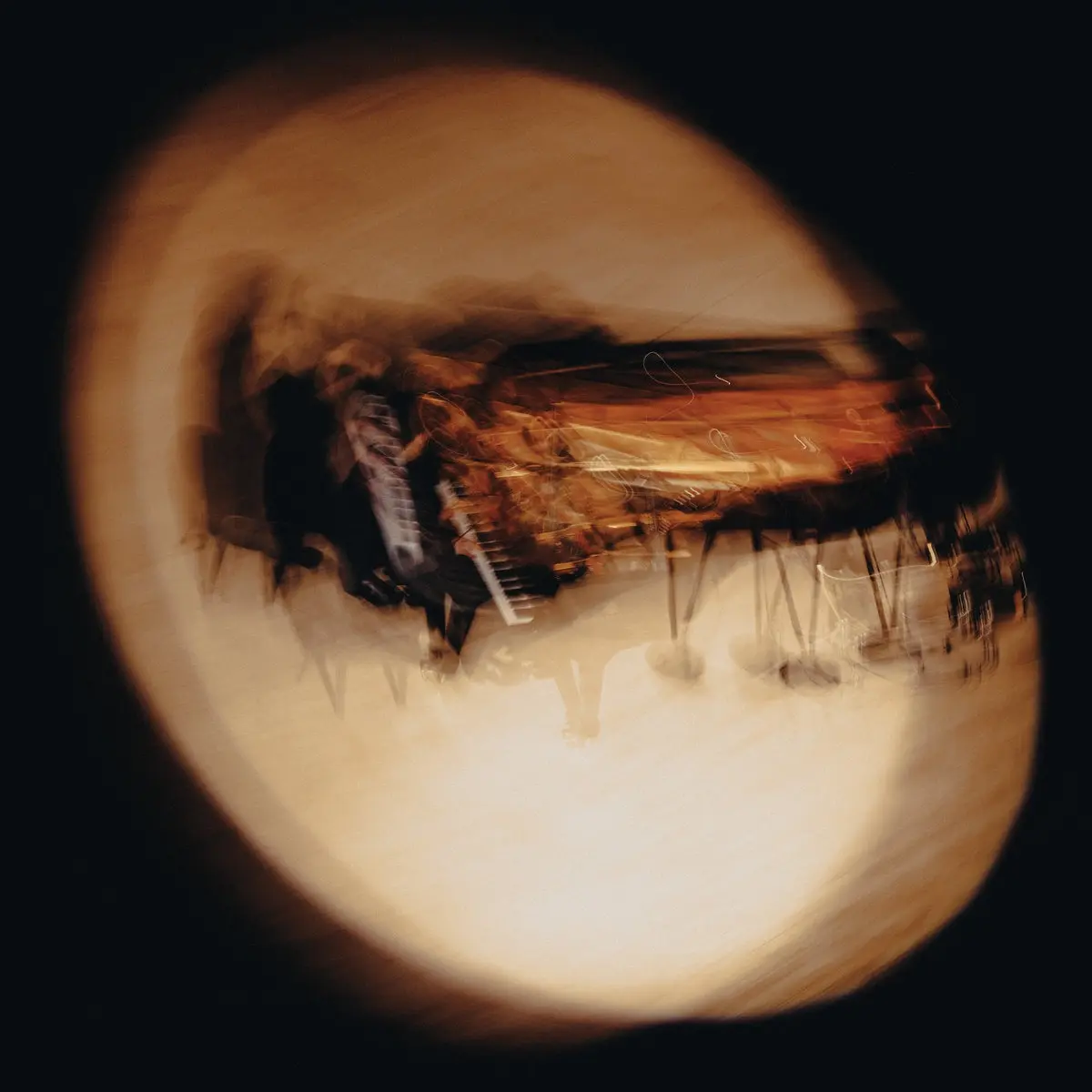
Building upon the momentum of Heavy Metal, Winter took a leap that most artists spend decades working toward. In December 2024, he stepped onto the legendary main stage of Carnegie Hall—armed with nothing more than a Steinway grand piano, his voice, and a selection of career-defining tracks alongside unreleased material.
To document the evening, Winter enlisted an elite creative apparatus, bringing in visionary filmmakers Paul Thomas Anderson and Benny Safdie to capture the performance on grainy 16mm film. The resulting visual and sonic document, Live at Carnegie Hall, encapsulates a historic evening: a 24-year-old artist commanding one of the world’s most prestigious acoustic environments with utter fearlessness, permanently altering the trajectory of his career.
Supporting Context & Metrics
The Anatomy of Winter’s Vocal Instrument
To understand Cameron Winter’s cultural resonance, one must examine the mechanics of his instrument. In an era dominated by pitch-corrected precision and conversational mumble-pop, Winter’s vocal delivery is startlingly operatic and dynamically volatile. His baritone possesses a rare plasticity—capable of shifting from a comforting warmth to a violent, trembling vibrato that echoes the wheezing breath of a harmonium.
Musicologists and critics have often compared his phrasing to the emotive, piano-driven confessionals of singer-songwriters like Laura Nyro at her most volcanic, or the dramatic noir storytelling of classic American songbook interpreters. On tracks like "Love Takes Miles" and the tempestuous "Drinking Age," Winter utilizes negative space and dynamic restraint, stretching syllables like rubber bands until the tension in the room becomes palpable.
Deconstructing the Irony
A recurring debate surrounding Winter’s body of work concerns sincerity. Is the 24-year-old visionary entirely earnest, or is his entire artistic output coated in a thick, postmodern layer of irony?
This question is perpetually invited by his lyrics. On his solo material, lines such as the startling refrain "I’m not kidding this time / God is actually real" from "$0" walk a tightrope between profound spiritual yearning and deadpan absurdity. Similarly, on the unreleased Carnegie Hall staple "Emperor XI in Shades," he croons with absolute conviction: "I don’t like what they did to Jesus / But I sure like Saturday morning."
However, when viewed through the lens of Live at Carnegie Hall, these dichotomies dissolve. Stripped of studio sheen and band arrangements, hunched over the polished wood of the Steinway, Winter delivers these lines with the weight of ancient scripture. Irony is systematically burned away by absolute, gut-wrenching feeling. The performance proves that Winter’s cynicism and earnestness are not mutually exclusive; rather, they are two sides of the same coin, utilized to map the complexities of modern existential dread.
Production and Visual Aesthetics
The decision to film the Carnegie Hall performance on 16mm film stock—spearheaded by cinematic heavyweights Paul Thomas Anderson and Benny Safdie—was a deliberate aesthetic maneuver. In an age of pristine 4K digital streaming, ultra-HD smartphones, and hyper-curated social media content, the grainy, tactile texture of analog film grounds the performance in timelessness. It deliberately evokes the classic live concert films of the 1970s, framing Winter not as a fleeting internet-era micro-celebrity, but as an inheritor of a grand, romantic musical tradition.
Official Statements and Industry Reception
The rollout of Live at Carnegie Hall has sent ripples through the upper echelons of the music industry. While underground purists have occasionally leveled cynical barbs at the swiftness of Winter’s ascent—mocking internet-fueled hype cycles and labeling contemporary rising acts with the tired "nepo baby" brush—industry veterans and fellow artists have offered unreserved praise.
In statements surrounding the collaborative film project, production insiders noted Winter’s absolute autonomy on set. Unlike many young artists who require heavy structural guidance from veteran directors, Winter operated with a singular, unyielding vision.
"There is a distinct lack of artificiality in how Cameron approaches his craft," notes one behind-the-scenes production source close to the Carnegie Hall engagement. "He doesn’t rely on stage patter, forced banter, or millennial self-deprecation. He operates on a singular thesis: if the music, the arrangements, and the songwriting are transcendent enough, they will soar completely autonomously. And at Carnegie Hall, they didn’t just soar—they dominated."
Critical reception from major trade publications and broadsheets has similarly coalesced around a central theme: the re-emergence of genuine star power among Gen Z musicians. For decades, the music industry has moved away from bestowing the kind of heavy, generational reverence upon young musicians that was once standard practice in the 1960s and 70s. Yet, the critical consensus surrounding Live at Carnegie Hall suggests that Winter has forced an exception to the rule.
Future Outlook
As Live at Carnegie Hall makes its official commercial and cinematic rounds, the question on every industry insider’s lips is simple: Where does a 24-year-old visionary go after conquering music’s Mount Olympus?
For Geese, the immediate future points toward larger international stages, festival headlining slots, and the inevitable pressure of crafting a follow-up to Getting Killed. The band has proven resilient against internet detractors, letting their ferocious live performances and undeniable musicianship do the talking.
For Winter personally, the solo trajectory opened by Heavy Metal and cemented at Carnegie Hall suggests a sprawling, multi-decade career that mirrors the paths of legendary singer-songwriters who transcended their foundational bands—artists like Neil Young, Tom Waits, or Nick Cave. The integration of new, unreleased compositions during his solo set—such as "It All Fell in the River" and "If You Turn Back Now"—indicates that his compositional well is nowhere near dry; if anything, it is deepening.
Ultimately, Winter’s rise marks a vital course correction for contemporary rock music. By refusing to pander to algorithmic trends, embracing high-art aesthetics, and wielding his formidable voice with terrifying vulnerability, he has bypassed the ephemeral nature of internet hype. Live at Carnegie Hall stands not as a peak to be admired from afar, but as the foundational cornerstone of a generational talent who is just getting started.