
Executive Overview
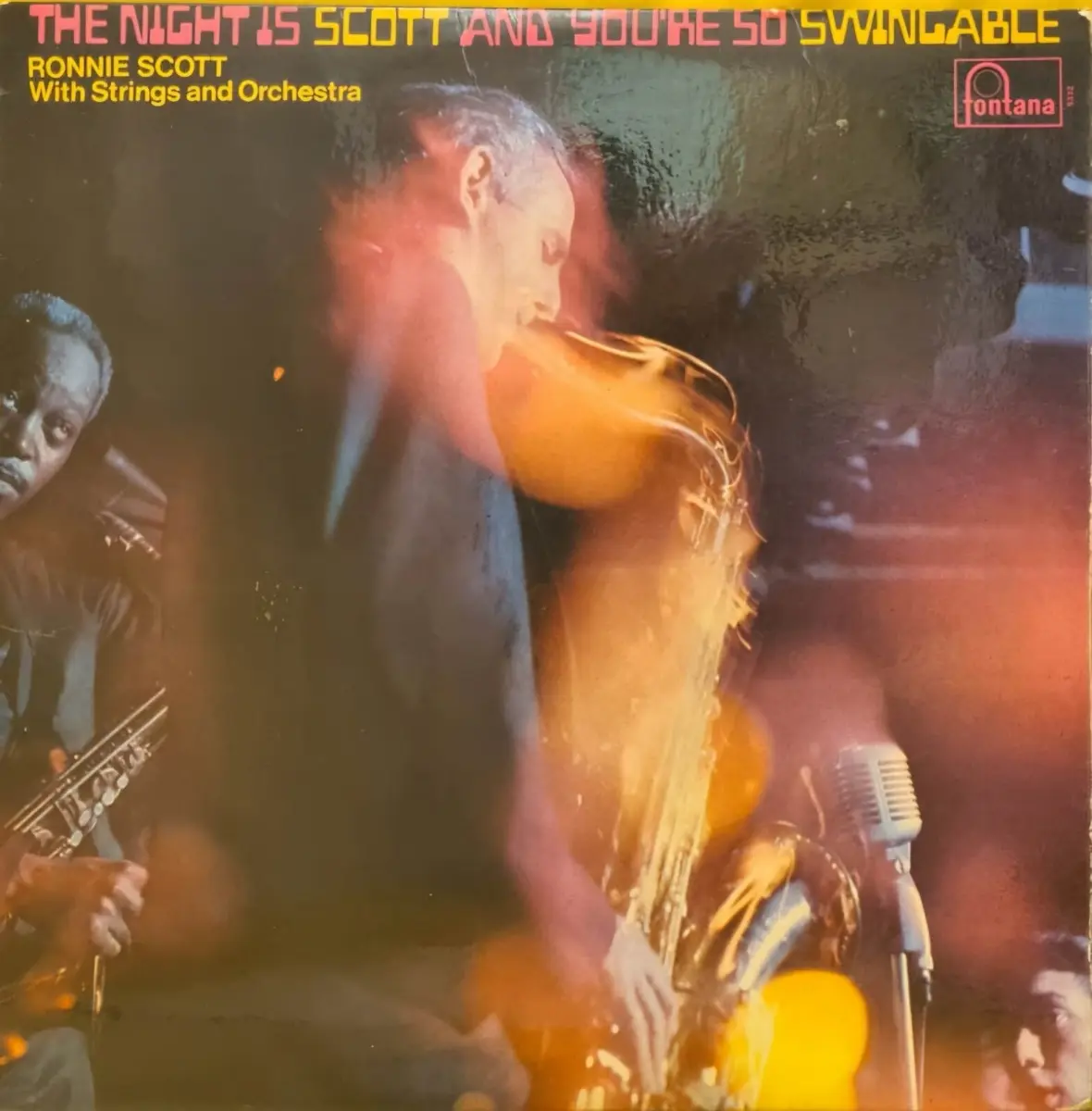
In the fast-evolving landscape of 1960s modern jazz, few figures cast as long or as paradoxical a shadow as Ronnie Scott. As both a preeminent tenor saxophonist and the proprietor of London’s most famous subterranean jazz institution, Scott walked a tightrope between international performance and local curation. The release of his latest long-playing record on Fontana, The Night Is Scott And Youre So Swingable (TL 332), captures a pivotal juncture in this master musician’s career. Far from merely serving as a souvenir for patrons of his Frith Street club, the album is a definitive artistic statement that challenges prevailing transatlantic hierarchies.
This comprehensive review and critical analysis explores the stylistic genesis of Scott’s mature sound, dissects the delicate interplay between distinct rhythm sections, and evaluates the contentious packaging—ranging from Benny Green’s disconnected liner notes to an ostensibly absurd title. Through meticulous studio tracking, rare collaborations with Jamaican guitar virtuoso Ernest Ranglin, and a lush, if unexpected, string-backed configuration, Scott proves that British modern jazz has developed a distinct voice entirely its own. This article examines the album’s historical context, technical merits, personnel dynamics, and its lasting significance within the broader canon of British post-bop and ballad interpretation.
Detailed Chronology and Recording Sessions
To fully understand the artistic triumphs and stylistic shifts present on The Night Is Scott And Youre So Swingable, one must trace the chronological and logistical origins of the sessions that comprise the LP. Recorded across various dates in mid-1964 and 1965 in London, the album is a mosaic of different stylistic phases in Scott’s mid-sixties output.
The 1965 London Quintet Sessions
The core of the contemporary studio work captured on the record stems from a 1965 London session featuring Scott on tenor saxophone alongside pianist Stan Tracey, bassist Rick Laird, and drummer Bill Eyden. This configuration anchors tracks such as "Baubles, Bangles And Beads," "For Heaven’s Sake," and "The Night Is Young (and You’re So Beautiful)." During these dates, Scott leaned heavily into a sophisticated, unhurried harmonic exploration. Free from the pressures of matching the breakneck speeds often demanded of visiting American headliners, Scott shaped these performances with a spacious, reflective maturity.
The 1964 Small Group and String-Enlarged Sessions
Conversely, a significant portion of the material dates back further, likely to late 1964. These tracks spotlight a different rhythm section featuring the brilliant Jamaican guitarist Ernest Ranglin, bassist Lennie Bush, and drummer Tony Crombie. Ranglin’s presence is particularly historic; his tenure in London clubs and studios predated his eventual return to the West Indies. Four of these tracks—including "What’s New?", "They Can’t Convince Me," "All About Ronnie," and "Once Upon A Summertime"—were augmented by a large, uncredited string section. This lush orchestral framework tests the limits of traditional small-group jazz, forcing Scott to float effortlessly above a sea of sweeping violins and cinematic harmonic pads without losing his distinct, hard-bop-inspired edge.
Musical Analysis: Style, Repertoire, and Ensemble Dynamics
The Shadow of Transatlantic Influences and Personal Identity
Upon initial listening, a seasoned jazz aficionado might detect echoes of American modernists Lucky Thompson and Hank Mobley in Scott’s phrasing. Both Thompson and Mobley were masters of the middle register, utilizing a warm, rounded tone and a relaxed, swinging conception that prioritized melodic storytelling over acrobatic pyrotechnics. Scott absorbed these influences deeply during his formative years and his travels to the United States.
However, The Night Is Scott And Youre So Swingable makes it abundantly clear that Scott has transcended mere imitation. He has forged a personal, highly idiosyncratic style characterized by an economical use of notes, a rich, woody timbre, and a supreme sense of temporal suspension. In many instances captured on this record, Scott displays an authority and emotional depth that easily eclipses several of the American guest stars who regularly graced the stage of his Soho club. Where some foreign acts relied on bluster and high-register shock value, Scott remained resolutely grounded in lyrical integrity.
The Repertoire: Balladry vs. Up-Tempo Steamers
The album’s programming is sharply divided between restrained, intimate ballad performances and select up-tempo workouts. Scott’s restraint is his greatest asset here. Rather than rushing through standard tunes, he unpacks them slowly, savouring the harmonic turns of songs like "Once Upon A Summertime" and "For Heaven’s Sake."
The exceptions to this prevailing ballad-heavy mood arrive in the form of "Eyes" ("The Night Has A Thousand Eyes") and "Treat It Lightly." These two pieces function as genuine "steamers"—fast-moving, high-energy vehicles designed to test a horn player’s endurance and harmonic ingenuity. Yet, Scott sidesteps the common trap of overblowing. He is simply too mature a musician to sacrifice tone for volume. His lines remain crystalline, fluid, and brilliantly articulated, even as the tempo surges around him.
The Rhythm Sections: Ranglin vs. Tracey
A fascinating aspect of the record is the stark contrast between the two accompanying rhythm sections.
On one hand, the collaboration with guitarist Ernest Ranglin yields a remarkably sympathetic dialogue. Ranglin, deeply steeped in both Caribbean idioms and modern jazz harmony, shares a profound intuitive rapport with Scott. His comping is delicate, inventive, and emotionally aligned with the saxophonist’s aesthetic goals.
On the other hand, the contributions of pianist Stan Tracey present a more contentious dynamic. Tracey, an undisputed heavyweight of British jazz, was deeply influenced by the idiosyncratic, angular vocabulary of Thelonious Monk. On this recording, however, critics have noted that Tracey occasionally falls back on "sub-Monkisms"—glibly trotted-out harmonic clusters and dissonant voicings that feel pasted on rather than organically integrated into the musical context. While Tracey remains a formidable talent, his approach here occasionally clashes with Scott’s smooth, linear trajectory, making the Ranglin-backed tracks feel marginally more cohesive.
Packaging, Critical Reception, and Industry Context
The Critical Standing
In the broader ecosystem of mid-sixties jazz criticism—dominated by publications like the US-based DownBeat—British and European recordings often struggled to secure unbiased evaluations. Yet, The Night Is Scott And Youre So Swingable easily clears the bar set by many contemporary American releases that routinely earned four- and five-star ratings from transatlantic critics. Scott’s musicianship is world-class, possessing an authenticity and emotional resonance that transcends geographic boundaries.
The Flaws of Presentation: Liner Notes and Misleading Monikers
Despite the undeniable brilliance of the music contained within the grooves of Fontana TL 332, the physical packaging of the record leaves much to be desired. The liner notes, penned by noted jazz writer Benny Green, have been widely criticized for bearing almost no relevant connection to the actual music on the record. Rather than offering analytical insight into Scott’s stylistic evolution, the sessions, or the personnel involved, the text wanders into tangential territory.
Equally baffling is the album’s title. The Night Is Scott And Youre So Swingable is an awkward, borderline absurd play on words that poorly reflects the prevailing mood of the record. With its heavy emphasis on moody ballads, late-night introspection, and lush string arrangements, the album is far more of a sophisticated nocturnal meditation than a relentless swing-fest. Fortunately, the artistic merit of Ronnie Scott’s saxophone playing shines brightly enough to overcome these superficial marketing missteps.
Track Listing and Personnel Breakdown
For discographers and dedicated collectors, Fontana TL 332 represents a neatly packaged cross-section of mid-sixties British modern jazz. Below is the official breakdown of the tracks, running times, personnel configurations, and recording contexts:
Side A (approx. 24 minutes)
- Baubles, Bangles And Beads – Personnel (a)
- For Heaven’s Sake – Personnel (a)
- Sweet Lotus Blossom – Personnel (b)
- The Night Is Young (and You’re So Beautiful) – Personnel (a)
- The Night Has A Thousand Eyes – Personnel (a)
Side B (approx. 20¼ minutes)
- What’s New? – Personnel (c)
- They Can’t Convince Me – Personnel (c)
- All About Ronnie – Personnel (c)
- Once Upon A Summertime – Personnel (c)
- Treat It Lightly – Personnel (a)
Personnel Key
- (a) Ronnie Scott Quintet (London, 1965): Ronnie Scott (tenor saxophone); Stan Tracey (piano); Rick Laird (bass); Bill Eyden (drums).
- (b) Ronnie Scott Quartet (London, c. 1964): Ronnie Scott (tenor saxophone); Ernest Ranglin (guitar); Lennie Bush (bass); Tony Crombie (drums).
- (c) Ronnie Scott Quartet with Strings (London, c. 1964): Ronnie Scott (tenor saxophone); Ernest Ranglin (guitar); Lennie Bush (bass); Tony Crombie (drums); plus a large, uncredited string section arranged for select atmospheric arrangements.
Label / Catalog Number: Fontana TL 332
Standard Retail Price (UK): 33s. 1d.
Future Outlook and Lasting Legacy
As the British jazz scene continues to mature through the mid-1960s, records like The Night Is Scott And Youre So Swingable serve as essential milestones. They mark the transition of British musicians from mere emulators of American bebop to confident, world-class stylists capable of commanding both small club stages and elaborate studio orchestrations.
Looking ahead, Ronnie Scott’s dual role as club owner and performing artist guarantees that his influence will remain foundational to the UK jazz ecosystem. While his commitments at Frith Street undoubtedly demand immense energy, this Fontana release proves that Scott’s creative fires burn brighter than ever. For jazz enthusiasts, collectors, and historians alike, purchasing this LP is not merely an act of patronage toward a beloved local institution—it is an investment in some of the finest, most mature tenor saxophone playing captured on European soil during the decade. Despite minor missteps in packaging and promotional titles, Scott’s artistry stands unassailable, ensuring that The Night Is Scott will be studied and savored for generations to come.