
Executive Overview
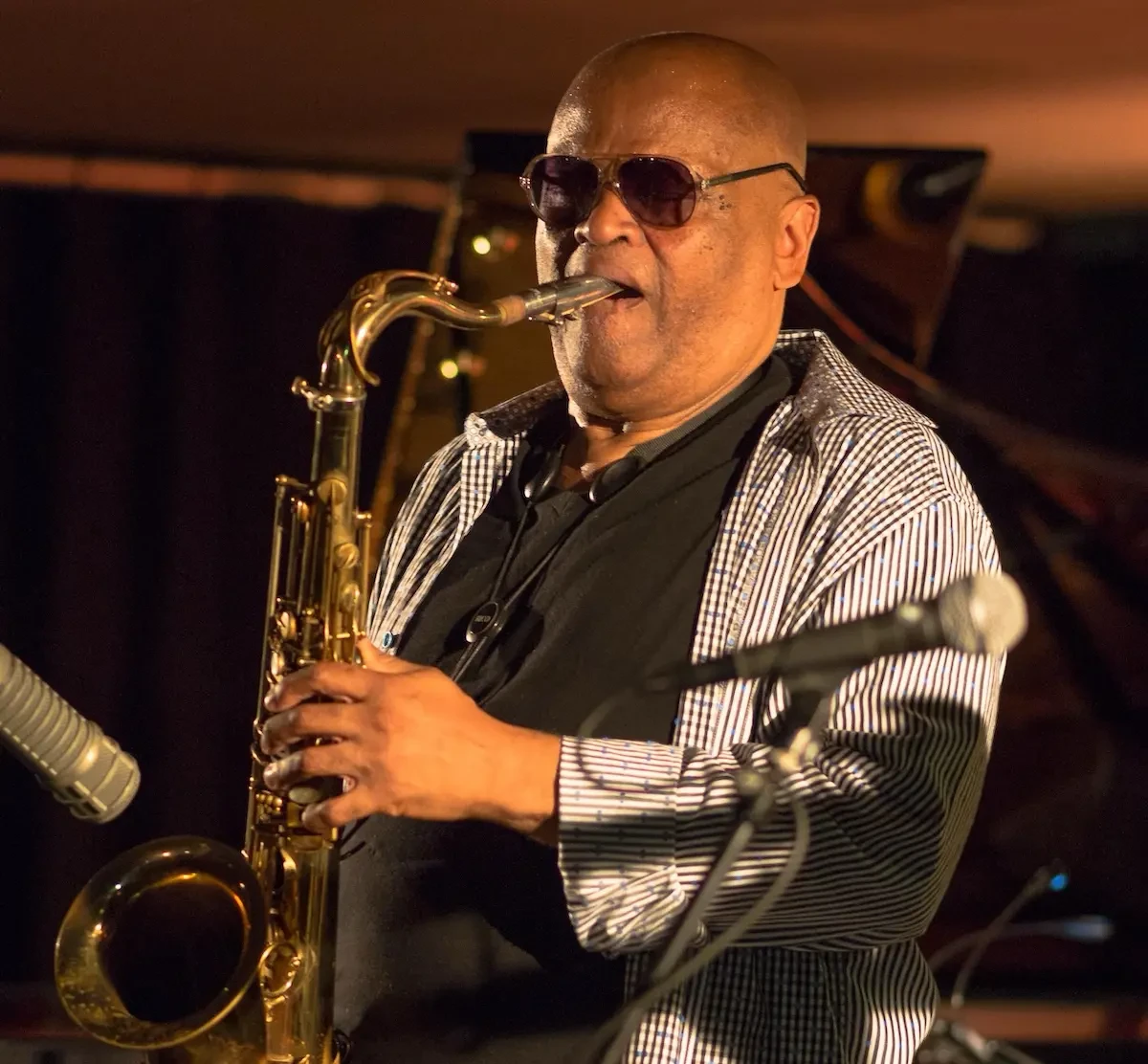
The contemporary jazz landscape continues to be shaped and enriched by living legends who cut their teeth during the incendiary creative peaks of the 1960s and 1970s. Among these enduring icons, saxophonist Azar Lawrence and trumpeter Wadada Leo Smith stand out as towering architects of modern improvised music. Both artists have recently issued significant new recordings that look backward and forward simultaneously, reflecting decades of cross-pollination, stylistic metamorphosis, and rigorous artistic discipline.
Lawrence’s latest release on Trazar Records, recorded in Venice, California, finds the veteran saxophonist revisiting his landmark early-1970s spiritual jazz statements. By blending fresh interpretations of material from his classic solo albums Bridge Into The New Age (1974) and Summer Solstice (1975) with tributes to mentors and peers like McCoy Tyner and Pharoah Sanders, Lawrence constructs a bridge across generations. Backed by a dynamic septet and enriched by guest contributors, his current musical vision tests the boundaries between expansive spiritual expression and modern ensemble density.
Conversely, Wadada Leo Smith’s Constellations And Hemispheres (Burning Ambulance) represents a radically different approach to contemporary recorded jazz. At 85 years old, Smith remains an indefatigable innovator. This release synthesizes material recorded across multiple sessions between 2017 and 2022, utilizing advanced post-production techniques, dynamic studio stitching, and complex multi-ensemble configurations. Building upon the structural frameworks introduced in his 2023 work Fire Illuminations, Smith juxtaposes contrasting sonic environments—most notably across a staggering 22-minute central suite.
While Lawrence relies on the live-wire, organic friction of a working septet to channel the ecstatic frequencies of 1970s spiritual jazz, Smith employs a conceptual, architectural method that positions the studio as an active instrument. Together, these two releases offer jazz historians and contemporary enthusiasts a masterclass in how aging visionaries negotiate their vast legacies while continuing to push aesthetic boundaries.
Detailed Chronology
Azar Lawrence: From McCoy Tyner’s Shadow to Contemporary Retrospection
To understand the weight and context of Azar Lawrence’s latest offerings, one must trace a career that spans the golden era of post-bop and spiritual jazz through the commercial realities of the late 20th-century music industry. Lawrence first caught the attention of the jazz cognoscenti in the early 1970s as a vital, blazing voice on tenor and soprano saxophones, most notably during his tenure with piano titan McCoy Tyner. Stepping into the lineage previously occupied by giants like John Coltrane and Joe Henderson, Lawrence possessed the technical facility and spiritual gravitas necessary to hold his own in Tyner’s high-octane modal furnace.
As economic pressures and shifting musical landscapes made sustaining a dedicated jazz career increasingly difficult during the late 1970s and 1980s, Lawrence—like many of his peers—adapted by pivoting toward mainstream R&B, soul, and funk. His formidable horn work found a welcoming home in the backing touring and studio bands of megastars such as Marvin Gaye and Earth, Wind & Fire. This commercial detour not only sharpened his rhythmic precision and pop sensibilities but also broadened his expressive palette, infusing his subsequent jazz work with an irresistible, danceable undercurrent.
In the decades that followed, Lawrence maintained a steady presence in the global jazz community, eventually joining the legendary straight-ahead supergroup The Cookers. Alongside veterans like Billy Hart and Eddie Henderson, Lawrence helped keep the hard-bop flame burning with blistering intensity.
His latest album represents a deliberate archival and artistic excavation. Rather than forging entirely new thematic territory, Lawrence looks back directly at his formative catalog:
- Bridge Into The New Age (1974)
- Summer Solstice (1975)
Furthermore, he expands his retrospective lens by incorporating a track from McCoy Tyner’s acclaimed Atlantis album, alongside a reverent nod to his late friend and mentor Pharoah Sanders through a reading of The Creator Has A Master Plan. This composition, in particular, enjoys a contemporary renaissance, appearing in notable recent versions by rising vocalists Tyreek McDole and Ekep Nkwelle.
Wadada Leo Smith: A Lifetime of AACM Innovation and Studio Alchemy
Wadada Leo Smith’s artistic trajectory is equally storied, though fundamentally tied to the avant-garde, free jazz, and the institutional foundations of the Chicago-based Association for the Advancement of Creative Musicians (AACM). Emerging in the late 1960s, Smith established himself immediately as an uncompromising, original voice on the trumpet, developing a distinct vocabulary characterized by wide intervals, dynamic space, and a deeply expressive, cloudy muted tone.
As a central figure in the AACM, Smith participated in a radical paradigm shift that elevated improvised music to the status of high art, emphasizing original composition, collective autonomy, and multidisciplinary exploration. Following in the rich post-Miles Davis lineage, Smith—much like his close contemporary Anthony Braxton—has maintained a staggering, prolific output throughout his life.
The chronology of Constellations And Hemispheres spans a five-year gestation period, recorded between 2017 and 2022 in New Haven, Connecticut. Rather than presenting a single, uninterrupted live performance, this release is the product of extensive post-production creativity. Smith gathered an elite assembly of musicians—including vibraphonist Bobby Naughton, bassists Bill Laswell and Melvin Gibbs, and drummers Pheeroan akLaff and Marcus Gilmore—across separate sessions, weaving disparate spatial and temporal fragments into a unified artistic statement.
This methodology directly mirrors the compositional strategies Smith deployed on his critically lauded 2023 album, Fire Illuminations. By utilizing studio alchemy to juxtapose contrasting musical environments, Smith treats recorded sound as raw clay, sculpting a narrative arc that moves fluidly from intimate trio textures to massive, layered octet explosions.
Supporting Context & Metrics
The Ensemble Frameworks and Technical Specifications
A rigorous examination of these two releases reveals starkly contrasting approaches to ensemble organization, acoustic space, and post-production philosophy.
Azar Lawrence: Turn The Music Up (Trazar Records)
- Recording Location & Date: Venice, California; 2024–2025.
- Total Runtime: 50 minutes, 02 seconds.
- Core Personnel:
- Azar Lawrence (Tenor saxophone, Soprano saxophone)
- Brian Swartz (Trumpet)
- Taka Mori (Guitar)
- Robert Turner (Keyboards/Piano)
- Gerald Brown (Bass)
- Yayo Morales (Drums)
- Lynne Fiddmont (Vocals)
- Featured Repertoire: Highway, Novo Ano (both composed by Brazilian guitarist Amaury Tristao), Atlantis, Lost Tribes Of Lemuria, The Creator Has A Master Plan, Fatisha, and Summer Solstice.
Lawrence’s septet is built for maximum acoustic warmth and polyrhythmic drive. The inclusion of Brazilian composer Amaury Tristao’s Highway and Novo Ano injects a breezy, lyrical cadence reminiscent of Lawrence’s mid-70s experiments with Latin and world-music fusion. However, critical reception regarding the arrangement density is mixed. Some contemporary reviewers note that the expansive septet, bolstered by additional guest artists, occasionally threatens to overshadow the core spiritual intimacy that defined Lawrence’s early work. While the musicianship is uniformly stellar—highlighted by Robert Turner’s lush keyboard voicings and Yayo Morales’s propulsion—elements such as Lynne Fiddmont’s vocal scatting on Highway and the abrupt fade ending on Atlantis have sparked debate among purists regarding whether this matches the raw, unadulterated power of his 1970s output.
Wadada Leo Smith: Constellations And Hemispheres (Burning Ambulance)
- Recording Location & Date: New Haven, Connecticut; 2017–2022.
- Total Runtime: 59 minutes, 11 seconds.
- Core Personnel:
- Wadada Leo Smith (Trumpet)
- Sylvie Courvoisier (Piano)
- Marcus Gilmore (Drums)
- Bobby Naughton (Vibraphone)
- Lamar Smith (Guitar)
- Bill Laswell, Melvin Gibbs (Bass)
- Mauro Refosco, Brian Jarawa Gray (Percussion)
- Pheeroan akLaff (Drums)
- Featured Repertoire: Dark Energy, Lake Tanganyika, Dark Matter, Particles Of Light, Mirror Of The Unseen (22-minute suite), Deep Canyons On Mars, and Meditation On Love.
Smith’s project thrives on knotty, intellectually demanding structures. By utilizing dual bassists (Bill Laswell and Melvin Gibbs) across shifting sessions, Smith creates a bottom-end gravitational pull that anchors the ethereal, impressionistic stylings of vibraphonist Bobby Naughton and pianist Sylvie Courvoisier. The structural centerpiece—the 22-minute suite Dark Matter, Particles Of Light, Mirror Of The Unseen—serves as a masterclass in dynamic tension, shifting effortlessly from sparse, conversational trio passages to the dense, multi-layered roar of a full octet.
Official Statements and Critical Perspectives
Navigating the Tension Between Tradition and Modernity
Critical reception to both albums highlights the ongoing debate within the jazz community regarding how veteran artists should handle their historical repertoires versus pushing into uncharted avant-garde territory.
In evaluating Azar Lawrence’s retrospective approach, critics have engaged in a healthy dialogue about the merits of artistic restraint. One prominent reviewer noted:
"For some writers, the power of his septet, with four additional guests, overpowers its spirituality. I’m not sure about this. I certainly agree that in art often ‘less is more’. But the music on this album is delightful, so I hesitate to criticise."
This sentiment encapsulates the delicate tightrope Lawrence walks. By expanding his ensemble and revisiting works from Bridge Into The New Age and Summer Solstice, Lawrence aims to recontextualize his historical breakthroughs for a modern audience. Yet, stylistic choices—such as vocal scatting and commercial-style fade-outs—demonstrate the enduring influence of his years backing pop and R&B icons like Marvin Gaye, creating a fascinating stylistic friction that separates his work from the ascetic purity of contemporaneous spiritual jazz revivals.
Conversely, Wadada Leo Smith’s work is universally recognized as a monument to uncompromising compositional rigor. At 85 years old, Smith shows zero interest in nostalgia. Critics emphasize that while Smith’s catalog is vast—necessitating a selective approach for the uninitiated—Constellations And Hemispheres represents a pinnacle of his compositional architecture.
In comparing Smith’s structural, studio-engineered masterpieces with his purely improvisational live outings, critics have drawn clear lines for consumers. While last year’s collaborative album Angel Falls (released on Intakt with Sylvie Courvoisier) highlighted Smith’s spontaneous, real-time interactive brilliance, Constellations And Hemispheres showcases his visionary long-form architecture. As jazz journalism continues to map the outputs of octogenarian masters, Smith’s willingness to embrace post-production wizardry proves that avant-garde jazz remains a living, mutating laboratory.
Future Outlook
As the global jazz community looks toward the horizon, the trajectory of artists like Azar Lawrence and Wadada Leo Smith offers valuable insight into the sustainability and evolution of improvised music. Both releases demonstrate that advanced age is no barrier to creative vitality; rather, it serves as a wellspring of accumulated wisdom, historical consciousness, and fearless reinvention.
For Azar Lawrence, the success of his current touring cycle and the renewed interest in his 1970s catalog suggest a bright future for spiritual jazz curation. As younger generations of listeners and musicians—typified by vocalists like Tyreek McDole and Ekep Nkwelle championing Pharoah Sanders’ repertoire—rediscover the ecstatic, modal languages of the past, Lawrence stands ready as a living bridge. Future projects are expected to continue leveraging his unique position within both straight-ahead supergroups like The Cookers and expansive, groove-oriented septets, proving that the fire of the early ’70s spiritual awakening remains far from extinguished.
For Wadada Leo Smith, the future lies in the endless expansion of his compositional universe. Given his historic prolificacy, Constellations And Hemispheres is unlikely to be his final statement on the intersections of studio manipulation and improvised performance. As younger percussionists and pianists continue to cycle through his shifting ensembles, Smith’s blueprint for structured free jazz will undoubtedly influence the next generation of AACM-inspired avant-gardists.
Ultimately, both records underscore a vital truth: jazz is an art form of infinite elasticity. Whether through Lawrence’s joyous, groove-laden reclamation of spiritual jazz roots or Smith’s cerebral, multi-session sonic architecture, these two masters continue to illuminate the path forward by honoring the profound depths of their pasts.