
Executive Overview
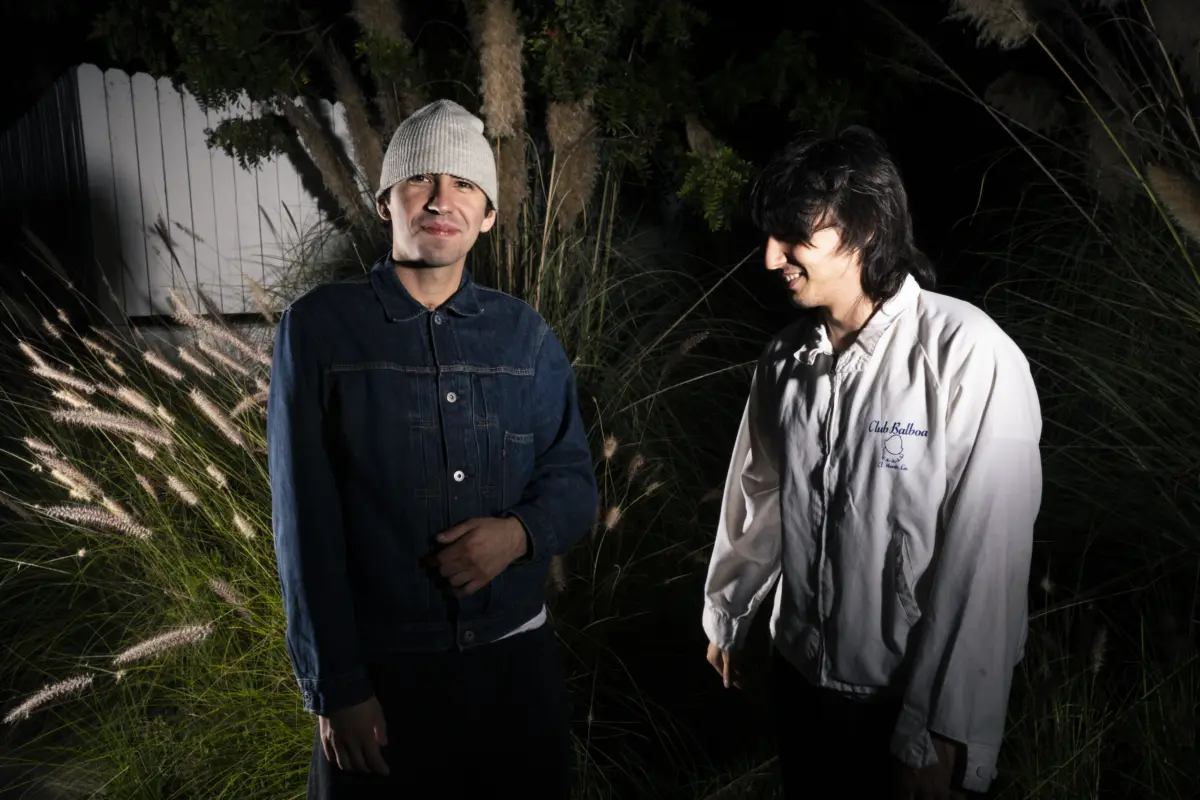
The contemporary indie-pop and alternative music landscapes are experiencing a profound identity crisis, torn between the hyper-curated, algorithmic demands of short-form social media platforms and a nostalgic yearning for the organic grit of the early-2000s garage rock revival. Enter the dynamic production and songwriting duo of Charlie Ziman and Nathan Tsunoda. While Ziman has quietly built a formidable reputation behind the mixing boards and in recording studios crafting viral sensations for Los Angeles-based songwriter Malcolm Todd, the pair have consciously pivoted away from conventional pop formulas for their highly anticipated full-length debut, 1+1.
The album arrives as a deliberate counter-narrative to the prevailing winds of modern commercial production. Trading the pristine, compressed aesthetic of today’s chart-topping hits for a sprawling, sun-drenched palette of Californian sonic touchstones—ranging from the laid-back, genre-blending grooves of Sublime to the kaleidoscopic, psych-rock wanderings of Tame Impala—Ziman and Tsunoda have constructed an expansive 14-track journey. This release serves as the official follow-up to their critically appreciated 2023 EP, Supernova, signaling a maturation in their collaborative dynamic and an ambition that transcends fleeting internet trends.
At the center of this release cycle is the record’s ambitious seven-minute lead single, "Wish 4," a sprawling composition that wrestles with existential dread, mindfulness, and the ephemeral nature of joy. Yet, despite the album’s stylistic alignment with certain touchpoints of the current "indie sleaze" cultural revival, the duo is eager to distance themselves from shallow nostalgia-baiting. In an exclusive dialogue surrounding the release, Ziman and Tsunoda unpack the philosophy behind 1+1, addressing the geographical mythologies of modern music scenes, the pitfalls of replicating past decades without innovation, and their ultimate, unabashed ambition: crafting a body of work that listeners will still revere as a classic two decades from now.
Detailed Chronology: From Underground Production to 1+1
To understand the weight and sonic diversity of 1+1, one must trace the winding trajectory that brought Charlie Ziman and Nathan Tsunoda together in the hyper-competitive ecosystem of the Los Angeles music scene. For years, Ziman operated primarily in the shadows as a sought-after producer and instrumentalist. His most notable early breakout came through his extensive collaborations with viral LA sensation Malcolm Todd, where Ziman helped engineer a sound characterized by velvety bedroom-pop textures, subtle jazz-inflected chord progressions, and an intimate vocal clarity tailored for TikTok and streaming algorithms.
However, creative partnerships often demand an outlet for impulses that fall outside the parameters of commercial expectations. When Ziman and Tsunoda began pooling their creative resources, they realized their shared sensibilities pointed toward a radically different horizon. Moving away from the click-track precision and heavily automated vocal tunings dominating mainstream indie-pop, the duo retreated into a more tactile, exploratory production style.
This creative symbiosis first crystallized during the recording sessions for their 2023 sophomore-leaning EP, Supernova. That project functioned as a crucial exploratory laboratory, allowing the pair to test the waters of blending organic instrumentation with lo-fi electronic textures. While Supernova proved they could craft cohesive, mood-driven vignettes, it left them hungry for a more expansive canvas.
That hunger manifested in 1+1, a sprawling fourteen-track opus that refuses to adhere to modern attention-span economics. The creation process spanned many months across various makeshift studios in Southern California. Eschewing the sterile environment of major commercial facilities, Ziman and Tsunoda favored spaces where natural acoustics, vintage gear quirks, and the ambient sounds of the Pacific coast could bleed into the recordings.
The sequencing of the album—kicking off with "Cosmos," winding through emotional centerpieces like "Mental Health Day" and the epic lead single "Wish 4," and finally drawing to a close with "Destroy My Life"—tells a chronological story of artistic emancipation. It documents two producers stepping out from behind the curtain of other artists’ projects to stake their own definitive claim on the contemporary indie landscape.
Supporting Context & Metrics: Navigating the Californian Soundscape and the "Indie Sleaze" Mirage
The release of 1+1 occurs against a fascinating backdrop of cultural reclamation. Over the past several years, cultural commentators and internet subcultures have obsessed over the revival of "indie sleaze"—a nebulous aesthetic descriptor encompassing the gritty, flash-photography-heavy, American Apparel-clad nightlife of the mid-to-late 2000s. Naturally, critics and bloggers have been quick to lump any modern guitar-adjacent music into this retrofitted stylistic box.
However, Ziman is quick to push back against the geographic and aesthetic assumptions often projected onto their work by coastal tastemakers.
"We never really meant to dig into the whole indie sleaze thing," Ziman notes, addressing the tag with a mixture of amusement and mild weariness. "I’m also not in New York. I think people are actually having a lot of fun there. Like any genre, there’s a lot of people trying to do exactly the thing that The Strokes and other artists did 20 years ago; to that I ask, why? I think you should do that and put a twist on it, and mesh it into your own thing."
This critique cuts to the heart of what makes 1+1 distinct. Rather than replicating the razor-thin, trebly guitar tones and frenetic CBGBs-worship of early 2000s New York garage rock, Ziman and Tsunoda lean heavily into their native Californian environment. The sonic architecture of the album is drenched in West Coast consciousness. There is the sun-baked, reggae-inflected warmth reminiscent of Sublime, filtered through a modern, melancholic lens. Simultaneously, the hypnotic, phasing guitar effects and sprawling song structures nod directly to the neo-psychedelic wizardry of Tame Impala’s Kevin Parker.
The metrics of modern consumption make the duo’s approach all the more daring. In an era where the average song length has shrunk to under two minutes and thirty seconds to appease streaming platform skip rates and algorithmic playlisting, Ziman and Tsunoda delivered a lead single—"Wish 4"—that clocks in at a defiant seven minutes.
According to the creators, this extended runtime is not mere self-indulgence, but a narrative necessity. The track is designed to explore the profound psychological tension that occurs "between the peace of the present moment and the ‘what ifs’ of how it will end." By allowing the song to breathe, unfold, and transition through multiple distinct movements, the duo rejects the fast-food consumption model of contemporary music in favor of a slow-burn cinematic experience.
Official Statements and Tracklist Breakdown
The thematic weight of 1+1 is reflected not only in its expansive sonic choices but in its meticulous sequencing. The album spans fourteen distinct tracks, each functioning as a thematic chapter in a larger narrative about anxiety, presence, modern romance, and self-destruction.
Official 1+1 Tracklist
- "Cosmos"
- "I Am No One"
- "Mental Health Day"
- "Wish 4"
- "In The Stars"
- "The Truth!"
- "Myriad"
- "Halfway"
- "Wiretooth"
- "Twisted"
- "Price2Pay"
- "You"
- "Lil Song"
- "Destroy My Life"
At the core of the album’s promotional campaign is "Wish 4," a track that has quickly garnered attention from underground music circles for its refusal to compromise on scale or emotional depth. Elaborating on the conceptual underpinnings of the single, the duo shared insight into its existential core:
"The seven-minute lead single explores the contrast between the peace of the present moment and the ‘what ifs’ of how it will end."
This dualistic tension permeates the entire tracklist. Songs like "Mental Health Day" and "Price2Pay" grapple with the inescapable pressures of modern life, juxtaposing lighthearted, breezy instrumentation with deeply vulnerable lyricism. Meanwhile, tracks such as "Wiretooth" and "Twisted" showcase Ziman and Tsunoda’s production prowess, blending distorted analog synths with organic drum loops that pay homage to their hip-hop and indie-rock influences alike.
Future Outlook: The Pursuit of Timelessness
As 1+1 makes its way into the hands of fans and critics worldwide, the ultimate test for Charlie Ziman and Nathan Tsunoda will be navigating the transition from behind-the-scenes producers and EP-level experimenters to recognized auteurs of modern alternative music.
The industry is notoriously fickle, often chewing up and spitting out genre-fluid acts that fail to anchor themselves to a distinct cultural identity. Yet, the philosophy guiding 1+1 suggests a durability that goes beyond transient internet fame. When asked about the ultimate legacy of the record, Ziman offered a statement that reveals both audacious ambition and grounded artistic integrity:
"Hopefully, the record will become a classic in 20 years."
Achieving classic status in the twenty-first-century music economy requires an almost paradoxical combination of cultural awareness and timeless craftsmanship. By refusing to mimic the hollow pastiche of the "indie sleaze" revival, and instead filtering their deep appreciation for classic Californian songwriting and psych-rock through a thoroughly modern, emotionally resonant lens, Ziman and Tsunoda have laid a formidable foundation.
Whether 1+1 achieves the twenty-year staying power its creators dream of remains to be seen. However, in an era where safe, algorithmic conformity threatens to turn popular music into a monolith of homogenized short tracks, the mere existence of a seven-minute meditation on mindfulness and mortality like "Wish 4" is a victory. Charlie Ziman and Nathan Tsunoda have not just released an album; they have thrown down a gauntlet, challenging both themselves and their peers to aim higher, write deeper, and build sounds designed to outlast the digital noise.