
Executive Overview
The international jazz landscape continues to undergo a profound renaissance, characterized by a dynamic tension between boundary-pushing contemporary explorations and the excavation of monumental archival recordings. Over the coming months, the recorded music ecosystem will see an extraordinary influx of releases spanning diverse geographies, generations, and sonic methodologies. From the historic vaults of South Africa and Paris to contemporary avant-garde sessions recorded live in Stockholm and Montreal, the genre is expanding its boundaries while maintaining a reverent dialogue with its rich history.
This comprehensive review explores a vast catalog of forthcoming and newly unearthed albums. We examine the collaborative studio sessions defining today’s acoustic and fusion circuits, rare historical broadcast transcriptions brought to light decades after their initial capture, and the cross-continental alliances driving modern improvised music. As jazz absorbs influences ranging from Eastern European folk traditions and Slovakian ecological philosophies to contemporary electronica and Western classical structures, artists are proving that the idiom remains as vital, restless, and inventive as ever.
Detailed Chronology: From 1953 Pioneers to 2027 Visions
The historical continuum of jazz is laid bare across this expansive release cycle, offering listeners a chronological journey from the mid-century birth of modern modernism to anticipated projects stretching into 2027.
The Mid-Century Masters: 1953–1968
The archival sphere offers essential windows into formative eras of jazz history. Chief among these is a landmark historical document: the reissue of Toshiko’s Piano by Toshiko Akiyoshi. Originally released as a 10-inch LP and produced by Norman Granz, this 1953 Tokyo recording captures one of Japan’s most celebrated jazz pianists at the dawn of her international career. Akiyoshi is joined by an elite American rhythm section—Herb Ellis on guitar, Ray Brown on bass, and J.C. Heard on drums—who were operating at the time as Oscar Peterson’s legendary backing unit for Granz’s Jazz at the Philharmonic tours.
Moving into the vibrant matrix of the 1960s, the legacy of Art Blakey takes center stage through Elemental Music’s release of Blue Moon Over Paris (also known under alternate pressing titles). This collection presents two previously unreleased, complete live performances by Art Blakey & The Jazz Messengers: a 1963 date from the Olympia Theatre in Paris and a 1968 performance at the Salle Pleyel. Featuring staggering collective personnel including Freddie Hubbard, Wayne Shorter, Billy Harper, Ronnie Mathews, and Julian Priester, these recordings capture Blakey at two distinct creative peaks, cementing his status as both an indomitable swing drummer and an exceptional mentor to generations of jazz innovators.
Pianist Paul Bley’s pivotal 1966 session, Ramblin’, has finally been restored to circulation via Red Records. This recording marked a major turning point for the American pianist (1932–2016), notably because it featured three compositions by his then-wife Annette Peacock ("Both," "Albert’s Love? Theme," and "Touching") alongside just one by his former wife, Carla Bley.
Perhaps the most poignant archival recovery comes from Matsuli Music with Prelude to the Sun by Dollar Brand (later known as Abdullah Ibrahim). Recorded in 1968 during a brief, turbulent return to South Africa following six years in exile, this South African Broadcasting Corporation (SABC) transcription session catches the pianist at a vital crossroads. Bridging New York avant-garde sensibilities with the traditions of Duke Ellington, Thelonious Monk, and the vocal stylings of Bea Benjamin, the album provides an unprecedented, historically charged document of South Africa’s most visionary pianist coming home.
Contemporary Innovations: 2024–2025 Sessions
Stepping into the modern era, the period between 2024 and late 2025 yielded fertile ground for collaborative ensembles. London-based guitarist and songwriter Jake Aaron completed his third album, Livingston Sessions, at Livingston Studios in 2024. Featuring Steve Lodder on keyboards, Davide Mantovani on bass, and Marc Parnell on drums, the album draws heavily on folk and jazz vocabularies, following up on his Western noir-inspired 2023 release, Always Seeking.
In Trondheim, Norway, the trans-European quartet Aileron—comprising Espen Berg (piano), Emma Rawicz (saxophone), Kertu Aer (bass), and Håkon Mjøset Johansen (drums)—recorded an exceptional suite of compositions written by Berg, channeling the distinct lyrical and harmonic influences of Brad Mehldau, Gerald Clayton, Keith Jarrett, and Jan Garbarek.
Meanwhile, the European free-jazz and improvisation underground was documented on October 22, 2025, when Swedish pianist Lisa Ullén, Swedish saxophonist Elin Forkelid, and Portuguese drummer Sofia Borges convened for an ad hoc performance at the intimate Krematoriet venue in Stockholm. Released as Bestiary Of Luminous Beings on Sail Cabin, the recording captures the spontaneous combustion of three of Europe’s most sought-after improvisers.
The Immediate Horizon: 2026–2027 Releases
Looking ahead, the calendar is crowded with ambitious projects. Multi-instrumentalist Steve Amirault introduces his alter ego, "Diva Miro" (playing U-Bass), on Vanity Project. Recorded at Montreal’s Hotel2Tango with saxophonists Erik Hove and Chet Doxas and drummer Richard Irwin, Amirault steps away from his primary instruments of piano and voice to deliver nine original contemporary jazz compositions.
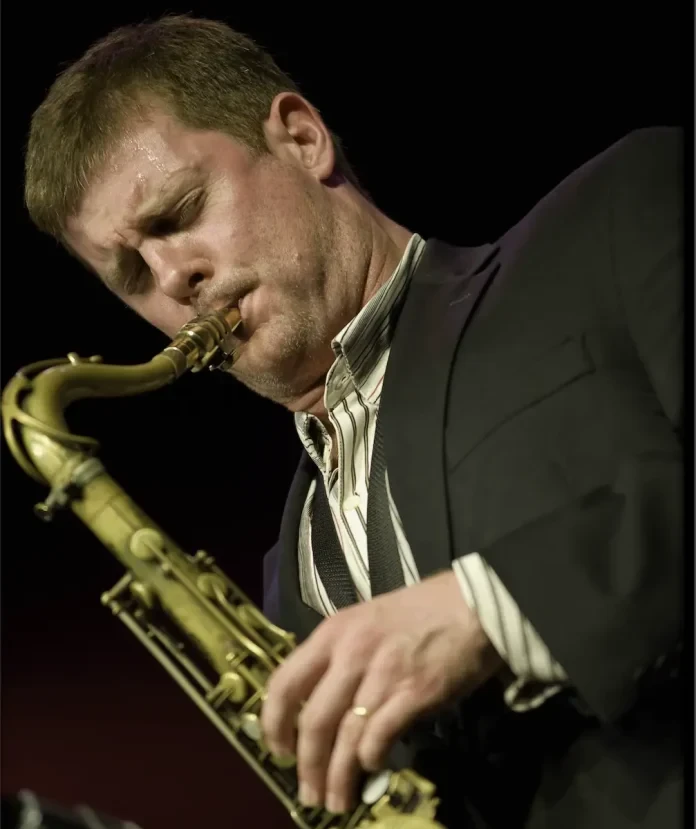
In the straight-ahead acoustic realm, tenor saxophonist Eric Alexander makes his Smoke Sessions leader debut with Fifth Quadrant. Partnering with a powerhouse quartet of long-time collaborators—pianist Cyrus Chestnut, bassist Nat Reeves, and drummer Carl Allen—Alexander navigates a program designed to evoke shared emotional transcendence.
Similarly, veteran trumpeter Anders Bergcrantz has announced Anders Bergcrantz & Friends for release in February 2027. Teaming up with Robert Nordmark (saxophones), Sven Erik Lundeqvist (piano), Mattias Svensson (bass), and Bengt Stark (drums), Bergcrantz fulfills a long-held ambition to record with this specific collective of close friends and musical peers.
Finally, Jake Aaron’s Livingston Sessions is officially slated for release on November 12, 2026, marking another significant milestone in the guitarist’s evolving discography.
Supporting Context & Metrics
To fully appreciate the scope of this release wave, one must examine the diverse geographic networks, instrumentation strategies, and conceptual frameworks driving today’s artists.
Geographic and Cross-Cultural Collaborations
Jazz has always thrived on cross-pollination, and the current crop of albums demonstrates an increasingly borderless approach:
- The Middle Eastern-European Nexus: Israeli trio Atempo (Itay Abramovitz, Alon Stern, Yoav Lachovitsky) bridges Eastern European folk melodies with Latin grooves and Middle Eastern microtonalities on Supreme Chord.
- Slovakian Eco-Acoustics: Percussionist and composer Michaela Antalová explores deep ecology and heritage on Sun’s Daughter, utilizing the fujara (a traditional Slovakian shepherd’s flute) alongside an ensemble where every instrument is crafted entirely from wood, arranged in collaboration with Christian Wallumrød.
- Italian-American Intersections: Trombonist Samuel Blaser’s Rosina draws deeply on family roots in Emilia-Romagna, blending Italian folk idioms with modern American post-bop sensibilities alongside Russ Lossing, Masa Kamaguchi, and Billy Mintz.
Instrumentation and Ensemble Innovations
Artists are continually redefining the traditional lineup:
- Guitar-Free Trios and Unique Voicings: The German trio Graupe/Brendle/Terziïs utilizes an atypical lineup of guitar, drums, and voice on Reigen, melding composition, improvisation, and Dadaist theatricality.
- The Return of the Harp: Dorothy Ashby’s classic Hip Harp—featuring Frank Wess (flute), Herman Wright (bass), and Art Taylor (drums)—is highlighted in audiophile vinyl reissues, reminding contemporary audiences of the instrument’s unique harmonic capabilities in a small-group setting.
- Orchestral Improv: Miguel Atwood-Ferguson leads a massive 21-piece collective on ANANTA: Spirit of Coltrane, bringing together luminaries such as Jeff Parker, Flying Lotus, Immanuel Wilkins, Shabaka Hutchings, and Azar Lawrence to honor the spiritual and musical legacy of John Coltrane.
Official Statements & Artist Insights
Many of these releases are accompanied by profound personal statements from the artists regarding their motivations, compositional processes, and collaborative ethos.
“I was drawn to the image of the vast sky and the sense of openness, expansiveness, and possibility it evokes. As I wrote these pieces, I wanted to bring some of that feeling into the compositions. I hope each listener can find a personal connection to the music.”
— Lynne Arriale, discussing her 18th leader album, Wide As The Sky, recorded with bassist Alon Near and drummer Lukasz Zyta.
The collaborative spirit is echoed by veteran trumpeter Anders Bergcrantz regarding his upcoming 2027 release:
“For quite some time, I’ve wanted to make an album with some of my favorite musicians. But not only are they great players, they are also great friends. What a beautiful combination. I’m so happy that this project finally came to life. I’ve played with these gentlemen many times in different bands, but never with all five of us together at the same time.”
In the realm of archival excavation, critic Francis Gooding encapsulates the historical weight of the newly discovered Dollar Brand recordings:
“This album captures South Africa’s most forward-thinking pianist consciously documenting both his own music and its key sources at a crucial crossroads in his life and career.”
Future Outlook
The trajectory of jazz heading into the late 2020s points toward an increasingly decentralized, highly collaborative, and historically conscious ecosystem. As demonstrated by the simultaneous flourishing of high-end archival preservation (such as Elemental Music’s Blakey unearthings and Matsuli’s rescue of the SABC transcription discs) and forward-thinking studio laboratories (like Bill Laurance and Michael League’s retreat to Château Palmer for Close to Home), the genre refuses to be pinned down by rigid definitions.
Younger voices—such as Italian tenor saxophonist Mattia Basilico making his leader debut at age 23 with On The Edge, and Canadian baritone saxophonist Shirantha Beddage exploring geographic and personal transition on Departures—stand shoulder-to-shoulder with returning legends and avant-garde collectives.
Ultimately, whether through the spontaneous, unedited first-take mastery of Salvatore Bonafede, Eddie Gomez, and Billy Hart on Modus Operandi, or the sweeping, genre-defying orchestral visions of Miguel Atwood-Ferguson’s ANANTA, the global jazz community remains anchored by an unyielding commitment to emotional honesty, technical mastery, and fearless sonic exploration. Listeners and critics alike can look forward to a vibrant, multi-layered future where the past and future of improvised music converse on equal terms.