
Executive Overview
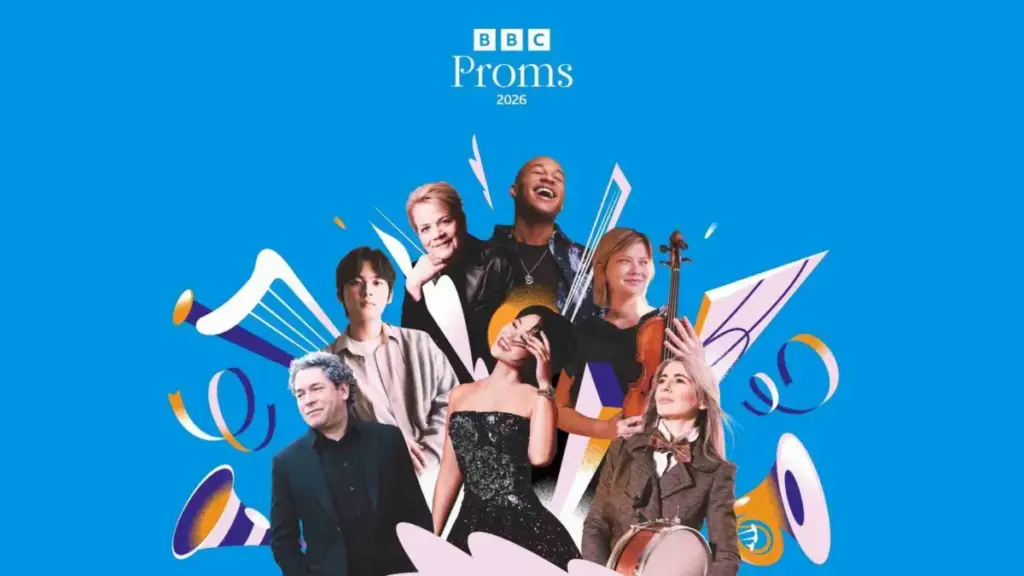
The classical music world turns its eyes to the historic Royal Albert Hall on Saturday, 12 September 2026, as the world’s largest and most comprehensive classical music festival reaches its emotional and sonic zenith. The Last Night of the Proms, traditionally celebrated as classical music’s biggest and most exuberant party, promises a glittering convergence of high art, contemporary pop culture, and global star power. Under the steady baton of Chief Conductor Sakari Oramo, the BBC Symphony Orchestra, the BBC Symphony Chorus, and the BBC Singers will anchor an evening designed to honor both classical heritage and contemporary innovation.
As the 2026 season draws to its magnificent close, it caps off an intensive eight-week cultural marathon that has featured 86 distinct concerts across the United Kingdom. While the physical heart of the festival remains the Royal Albert Hall—which hosted 72 of those performances—the reach of the Proms has extended far beyond central London, drawing in an estimated 300,000 live attendees across the nation. More impressively, the digital footprint of the 2026 season has shattered previous records, cementing the festival’s enduring relevance in a rapidly modernizing media landscape.
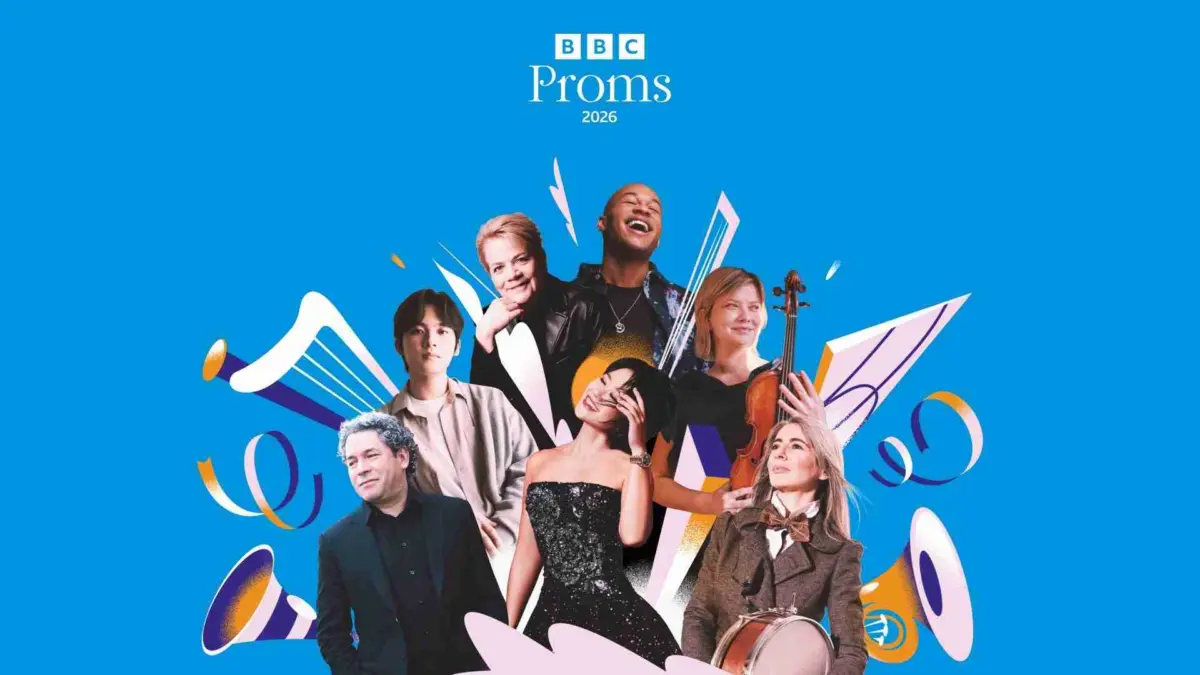
This year’s Last Night is particularly noteworthy for its eclectic programming, which bridges the gap between Pulitzer Prize-winning modernism and a joyous, star-studded tribute to the late, great Queen of Country, Dolly Parton. Featuring world-renowned virtuosos such as pianist Yuja Wang, celebrated tenor Nicky Spence, and beloved vocalists like Sheridan Smith, Beverley Knight, and the country-pop duo Ward Thomas, the evening encapsulates the inclusive, broad-church philosophy that has come to define the modern era of the BBC Proms.
With comprehensive live broadcasting scheduled across BBC Television, BBC iPlayer, BBC Radio 3, and BBC Sounds—co-presented by an engaging team including Katie Derham, Nick Mohammed, Tina Daheley, Petroc Trelawny, and Georgia Mann—the event guarantees that millions of viewers and listeners worldwide can share in the collective euphoria of the traditional flag-waving finale.
Detailed Chronology and Musical Programme
The structure of the 2026 Last Night of the Proms has been meticulously curated to balance profound orchestral masterworks, cutting-edge contemporary commissions, and the beloved, raucous traditions that audiences have cherished for generations.
Part 1: Orchestral Grandeur and Contemporary Premieres
The evening commences with explosive theatricality as the orchestra launches into Leonard Bernstein’s effervescent Candide: Overture, setting a high-energy tone for the night. This is swiftly followed by the evocative, melancholic beauty of the second movement (“Lament”) from Joseph Foulds’ Keltic Suite.
The programme then transitions into operatic and symphonic richness with Scottish tenor Nicky Spence joining the BBC Symphony Chorus and BBC Singers for an exquisite rendition of Act I excerpts from Antonín Dvořák’s Rusalka (“Vidino divná, přeadká”). The mood shifts to cinematic pastoral beauty with Bedřich Smetana’s iconic Má vlast—specifically the sweeping, narrative currents of Vltava (The Moldau).
A major highlight of the early evening is the world premiere of Dithyramb, a BBC commission by acclaimed Canadian composer and conductor Samy Moussa, which utilizes the full forces of the BBC Symphony Chorus and BBC Singers to push the boundaries of modern choral-orchestral texture.
Part 2: Virtuosity, Country Icons, and the Heart of the Party
As the broadcast transitions into its major viewing hours, the artistic caliber scales even higher. Star pianist Yuja Wang takes the stage to deliver the Proms’ debut performance of Samuel Barber’s Pulitzer Prize-winning Piano Concerto. Wang’s legendary technical brilliance and profound interpretive depth make this a centerpiece of the classical portion of the evening.
In a brilliantly unexpected stylistic pivot, the concert shifts into To Dolly, With Love, an arrangement by Fiona Brice paying heartfelt tribute to the late Dolly Parton. An all-star lineup takes ownership of the country legend’s timeless catalog: Sheridan Smith delivers a high-octane performance of 9 to 5, Soul powerhouse Beverley Knight lends her soaring vocals to I Will Always Love You, and acclaimed country-pop duo Ward Thomas harmonies through Jolene.
Following this country-pop interlude, Gustav Holst’s The Planets brings celestial energy with Jupiter, the Bringer of Jollity, before Yuja Wang returns to the stage for Alexander Tsfasman’s jazzy, exhilarating Suite for Piano and Orchestra.
The contemporary thread continues with another major world premiere: Iris of Life, a BBC commission by Academy Award-winning British composer Anne Dudley, performed alongside the BBC Singers. Nicky Spence returns to lighten the mood with a rollicking performance of Frank Loesser’s Guys and Dolls classic, “Sit Down, You’re Rockin’ the Boat” (arranged by Mark Cumberland), accompanied by the full choral forces, alongside a spirited delivery of Scotch Snap (arranged by Stuart Calvert).
Part 3: The Traditional Finale
No Last Night of the Proms would be complete without its legendary, participatory sequence. The evening races toward its emotional climax with Henry Wood’s perennial crowd-pleaser, the Fantasia on British Sea Songs, followed by Thomas Arne’s defiant Rule, Britannia!.
The gravity of the classical tradition meets collective national memory in Sir Edward Elgar’s Pomp and Circumstance March No. 1 (Land of Hope and Glory) and Sir Hubert Parry’s soaring anthem Jerusalem (orchestrated by Elgar). The formal musical programme concludes with the traditional British National Anthem (arranged by Benjamin Britten) and a poignant, community-minded singing of Auld Lang Syne (arranged by Paul Campbell), uniting the packed auditorium in a sea of waving flags, linked arms, and shared musical joy.
Supporting Context and Metrics: A Record-Breaking Season
To fully appreciate the significance of the 2026 Last Night, one must contextualize it within the broader framework of a historic eight-week season. Spanning 86 concerts in total—with 72 hosted at the iconic Royal Albert Hall and 14 touring various cultural hubs across the United Kingdom—the 2026 BBC Proms has proven that the appetite for live orchestral music is not only surviving but aggressively expanding.
Digital Expansion and Accessibility
While the physical venues have welcomed roughly 300,000 patrons through their doors, the digital transformation of the Proms has rewritten the record books. Interim figures released by the BBC reveal an unprecedented digital reach across BBC Sounds and BBC iPlayer:
- Account Reach: The Proms digital content has been actively accessed by 1.7 million unique accounts, representing a stellar 32% year-on-year increase.
- Engagement Volume: This surge in interest has translated into 6.8 million individual plays.
- Total Consumption Time: Audiences have collectively spent 3.4 million hours listening to and viewing Proms content between 13 April and 6 September 2026.
- Radio 3 Momentum: Weekly accounts for Radio 3 on BBC Sounds experienced a 10% year-on-year boost during the week commencing 17 August 2026—a powerhouse week that featured landmark performances from international heavyweights including The Met Orchestra, the Oslo Philharmonic, and the Berlin Philharmonic.
These metrics highlight a fundamental shift in how classical music is consumed. By marrying the traditional, elite live performance model with frictionless, high-definition digital broadcasting, the BBC has successfully cultivated younger, geographically diverse audiences who engage with the art form long after the final curtain falls at the Royal Albert Hall. Furthermore, the BBC’s commitment to keeping television broadcasts available on BBC iPlayer for a full year—and audio streams on BBC Sounds for 30 days post-broadcast—ensures that the cultural footprint of the festival extends deep into the autumn and winter months.
Official Statements and Industry Perspectives
The architects of this year’s triumph have reflected proudly on a season that pushed creative boundaries while honoring centuries-old traditions.
Sam Jackson, Controller of Radio 3 and BBC Proms, expressed his enthusiasm for the approaching finale and the broader achievements of the summer:
"This year’s Last Night of the Proms promises to be a joyous celebration, bringing together world-class performers, much-loved repertoire and memorable musical moments. Across eight weeks, audiences have embraced the Proms in record numbers on our broadcast platforms, while around 300,000 people have joined us at the Royal Albert Hall and at venues across the UK. We very much look forward to the centenary of the BBC Proms next year, but for now, we can’t wait to celebrate the end of the 2026 season in style!"
Echoing these sentiments, Suzy Klein, Head of Arts and Classical Music TV, emphasized the unifying power of public service broadcasting in the cultural sphere:
"The BBC Proms has once again connected audiences across the UK and beyond through an extraordinary summer of live music. We’re incredibly proud of the range and quality of concerts across BBC television and BBC iPlayer, and the Last Night will provide the perfect finale to an unforgettable season. And while the season may be drawing to a close, audiences will be able to enjoy the Proms on BBC iPlayer for a whole year afterwards."
Their remarks underscore the dual mandate of the Proms: maintaining uncompromising artistic excellence while functioning as an accessible, democratic cultural touchstone for the entire nation.
Future Outlook: Looking Ahead to the Centenary
As the last notes of Auld Lang Syne fade under the vaulted glass and iron dome of the Royal Albert Hall on 12 September, the classical music community will not have long to rest on its laurels. Sam Jackson’s forward-looking tease regarding the centenary of the BBC Proms next year signals that the planning for an even more monumental milestone is already well underway.
For a century, the Proms has stood as a bastion of cultural continuity, adapting through world wars, social revolutions, and digital transformations without ever losing its core identity: bringing the best classical music in the world to the widest possible audience at affordable prices. The record-breaking engagement figures of 2026—particularly the 32% growth in digital accounts—prove that the festival is entering its second century in rude health, vibrant, technologically adaptable, and culturally indispensable.
For now, however, the focus remains firmly on the immediate horizon. With a star-studded lineup featuring Yuja Wang, Nicky Spence, Sheridan Smith, Beverley Knight, and Ward Thomas, backed by the peerless forces of the BBC Symphony Orchestra and Chorus under Sakari Oramo, the 2026 Last Night of the Proms is poised to deliver an unforgettable night of music, memory, and collective joy.
Broadcast Information Summary
- Date: Saturday, 12 September 2026
- Location: Royal Albert Hall, London
- Radio Broadcast: Live on BBC Radio 3 and BBC Sounds from 7.10 pm (Presented by Petroc Trelawny and Georgia Mann).
- Television Broadcast (Part 1): BBC Two and BBC iPlayer from 7.10 pm.
- Television Broadcast (Finale): BBC One and BBC iPlayer from 9.00 pm.
- Presenters: Katie Derham, Nick Mohammed, and Tina Daheley (Backstage).
- Catch-Up Availability: Audio available on BBC Sounds for 30 days; TV broadcasts streaming on BBC iPlayer for one full year.