
Executive Overview
Across the landscape of secondary and collegiate music education, honor choir auditions serve as critical benchmarks for young vocalists seeking artistic advancement, collegiate scholarships, and professional validation. However, a growing body of pedagogical research and expert observation indicates a troubling trend in student preparation: a widespread dependency on audio rehearsal tracks that fundamentally undermines musical independence.
While digital practice aids—such as part-predominant recordings, synthesized audio files, and guided vocal tracks—have accelerated initial note learning, they have inadvertently created a structural vulnerability in student performance. When thrust into high-stakes audition environments where support tracks are removed and performers must execute precise musical excerpts ("cuts") independently, a significant proportion of candidates experience severe technical breakdowns. These failures manifest as pitch inaccuracy, rhythmic degradation, compromised entrances, and an inability to recover from minor errors.
This report investigates the mechanics of track-dependent learning, analyzes the core failure modes observed by audition panels, and outlines pedagogical strategies designed to restore rigorous, autonomous musicianship in choral singers.
Detailed Chronology: The Evolution of Audition Preparation and Track Dependency
To understand how modern singers arrived at this juncture, it is necessary to examine the shifts in vocal music pedagogy and technology over recent decades.
+-----------------------------------------------------------------------------------+
|                           EVOLUTION OF CHORAL PRACTICE                            |
+-----------------------------------------------------------------------------------+
|  1980s - 1990s: Score-Centric Era                                                 |
|  - Heavy reliance on solfege, sight-singing, keyboard drills, and functional harmony. |
|  - High baseline literacy; slower initial learning curves.                        |
+-----------------------------------------------------------------------------------+
                                         |
                                         v
+-----------------------------------------------------------------------------------+
|  2000s - 2010s: The Digital Acceleration Era                                      |
|  - Emergence of MP3 practice tracks, part-predominant CDs, and digital scores.    |
|  - Rapid repertoire acquisition; drop in independent score analysis.              |
+-----------------------------------------------------------------------------------+
                                         |
                                         v
+-----------------------------------------------------------------------------------+
|  2020s - Present: Post-Pandemic Track Saturation & Audition Breakdown             |
|  - Virtual choir models normalize passive listening as primary practice method.   |
|  - Increased incidence of "catastrophic failure" during live solo auditions.       |
|  - Industry pivot toward enforcing strict musical autonomy in preparation.        |
+-----------------------------------------------------------------------------------+
Phase 1: The Score-Centric Era (Pre-2000s)
Historically, preparation for regional and state honor choir auditions relied on intensive score analysis, functional keyboard skills, solfege system mastery, and targeted interval training. Students were expected to decipher pitches and rhythms directly from the printed sheet music using a pitch pipe or piano for initial reference. While this methodology required a longer onboarding phase for new repertoire, it systematically reinforced internal audiating capabilities—the mental ability to hear music before singing it.
Phase 2: The Digital Acceleration Era (2000s–2010s)
The proliferation of digital audio technologies revolutionized music distribution within choral programs. Directors, short on instructional time, began providing students with custom-recorded audio files featuring individual voice parts isolated or amplified over the accompaniment. Software tools allowed rapid creation of MIDI-based practice tracks. Repertoire learning accelerated exponentially, enabling ensembles to perform increasingly complex works. However, this period marked the beginning of a subtle shift from active decoding (reading music) to passive mimicking (singing along with a reference track).
Phase 3: Post-Pandemic Track Saturation and Audition Vulnerability (2020s–Present)
The remote learning mandates of the COVID-19 pandemic solidified reliance on guide tracks as primary instructional media. As live, in-person honor choir auditions returned, adjudicators observed a marked increase in performance fragility among candidates. While students could perform successfully alongside an audio track or within a full ensemble, their ability to execute identical material as an isolated solo audition fell sharply.
Insights from professional educational initiatives, such as the ChoralEd video series sponsored by major choral organizations, highlighted this discrepancy: singers were failing not due to lack of effort, but because their preparation routines lacked the mechanics necessary to build self-reliant musical cognition.
Supporting Context & Metrics: Deconstructing the Audition Failure Modes
When an audition requires a candidate to perform a short, specific excerpt without vocal backing, track-reliant practice methods fail predictable stress tests. Adjudicator feedback and pedagogical evaluations identify three primary technical breakdowns that occur during solo executions.
                      +---------------------------------------+
                      |   Audition Failure Modes Under Stress |
                      +---------------------------------------+
                                          |
         +--------------------------------+--------------------------------+
         |                                |                                |
         v                                v                                v
+------------------+             +------------------+             +------------------+
| Pitch Instability|             | Rhythmic Decay   |             | Recovery Collapse|
| & Tonal Drift    |             | & Subdivision    |             | & Entrance Miss  |
| - Lack of pitch  |             | - Absence of internal          | - Complete stop  |
|   center without |             |   pulse without  |             |   after minor    |
|   guide vocal.   |             |   backing beat.  |             |   stumble.       |
+------------------+             +------------------+             +------------------+
1. Pitch Instability and Harmonic Drift
Singers who learn exclusively through vocal tracks often memorize pitch soundwaves rather than harmonic relationships. In an audition setting where only a sparse accompaniment or a starting pitch is provided, these singers lose their external tonal anchor.
- Symptom: Unintentionally sharping or flatting during unaccompanied passages.
- Root Cause: Inability to contextualize individual vocal lines within the underlying harmonic structure (e.g., failing to recognize whether a note functions as the root, third, or fifth of a triad).
2. Rhythmic Compromise and Temporal Instability
In track-reliant practice, the reference recording dictates the tempo and subdivision. The student acts as a passive recipient of the pulse rather than its generator.
- Symptom: Rushing through sustained notes, dragging complex rhythmic figures, and failing to execute precise syncopation.
- Root Cause: Absence of internal subdivision habits. Without a click track or backing voice, the student’s internal clock collapses under performance anxiety.
3. Critical Entrance Failures and Recovery Collapse
The most severe manifestation of track dependency occurs at musical entrances—particularly following rests or key changes.
- Symptom: Missing an entrance after a multi-measure rest, entering on the wrong pitch, or freezing entirely when an error occurs.
- Root Cause: Memory linked exclusively to external auditory cues (e.g., "I sing after I hear the tenor line finish") rather than score literacy (e.g., "I enter on beat three following a two-measure rest"). When an error disrupts the anticipated auditory landscape, the student lacks the structural framework to rejoin the music.
Comparative Performance Metrics
Comparative observations between score-literate students and track-reliant students in honor choir audition environments demonstrate clear divergence in key metrics:
| Metric / Assessment Category | Score-Literate Preparation | Track-Reliant Preparation |
|---|---|---|
| Pitch Accuracy Rate (Isolated) | High (88% – 95%) | Variable (55% – 70%) |
| Rhythmic Precision (Post-Rest) | High consistency across tempos | High error rate; frequent early entrances |
| Error Recovery Capacity | Re-enters within 1–2 measures | High risk of complete performance stoppage |
| Harmonic Adaptability | Holds part against dissonant accompaniment | Easily pulled off pitch by competing voices |
| Cognitive Strain (Self-Reported) | Low to moderate during solo cuts | Extremely high during unaccompanied cuts |
Official Statements and Pedagogical Perspectives
Choral directors, adjudicators, and music educators widely acknowledge the necessity of reforming practice protocols to address the audition crisis.
In Episode 56 of the ChoralEd pedagogical platform, experts noted the underlying mechanical flaws that plague honor choir candidates:
"While musical aids are beneficial in helping the student learn their part, overreliance on these resources can lead to negative effects by limiting the student’s ability to develop musical independence. As a result, the student becomes unable to perform the music independently without external support."
The analysis underscores how this dynamic manifests during critical audition cuts:
"In an audition where only a portion of the music is performed, this lack of musical independence appears as incorrect pitches, compromised rhythmic integrity, and missed or poorly timed entrances. In extreme cases, the student never recovers after missing an entrance."
Prominent choral educators emphasize that practice tracks are tools for acceleration, not substitutes for fundamental literacy. "Track learning builds muscle memory for a single, static environment," notes one veteran adjudicator. "True musical independence builds cognitive agility, allowing a singer to navigate tempo fluctuations, acoustic changes, and performance nerves without collapsing."
Future Outlook: Methodological Reforms for Musical Autonomy
To remediate track dependency and equip students for high-level audition success, music educators are implementing structured, phased instructional frameworks. These strategies transition students from supported learning to absolute performance autonomy.
+-----------------------------------------------------------------------------------+
|                        THE FOUR-PHASE INDEPENDENCE MATRIX                         |
+-----------------------------------------------------------------------------------+
|  Phase 1: Assisted Onboarding                                                     |
|  - Use tracks briefly for initial pitch identification and vocal contouring.      |
+-----------------------------------------------------------------------------------+
                                         |
                                         v
+-----------------------------------------------------------------------------------+
|  Phase 2: Track Weaning & Tactile Engagement                                      |
|  - Speak rhythms on neutral syllables with metronome.                             |
|  - Play starting pitches on keyboard; plunk problematic intervals manually.        |
+-----------------------------------------------------------------------------------+
                                         |
                                         v
+-----------------------------------------------------------------------------------+
|  Phase 3: Harmonic & Structural Isolation                                         |
|  - Sing target part against accompaniment-only tracks or contrasting vocal lines. |
|  - Conduct internal pulse during rests; analyze key transitions visually.         |
+-----------------------------------------------------------------------------------+
                                         |
                                         v
+-----------------------------------------------------------------------------------+
|  Phase 4: Simulated Audition Stress Testing                                       |
|  - Execute random "cut" selections without warning or pitch assistance.          |
|  - Practice immediate error recovery without stopping performance flow.           |
+-----------------------------------------------------------------------------------+
Actionable Strategies for Teachers and Vocalists
1. Implement Strict "Track Weaning" Deadlines
Practice tracks should be restricted to the initial 20% of the preparation timeline. Once a student understands the general contour of the piece, tracks must be removed to force reliance on sheet music, tuning forks, pitch pipes, or keyboards.
2. Master Rhythmic Speaking and Physical Metronomes
Before singing pitches, students should speak the text on rhythm while physically tapping the macro-pulse and subdividing the micro-pulse. Utilizing a metronome during silent rests ensures that multi-measure pauses are counted accurately rather than felt casually.
3. Practice Structural and Harmonic Contextualization
Teachers must guide students through basic score analysis. Vocalists should be able to answer three structural questions at any point in the score:
- What scale degree/pitch am I singing?
- What is the underlying chord or harmonic context beneath my pitch?
- Which voice part or instrumental line serves as my cue for entry?
4. Run Simulated "Cut" Drills with Error Recovery Protocols
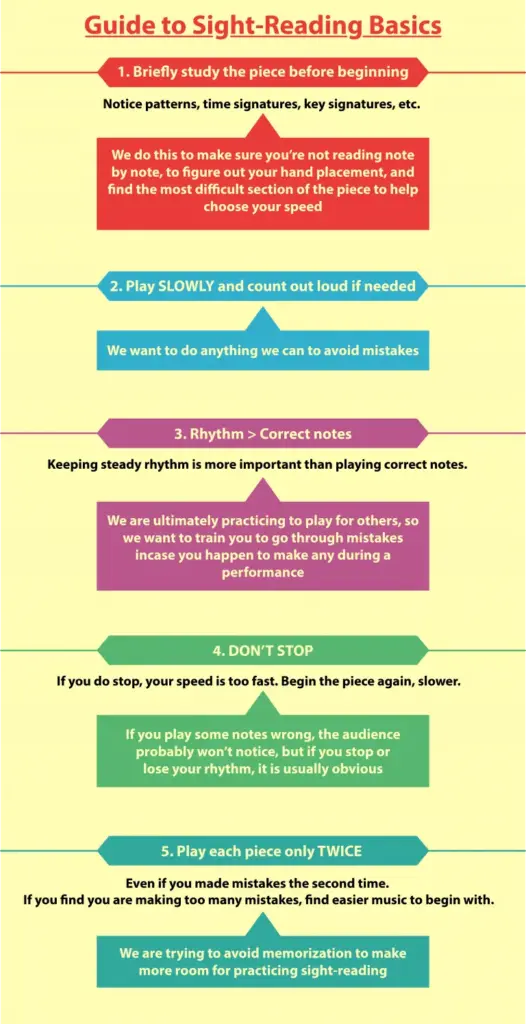
Honor choir auditions rarely require performing an entire piece from start to finish; panels call for specific excerpts to test precision. Instructors should simulate audition conditions by starting students at arbitrary measures within the score. Crucially, students must be trained in error recovery: if a pitch or entrance is missed, the singer must maintain the internal rhythm, scan ahead, and lock back into the score on the next available beat rather than stopping the performance.
Summary
The honor choir audition process remains an essential crucible for developing young musicians. By addressing the root causes of track dependency and enforcing practice habits centered on self-reliance, music educators can ensure that students enter the audition room not merely as well-rehearsed mimics, but as confident, independent musicians equipped for lifelong artistic success.