
By David Salazar | Editor-in-Chief
Published in partnership with investigative cultural desks
Executive Overview
In a dramatic and unprecedented escalation of an ongoing culture war, President Donald J. Trump announced via Truth Social that the historic John F. Kennedy Center for the Performing Arts will close its doors immediately. Citing a combination of "safety reasons" and the imperative to begin comprehensive "Reconstruction," the abrupt shuttering of one of the nation’s premier cultural institutions marks a stunning milestone in Trump’s second-term domestic agenda.
However, beneath the administration’s stated concerns regarding structural upkeep lies a much more contentious battleground: a high-stakes legal and political struggle over the naming rights of the federal monument. The President’s announcement explicitly conditions the execution of the multi-million-dollar renovation project on a favorable legal outcome from the D.C. Circuit Court regarding his push to affix his own name to the institution. Should the federal courts rule against him, Trump stated, the reconstruction will simply not take place.
This latest development arrives against a tumultuous backdrop of compounding national pressures. While the administration remains fixated on the architectural branding of a shuttered performing arts center—following a sustained period of friction that has alienated or financially strained resident companies like the Washington National Opera and the National Symphony Orchestra—the United States finds itself embroiled in a volatile foreign conflict with Iran. Domestically, the reverberations of this geopolitical friction are acutely felt by ordinary citizens: gas prices have surged past $4 a gallon, marking a staggering 40 percent increase since the onset of the conflict, while household grocery budgets continue to swell under the weight of aggressive federal tariffs.
The abrupt closure of the Kennedy Center is no longer merely a localized dispute over real estate and commemoration; it has crystallized into a defining paradox of the current political landscape, juxtaposing high-profile culture-war maneuvering against profound economic and geopolitical instability.
Detailed Chronology: The Kennedy Center Naming Saga
To understand the sudden, immediate shuttering of the Kennedy Center, one must trace the timeline of a naming dispute that has rapidly accelerated into a constitutional and administrative standoff.
The Push for Memorialization
The friction began early in Trump’s second term when administration officials and congressional allies floated proposals to formally associate the 45th and 47th President’s name with premier federal landmarks in the nation’s capital. The John F. Kennedy Center for the Performing Arts, established by a bipartisan act of Congress in 1958 as a living memorial to the assassinated 35th president, quickly emerged as the focal point of this campaign.
Proponents of the rebranding argued that the sweeping revitalization efforts planned for the complex warranted a modernization of its identity. Critics and descendants of the Kennedy family, however, viewed the maneuver as a partisan intrusion upon a cherished national monument dedicated to public service and the arts.
The Judicial Intervention
The standoff reached a critical legal threshold hours before the sudden closure announcement, when a federal district judge formally blocked the administration’s efforts to rename or install presidential memorials bearing Trump’s moniker at the venue. In a definitive and unambiguous ruling, the court declared:
"Simply put, Defendants cannot install memorials for President Trump or anyone or anything else at the Kennedy Center without Congress’s blessing."
The ruling underscored the fundamental separation of powers, reminding the executive branch that federal monuments established by statutory law cannot be unilaterally repurposed or rebranded via executive fiat or board-level maneuvering alone.
The Retaliation and Closure Decree
Rather than accepting the judicial check, the administration pivoted swiftly. Within hours of the unfavorable federal ruling, President Trump took to Truth Social to issue his directive. Citing "safety reasons" and the launch of a massive, complex "Reconstruction" project, the President ordered the immediate closure of the building.
Crucially, the President’s statement laid bare the transactional nature of the shutdown. He asserted that the renovation work—for which he claimed to have raised "$17 Million Dollars" to keep the center "afloat"—is legally and logistically contingent upon the D.C. Circuit Court overturning the lower court’s decision.
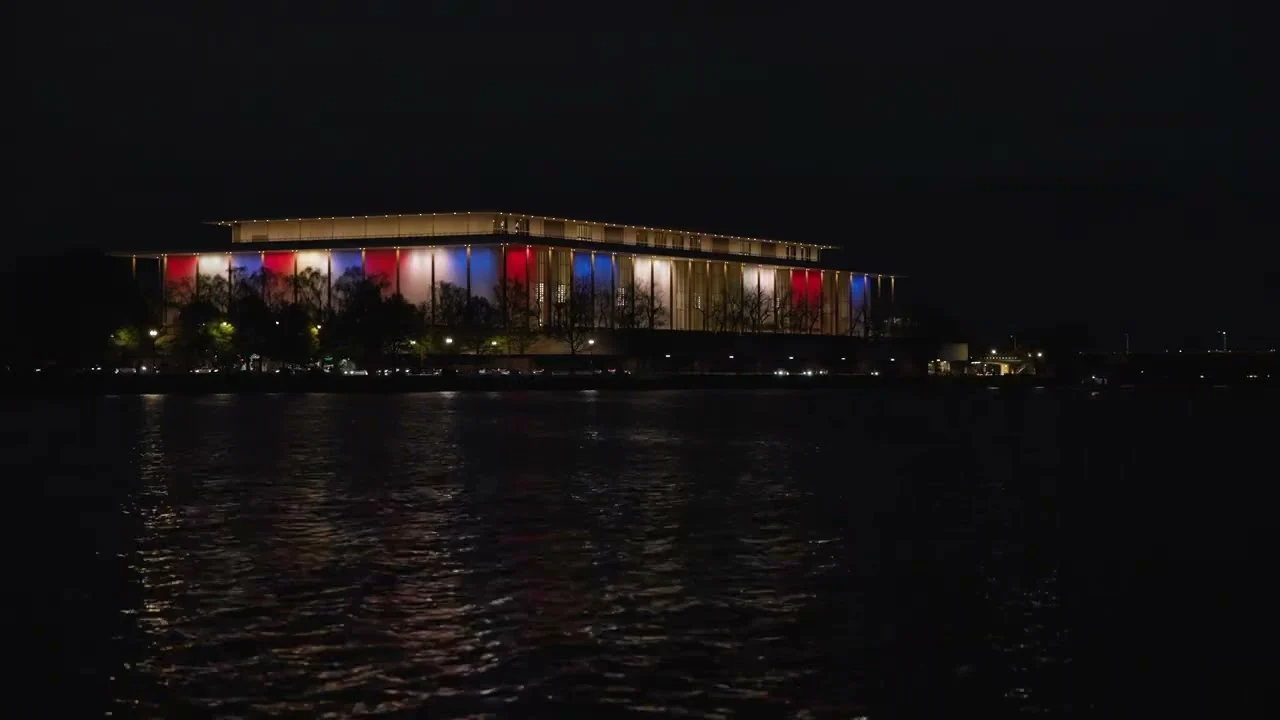
"If the ruling was a negative one," Trump noted, referencing his year-long quest to place his name tag on the building, "then the Reconstruction and Renovation of The Kennedy Center will not take place." Furthermore, the administration signaled an immediate appeal to the Supreme Court to vacate the federal injunction, setting the stage for a landmark legal battle over executive authority and federal memorialization.
Supporting Context & Metrics: Arts Policy and Economic Realities
The closure of the Kennedy Center does not occur in a vacuum; it is the culmination of years of tension between federal arts policy and the current administration’s broader fiscal and cultural philosophies.
The Assault on Public Arts Funding
Despite occasional rhetorical flourishes regarding national heritage, both of Trump’s presidential terms have been characterized by aggressive attempts to dismantle federal support for the arts. Most notably, successive federal budgets proposed by the administration have sought to completely eliminate the National Endowment for the Arts (NEA).
Arts advocates have repeatedly warned that gutting the NEA delivers a devastating blow not just to major symphonies and opera houses, but to grassroots community arts education programs across all fifty states. Critics argue that the administration’s simultaneous weaponization of the Kennedy Center’s governance and its systematic defunding of federal cultural agencies point to a consistent disregard for the sustaining infrastructure of American arts and letters.
Financial Strain on Resident Institutions
Prior to the abrupt closure decree, the Kennedy Center’s operational ecosystem was already under immense strain. Reports surfaced detailing how premier resident organizations—such as the Washington National Opera and the National Symphony Orchestra—had been pushed to the financial brink or forced to contemplate departures due to shifting institutional priorities, administrative friction, and escalating operational hurdles.
The infusion of $17 million cited by the President, while framed as a rescue package, has done little to assuage the fears of artists, administrators, and patrons who view the current leadership as hostile to the independent artistic integrity that the center was chartered to protect.
The Macroeconomic and Geopolitical Backdrop
Perhaps the most striking aspect of the Kennedy Center saga is the stark contrast between the administration’s localized, high-profile cultural battles and the severe macroeconomic challenges facing the American public.
- The Iran Conflict and Energy Markets: The United States remains embroiled in an active military engagement with Iran, casting a long shadow over stability in the Strait of Hormuz—a vital global energy chokepoint.
- Surging Gas Prices: Directly tied to the conflict in the Middle East, national average gas prices have climbed above $4 per gallon, representing a punishing 40 percent surge since the inception of military operations.
- Inflation and Tariffs: Simultaneously, the average American consumer continues to grapple with escalating grocery and retail prices. Economists attribute these persistent inflationary pressures largely to sweeping federal tariff policies enacted during Trump’s second term, which have disrupted supply chains and increased the cost of imported goods.
Against this sobering landscape of war, inflation, and strained household budgets, the spectacle of a President shutting down a national performing arts center over a dispute regarding his own name has drawn sharp bipartisan criticism, highlighting a profound disconnect between executive priorities and the daily realities of the citizenry.
Official Statements and Institutional Reactions
The sudden shuttering has elicited swift and condemnation-laced responses from legal scholars, arts organizations, and congressional watchdogs.
Legal analysts have pointed out that closing a major federal building under the guise of "safety and reconstruction" immediately following a court defeat strongly implies a pretextual use of executive power. Constitutional law experts note that while the executive branch possesses broad administrative authority over federal properties, wielding that authority to punish a legal setback or coerce a favorable judicial outcome invites severe constitutional scrutiny.
Meanwhile, representatives for the Kennedy Center’s unions, stagehands, musicians, and administrative staff expressed profound shock at the sudden displacement. With the doors locked immediately, hundreds of cultural workers face sudden uncertainty regarding their employment, scheduled performances, and the preservation of historic production assets housed within the facility.
Future Outlook: What Lies Ahead for the Cultural Landmark?
As the legal dust settles from the initial court battles, several critical questions remain regarding the future of the John F. Kennedy Center for the Performing Arts:
- The Appellate and Supreme Court Battles: All eyes now turn to the D.C. Circuit Court and potentially the Supreme Court. The judiciary will soon decide whether executive discretion extends to the renaming of congressionally chartered memorials. A ruling against the administration will test whether Trump follows through on his threat to permanently abandon the pledged renovations.
- The Fate of Resident Companies: With the building physically closed, major artistic anchors like the National Symphony Orchestra and the Washington National Opera must scramble to secure alternative venues in the Washington, D.C., metropolitan area to fulfill their artistic seasons and contractual obligations.
- The Broader Cultural Fallout: The saga has permanently altered the discourse surrounding public monuments and political ego in the 21st century. Whether the Kennedy Center emerges from this crisis with its historical identity intact or bearing a new, politically contested moniker will serve as a bellwether for the preservation of federal cultural institutions in an era of deepening polarization.
Ultimately, the closure of the Kennedy Center stands as a sobering monument to a fractured moment in American public life—where the ambitions of a single leader take precedence over the continuity of national culture, even as the nation navigates profound economic and global perils.