
Executive Overview
For over four decades, Wynton Marsalis has stood as an indomitable pillar of American culture, embodying the rare convergence of supreme virtuosity, rigorous scholarship, and visionary institutional leadership. As he is named Lincoln Center’s Visionary Artist—following in the illustrious footsteps of Terence Blanchard (2023), Rubén Blades (2024), and Jeanine Tesori (2025)—Marsalis prepares to close a monumental chapter in his career. He has officially announced that he will step down as the artistic director of Jazz at Lincoln Center (JALC) at the conclusion of the upcoming season.
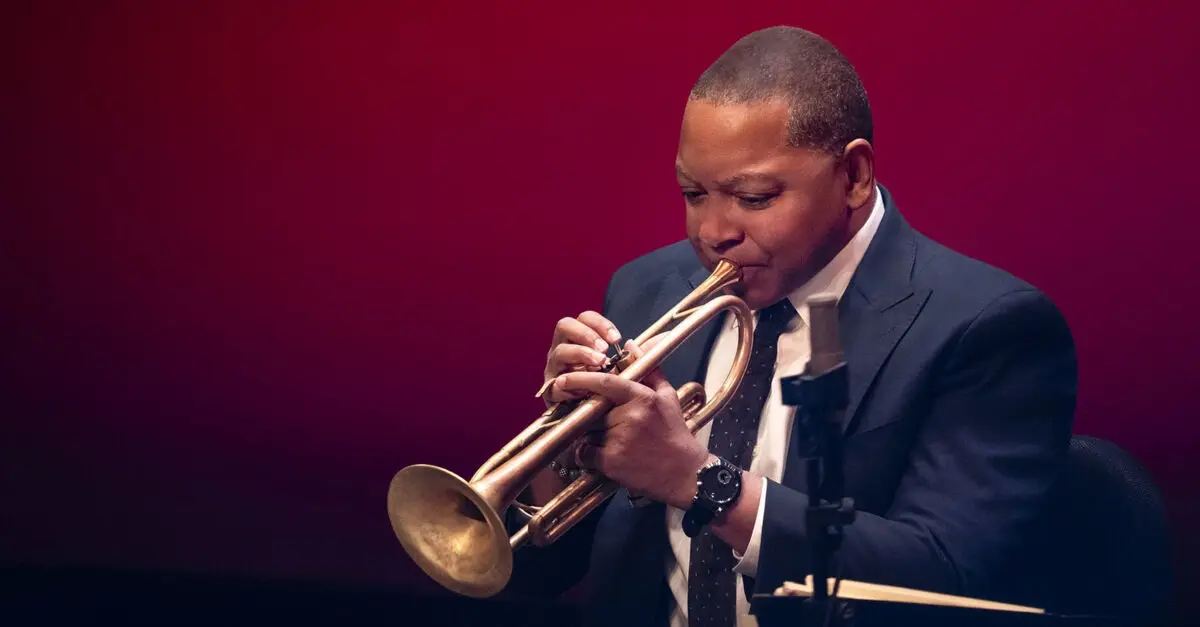
This transitional moment is not merely a passing of the torch; it is an invitation to evaluate a sprawling, paradigm-shifting legacy. Marsalis has worn countless hats throughout his extraordinary journey: world-renowned classical and jazz trumpeter, powerhouse bandleader, prolific composer, tireless educator, and foundational architect of both Jazz at Lincoln Center and the Juilliard jazz program, which proudly celebrates its 25th anniversary this season.
The upcoming season, aptly titled Wynton: Come Home, serves as a four-decade retrospective of his compositional brilliance, taking over the Rose Theater and Alice Tully Hall with a breathtaking survey of his cross-cultural collaborations, theatrical oratorios, and historical homages. Yet, beyond the notes on the page and the soaring brass melodies lies an even greater contribution: Marsalis’s tireless advocacy for jazz as a distinctly American art form inextricably linked to the democratic experiment. In the words of Shanta Thake, Lincoln Center’s Executive Vice President and Ehrenkranz Chief Artistic Officer, Marsalis "has taken the idea of Jazz at Lincoln Center and built a worldwide foundation for jazz that cannot be shaken." As the United States approaches its semiquincentennial, the story of Wynton Marsalis is, at its core, the story of America itself—complex, improvisational, resilient, and ever-evolving.
Detailed Chronology: From the Crescent City to the Global Stage
Roots in New Orleans and Early Virtuosity
The saga of Wynton Marsalis begins in the fertile cultural crucible of New Orleans, Louisiana. Born into a legendary musical dynasty as the second oldest of six sons to pianist and educator Ellis Marsalis Jr., music was quite literally in his DNA. His older brother, Branford Marsalis, would go on to become a titan of the saxophone, while other siblings—including Delfeayo and Jason—forged formidable careers in the jazz world. Growing up in a household where jazz, blues, and classical music echoed through the hallways, Wynton picked up the trumpet at age six and was performing in local brass bands and funk outfits by his early teens.
His prodigious talent soon demanded a larger canvas. Relocating to New York City in 1979, Marsalis enrolled at the Juilliard School to formally study classical trumpet. It did not take long for the jazz world to take notice. By the early 1980s, he was touring with jazz legend Art Blakey and the Jazz Messengers, quickly establishing himself as a young lion capable of channeling the rich history of the idiom while charting a blazing new path forward. In 1983, at just 21 years old, Marsalis achieved a historic milestone by winning Grammy Awards in both the jazz and classical categories in the same year—a breathtaking feat of versatility that he would repeat the following year.
The Birth of an Institution: Jazz at Lincoln Center
As Marsalis’s international touring career skyrocketed, so too did his commitment to institutionalizing jazz education and performance. In 1987, alongside a dedicated coalition of artists, board members, and arts administrators, he spearheaded a modest jazz concert series at Lincoln Center. What began as a seasonal program rapidly metastasized into a cultural juggernaut.
Under Marsalis’s artistic stewardship, Jazz at Lincoln Center officially became a constituent of the Lincoln Center campus on par with the New York Philharmonic and the Metropolitan Opera—a monumental validation of jazz as high art. In 2004, JALC opened its permanent home, Frederick P. Rose Hall, the world’s first institution specifically designed for jazz performance, education, and broadcast. Featuring the Rose Theater, The Appel Room, and Dizzy’s Club, the venue became the global epicenter of jazz, hosting legends and nurturing prodigies under Marsalis’s watchful eye. Simultaneously, Marsalis co-founded the jazz studies program at The Juilliard School in 2001, forging an academic pipeline that has spent the last quarter-century training the finest young musicians in the world.
Wynton: Come Home and the Final Bow
Now, as Marsalis prepares to transition away from his role as artistic director, the upcoming JALC season honors his monumental impact through a comprehensive retrospective titled Wynton: Come Home. Georgina Javor, Vice President of Concerts and Touring at Jazz at Lincoln Center, notes that the season offers "an incredible overview of his composing career over the past four decades."
The programming unfolds across multiple masterworks:
- October 23–24: From Cuba to the Crescent City, featuring sweeping selections from his groundbreaking suites Ochas and Afro!, highlighting the deep rhythmic and historical ties between Caribbean and New Orleans traditions.
- February 5–6: Portraits of Bards, Titans, and Legends, a literary and musical exploration honoring towering figures of American thought and culture, including Walt Whitman, Mark Twain, and Benjamin Franklin.
- February 10: An Evening with Wynton Marsalis: The Future of Jazz and Democracy at Alice Tully Hall, where Marsalis will deliver a landmark keynote address on leadership, arts administration, and the socio-political imperatives of the art form.
- April 8–10: A revival of his celebrated 2018 satirical oratorio The Ever Fonky Lowdown, starring acclaimed actor Wendell Pierce, which uses music, narration, and drama to dissect modern socio-political anxieties.
- April 30 – May 1: The World in Swing, a dazzling cross-cultural showcase uniting JALC musicians with masters of flamenco, traditional Brazilian music, and classical Arab instrumentation.
Supporting Context & Metrics: The Scale of Marsalis’s Impact
To fully grasp the magnitude of Wynton Marsalis’s career, one must look beyond the critical accolades and examine the quantifiable infrastructure he built. Over the course of four decades, Marsalis has fundamentally reshaped how arts organizations operate, how music is taught, and how global audiences consume jazz.
| Metric / Milestone | Significance |
|---|---|
| 4 Decades of Composition | Spanning classical concertos, multi-movement jazz suites, choral oratorios, and ballet scores. |
| 25th Anniversary of Juilliard Jazz | Co-founded by Marsalis in 2001, the program has graduated generations of elite performers who now populate top-tier bands worldwide. |
| Grammy Achievement | The only artist to win Grammy Awards in jazz and classical categories in the same year (1983 and 1984)—a feat achieved twice. |
| Firsts in Arts Administration | Established Jazz at Lincoln Center as the world’s first standalone institution dedicated exclusively to jazz within a major performing arts center. |
| Global Reach | JALC’s educational programs, including Essentially Ellington, reach tens of thousands of high school students annually across all 50 U.S. states and internationally. |
Marsalis’s influence on education cannot be overstated. Through initiatives like the Essentially Ellington High School Jazz Band Competition and Festival, he democratized access to jazz charts and masterclasses, ensuring that high school students from rural towns to inner cities could engage directly with the arrangements of Duke Ellington, Count Basie, and other architects of the music. For Marsalis, teaching was never secondary to performing; it was an urgent civic duty.
Official Statements: Voices from Lincoln Center
The announcement of Marsalis stepping down has elicited profound reflections from the leadership of Lincoln Center, who view his tenure as a transformative era for the entire cultural campus.
Georgina Javor, who has collaborated closely with Marsalis for years as Vice President of Concerts and Touring at JALC, emphasizes the sheer urgency that has always driven him:
"It’s in his DNA. He feels so passionately about this music, and it’s so important to him that the music lives, that Duke Ellington, Wayne Shorter, and John Coltrane, along with works by newer composers, continue to be performed globally. He’s driven by this mission."
Javor also underscores the intellectual weight of Marsalis’s off-stage contributions, pointing to his upcoming keynote address at Alice Tully Hall:
"His contributions as a scholar and educator are as important as his music. You’ll get to hear from him directly his thoughts on the world, on leadership, and on arts administration. The artistic legacy of jazz is something he feels strongly about."
Shanta Thake, Lincoln Center’s Executive Vice President and Ehrenkranz Chief Artistic Officer, frames Marsalis’s career as the physical and philosophical embodiment of the Lincoln Center campus itself:
"He personifies the promise of Lincoln Center that our institutions coexist and that our artists and audiences can move between them. We learn and grow together because we are in proximity with each other. Wynton has taken the idea of Jazz at Lincoln Center and built a worldwide foundation for jazz that cannot be shaken. The connections that he makes between genres, how he works with artists from JALC, the New York Philharmonic, and Juilliard, is a phenomenal attribute."
Furthermore, Thake notes the poetic timing of this transition as the United States approaches its semiquincentennial (250th anniversary):
"Wynton is a big believer in the American idea, and how jazz teaches us to be American. You can’t untangle the stories of America without thinking of the arts in America."
Future Outlook: A Living Legacy and the Next Generation
As Wynton Marsalis prepares to relinquish his title as artistic director of Jazz at Lincoln Center, the overarching question facing the institution is how to build upon a foundation so thoroughly shaped by one man’s titanic personality and vision. Yet, those closest to him insist that Marsalis’s departure is not an ending, but a graduation into a new phase of global cultural statesmanship.
The institutional machinery he established—from Frederick P. Rose Hall to the Juilliard jazz program and the sprawling educational networks reaching thousands of young musicians—is self-sustaining and robust. The upcoming Wynton: Come Home season serves as a blueprint for how his repertoire will continue to be studied, performed, and reinterpreted by future generations of artists who refuse to let the history of American music gather dust.
Marsalis leaves behind a blueprint for cultural leadership that insists excellence and accessibility are not mutually exclusive, and that high art can—and must—speak directly to the social and political realities of its time. Whether through his blistering trumpet solos, his intricate orchestral scores, or his eloquent advocacy for democracy, Wynton Marsalis has ensured that the heartbeat of jazz will echo through the halls of Lincoln Center—and across the global consciousness—for generations to come.
For more information on the upcoming Wynton Marsalis programs and ticketing details for the 2024–2025 season, visit LincolnCenter.org.