
Executive Overview
Thirty years have passed since jazz critic Mark Gilbert first penned his insightful review for Jazz Journal in October 1996, shedding light on a profound and deeply reflective artistic pivot by Mike Mainieri—best known globally as the dynamic frontman and visionary force behind the pioneering contemporary jazz fusion ensemble Steps Ahead.
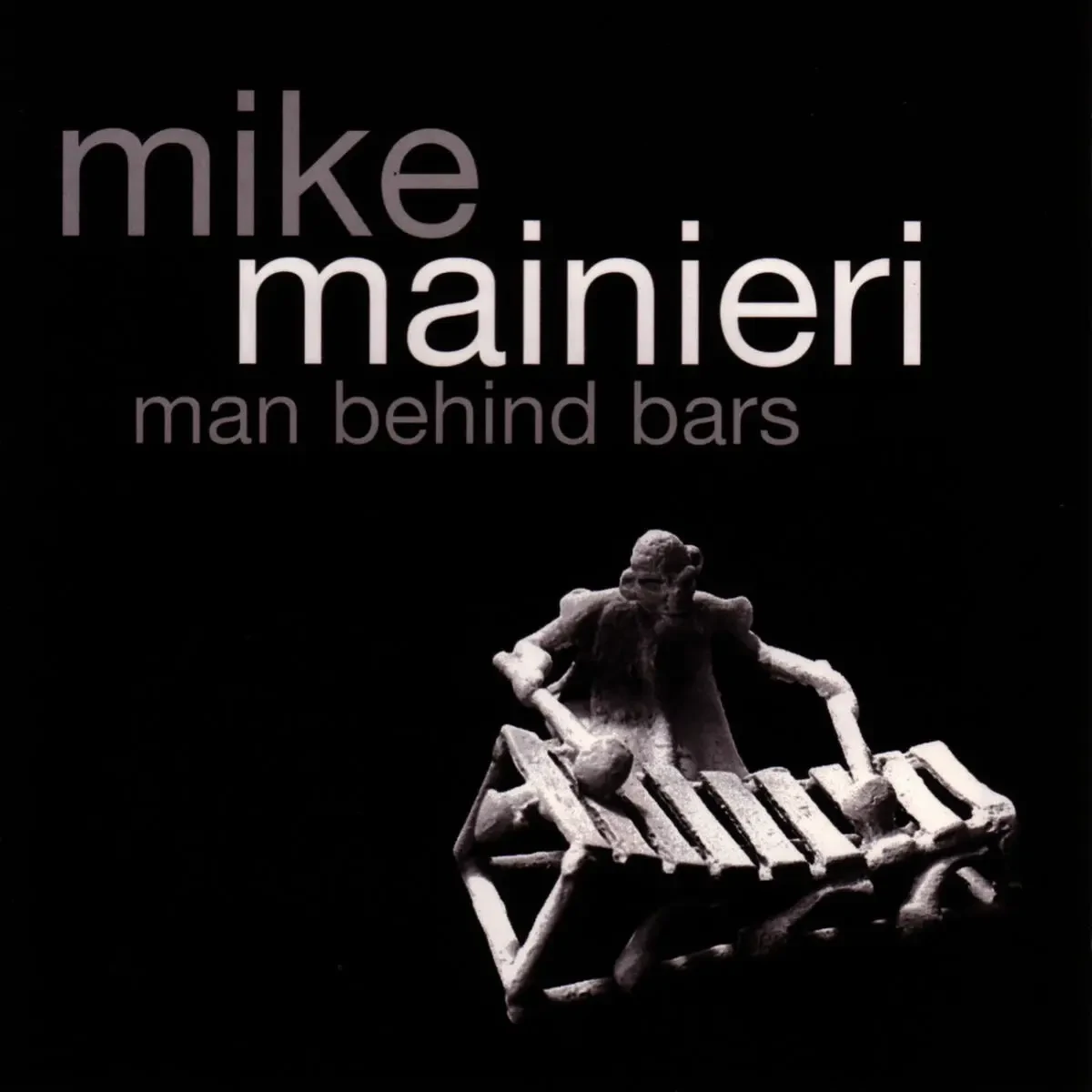
At a juncture in his career when audiences and critics alike had grown accustomed to the high-octane, electric-heavy, polyrhythmic fireworks of his group work, Mainieri startled the jazz community with a sequence of fiercely intimate, solo-crafted projects. Following closely on the heels of his mould-breaking 1995 release, An American Diary, Mainieri unveiled an even more stripped-down, introspective opus: Man Behind Bars (NYC Records, NYC 6019 2).
This comprehensive retrospective examines the cultural, technical, and musical significance of Man Behind Bars. By performing every single note, rhythm, and texture across the entire recording—layering vibraphones, concert marimbas, bass marimbas, xylophones, chimes, MIDI vibes, piano, drums, and auxiliary percussion through multi-tracking—Mainieri engineered a singular, masterclass-level study in self-reliance.
While contemporaneous reviewers noted minor aesthetic compromises inherent to mid-1990s home-studio overdubbing technologies, the overarching consensus remains steadfast: Man Behind Bars captured one of the twentieth century’s premier tuned-percussion virtuosos at the height of his compositional maturity, trading collective combustion for solitary, poetic introspection.
Detailed Chronology: The Evolution of Mainieri’s Introspective Era
To fully appreciate the arrival of Man Behind Bars in the mid-1990s, one must retrace the historical trajectory of Mike Mainieri’s career—a journey spanning from youthful prodigy to avant-garde trailblazer, fusion icon, and, ultimately, elder statesman of modern mallet percussion.
1. Early Roots and the Avant-Garde (1940s–1960s)
Born in the Bronx, New York, in 1938, Mainieri picked up the vibraphone at a remarkably young age, quickly establishing himself as a child prodigy. By his teens, he was touring with jazz royalty, most notably joining alto saxophone giant Paul Desmond and later working extensively with Buddy Rich’s orchestra throughout the early 1960s.
However, Mainieri was never content simply to rest within the confines of mainstream post-bop orthodoxy. During the turbulent cultural shifts of the late 1960s, he formed Jeremy and the Satyrs alongside flutist Jeremy Steig. This genre-blurring collective fused jazz improvisation with rock aggression, blues, and proto-fusion sensibilities, laying down a blueprint for the sonic experimentation that would define Mainieri’s subsequent decades.
2. The Steps Ahead Phenomenon (1970s–1980s)
By the late 1970s and early 1980s, Mainieri was operating at the epicentre of the fusion movement. He co-founded the band Steps (later renamed Steps Ahead), a powerhouse lineup that featured luminaries such as saxophonist Michael Brecker, pianist Don Grolnick, bassist Eddie Gomez, and drummer Peter Erskine.
Steps Ahead became an international phenomenon, celebrated for its virtuosic execution, complex harmonic frameworks, and high-energy live performances. Mainieri’s stewardship of the group cemented his reputation as a master of modern ensemble dynamics, pushing the acoustic and electronic capabilities of the vibraphone to their absolute limits through the pioneering use of MIDI controllers and synthesisers.
3. The Acoustic Reawakening and Solo Explorations (1990s)
As the 1990s unfolded, many jazz artists from the fusion era began to re-engage with acoustic traditions, valuing historical continuity and linear melodic exploration over sheer volume and electronic manipulation. For Mainieri, this manifested as a desire to strip away the communal safety net of a touring band and confront his instrument—and his musical identity—in total solitude.
The first major fruit of this philosophy was An American Diary (1995), a project that recast classic American songbook and jazz compositions through a lens of stark, chamber-jazz intimacy. Encouraged by the artistic freedom of that recording, Mainieri immediately pushed the concept further. Abandoning even the comforting collaborative dialogue of guest soloists, he retreated to his studio to build an entire album from the ground up, playing every instrument himself. The result was Man Behind Bars.
Supporting Context & Metrics: Decoding Man Behind Bars
Released circa 1995 on Mainieri’s own NYC Records label (catalog number NYC 6019 2), Man Behind Bars stands as a monumental technical and artistic undertaking. Below is the complete original tracklisting and instrumental breakdown as documented in the mid-1990s jazz press:
Tracklisting and Compositional Overview
- ESP (Wayne Shorter) – 5:02 (approx.)
- Trinary Motion (Mike Mainieri)
- Push-Pull (Mike Mainieri)
- Equinox (John Coltrane)
- Satyr Dance (Mike Mainieri)
- Momento No. 1 (Mike Mainieri)
- The Nearness Of You (Hoagy Carmichael / Ned Washington)
- Momento No. 2 (Mike Mainieri)
- All The Things You Are (Jerome Kern / Oscar Hammerstein II)
- Binary Motion (Mike Mainieri)
(Total Album Duration: 50 minutes, 32 seconds)
Instrumentation and Production Anatomy
Mainieri’s credits on the album read like an inventory of a percussionist’s dream warehouse:
- Melodic & Harmonic Percussion: Vibraphone, concert marimba, bass marimba, xylophone, chimes, MIDI vibes, piano.
- Rhythmic Foundation: Acoustic and electronic drums, auxiliary percussion.
Operating as a one-man orchestra, Mainieri relied heavily on the multi-tracking technology available during the mid-1990s. While state-of-the-art for home and private studio environments at the time, this approach introduced distinct sonic characteristics that critics were quick to parse.
As Mark Gilbert astutely observed in his 1996 Jazz Journal critique, “Very occasionally this gives a hint of 4-track bedroom production, the rhythm a little stiff and the sound lacking a certain depth, but the concept and musicianship are excellent.”
Rather than detracting from the record, these slight mechanical limitations serve as a sonic time capsule of 1990s digital/analog hybrid production. They emphasize the organic human sweat behind the overdubbing process; one can practically visualize Mainieri moving meticulously from the vibraphone bars to the marimba keys, and finally to the drum kit, meticulously constructing complex counterpoint layer by layer.
Deep-Dive Track Analysis
1. Opening with Shorter: ESP
Mainieri sets the tone for the entire album with a radical reimagining of Wayne Shorter’s post-bop classic ESP. Originally recorded by the Miles Davis Second Great Quintet as a swift, labyrinthine burner, Mainieri slows the tempo to a crawl, reimagining the piece as a delicately hammered, hypnotic slow samba. By stripping the composition of its frantic energy, he exposes the sublime, melancholic beauty of Shorter’s harmonic architecture, establishing the album’s meditative thesis statement from the opening notes.
2. The Resourcefulness of Tradition: All The Things You Are
Jazz standards are often treated as battlegrounds for virtuosic speed and harmonic exhaustion. Mainieri approaches Jerome Kern and Oscar Hammerstein II’s All The Things You Are with calculated subterfuge. The tune is expertly disguised beneath veiled harmonic voicings and shifting rhythmic subdivisions. It takes the listener several bars to realize which standard is unfolding, showcasing Mainieri’s ability to make familiar terrain sound utterly alien, fresh, and intellectually stimulating.
3. The Groove Engine: Satyr Dance
If the album leans heavily into ambient, poetic reflection, Satyr Dance provides the vital pulse and rhythmic invigoration. Driven by a modal groove with subtle hip-hop rhythmic undercurrents, this track serves as a bridge to Mainieri’s illustrious past—specifically invoking the spirit of his 1960s boundary-pushing ensemble Jeremy and the Satyrs. Featuring what is widely regarded as the finest jazz soloing on the record, Satyr Dance proves that Mainieri’s meditative late-career pivot had not diluted his capacity for visceral, head-nodding groove.
Official Statements & Critical Reception
Upon its release, Man Behind Bars elicited fascinating discussions among jazz critics, who were forced to recalibrate their understanding of Mainieri not merely as a bandleader of electric fusion titans, but as an intimate chamber artist capable of profound nuance.
In his original October 1996 assessment for Jazz Journal, Mark Gilbert wrote:
Following in the footsteps of his mould-breaking An American Diary, the cleverly titled Man Behind Bars gives us more of the new, sensitive Mike Mainieri, the style typified by the opening track, a delicately hammered slow samba reading of Wayne Shorter’s ESP… Even the most obviously poetic tracks combine to create a stimulating new perspective on one of today’s leading exponents of tuned percussion.
Reflecting on the overarching philosophy of the album years later, industry peers and critics alike noted that Man Behind Bars represented a crucial act of artistic purification. Stripping away the towering amplifier stacks and synthesizers of the Steps Ahead era allowed Mainieri to focus purely on the vibrational essence of wood, metal, felt, and mallets. The title itself—Man Behind Bars—offers a brilliant double entendre: a literal reference to the metal and wooden bars of his percussion instruments, and a metaphorical nod to the self-imposed monastic discipline required to record an entire multi-instrumental jazz album in total isolation.
Future Outlook: The Enduring Legacy of Man Behind Bars in Modern Jazz
As we look back across the thirty-year chasm separating the 1996 publication of Gilbert’s review from the present day, the historical stature of Man Behind Bars has only grown more luminous. In an era where modern bedroom producers routinely construct complex jazz, lo-fi, and neo-classical records using Digital Audio Workstations (DAWs) and virtual instruments, Mike Mainieri’s 1995 endeavor stands as an analog-era monument to true multi-instrumental dedication. He did not program MIDI files on a computer screen; he physically struck every marimba bar, bowed every vibraphone note, and physically laid down every drum groove.
For contemporary mallet percussionists—such as Joel Ross, Stefon Harris, and Warren Wolf—albums like Man Behind Bars serve as essential textbooks on texture, space, and courage. Mainieri demonstrated that the vibraphone and marimba are not merely rhythm-section embellishments or fast-fingered solo vehicles, but complete harmonic and polyphonic universes capable of sustaining an entire 50-minute artistic statement without external accompaniment.
Furthermore, Mainieri’s career trajectory offers a valuable blueprint for veteran artists navigating the twilight of their primary commercial peaks. Rather than endlessly chasing past commercial glories or fossilizing within a legacy fusion tribute act, Mainieri used maturity as fuel for introspection.
Thirty years after Mark Gilbert first introduced readers to the "new, sensitive Mike Mainieri," Man Behind Bars remains a triumph of solitary craft—a gleaming, mallet-driven sanctuary where one of jazz’s greatest innovators found ultimate freedom by locking himself behind the bars of his own creation.