
Executive Overview
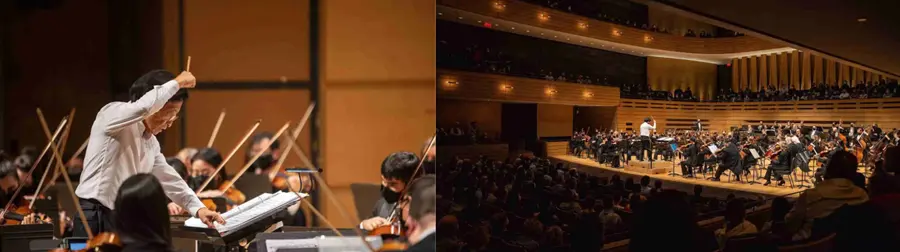
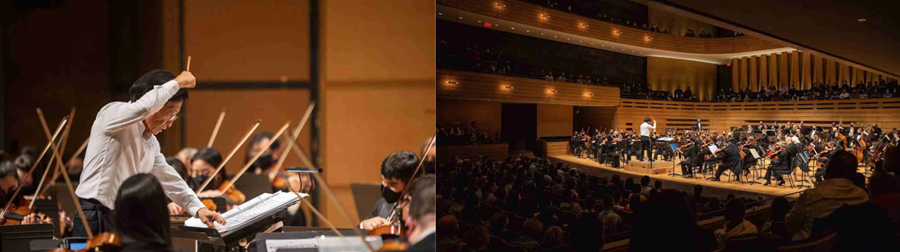
In what is poised to be one of the most monumental classical music events of the Canadian cultural calendar, the Mandle Philharmonic is preparing to mount a towering performance of Gustav Mahler’s Symphony No. 8 in E-flat major, universally known as the "Symphony of a Thousand." Scheduled for November 27 at Toronto’s prestigious Roy Thomson Hall, the concert marks a watershed moment for the ensemble and its visionary founder and music director, Mandle Cheung. For Cheung, this performance represents not only his debut public conducting engagement with this gargantuan masterpiece but also a definitive statement of artistic ambition for the orchestra he built.
Mahler’s Eighth Symphony is legendary for its logistical nightmares, emotional weight, and profound philosophical scope. Requiring a massive orchestral footprint, multiple choirs, and an elite roster of vocal soloists, the work pushes the absolute boundaries of what is possible within a concert hall. The Mandle Philharmonic is rising to this formidable challenge by assembling a stellar cast of musicians drawn from Canada’s premier musical institutions—including the Toronto Symphony Orchestra, the Canadian Opera Company, and the National Ballet of Canada—alongside an international tier of world-class vocal soloists.
This comprehensive report examines the anatomy of this upcoming performance, contextualizing the historical weight of Mahler’s composition, detailing the personnel and logistical choreography required to bring the "Symphony of a Thousand" to the stage, and analyzing the broader cultural significance of the event for Toronto’s classical music landscape.
Detailed Chronology: The Road to the "Symphony of a Thousand"
The journey toward the November 27 performance at Roy Thomson Hall is the result of years of meticulous artistic planning, institutional coalition-building, and high-stakes orchestral development.
The Genesis of a Monumental Vision
When Mandle Cheung founded the Mandle Philharmonic, his objective was to create an ensemble capable of tackling the most demanding repertoire in the orchestral canon with uncompromising precision and passion. Over successive seasons, the orchestra steadily built its reputation through disciplined execution and adventurous programming. However, performing Mahler’s Eighth Symphony has long been considered the ultimate crucible for any modern orchestra and conductor.
Preparations for this specific production began well over a year in advance. Given the sheer scale of the forces required—numbering hundreds of instrumentalists and choristers—the scheduling of rehearsals, securing of venue space at Roy Thomson Hall, and the delicate alignment of international soloists’ calendars demanded military-grade precision.
Assembling the Ensemble
A performance of this magnitude cannot rely on standard operational procedures. The Mandle Philharmonic has curated an elite cohort of instrumentalists. While the core of the orchestra features dedicated Philharmonic players, the ranks have been heavily reinforced by virtuosos from Canada’s flagship classical institutions. Musicians from the Toronto Symphony Orchestra, the Canadian Opera Company pit, and the National Ballet of Canada orchestra have crossed institutional lines to unite under Cheung’s baton. This cross-pollination of talent creates a super-orchestra effect, blending deep institutional synergy with the fresh, agile energy of the Mandle Philharmonic.
The Vocal Cadre
Mahler’s score demands soloists who possess not only immense vocal stamina to cut through a massive orchestral texture but also profound interpretive depth to navigate the philosophical poetry of the text. The assembled cast represents a glittering array of vocal talent:
- Sopranos: Hannah Crawford, Lauren Margison, and Mireille Asselin. Each brings a distinct radiance and agile vocal control essential for soaring above the polyphonic storms of Mahler’s vocal writing.
- Altos: Simona Genga and Hillary Tufford, whose rich, anchoring timbres provide the necessary warmth and harmonic gravity.
- Tenor: Freddie Ballentine, tasked with soaring, heroic lines that demand immense endurance and expressive clarity.
- Baritone: Jesse Blumberg, bringing a seasoned, resonant authority to the ensemble.
- Bass: Robert Pomakov, whose commanding foundation completes the octet of vocal soloists.
As the rehearsal schedule hits its final, intense weeks, these artists are locking in the complex interplay between the massive choral bodies and the orchestral sections, preparing for a performance that promises to test the acoustic limits of Roy Thomson Hall.
Supporting Context & Metrics: The Anatomy of Mahler’s Masterpiece
To fully appreciate the gravity of the Mandle Philharmonic’s upcoming concert, one must understand the unique structural, historical, and musical metrics that define Gustav Mahler’s Symphony No. 8.
The Myth and Reality of the "Symphony of a Thousand"
Composed in the summer of 1906 at Maiernigg in southern Austria, the Eighth Symphony was written during a period of immense personal and professional fulfillment for Mahler. He later described the creative process as an act of divine possession, recalling that he was gripped by a mysterious creative impulse the moment he stepped into his composing hut.
While the subtitle "Symphony of a Thousand" was largely a promotional stroke of genius invented by Mahler’s concert agent Emil Gutmann for the triumphant Munich premiere in 1910, it stuck because it accurately conveys the sheer physical scale of the work. The premiere featured 858 choristers and 171 instrumentalists—totaling over a thousand performers. While modern performances occasionally scale down the numbers depending on venue dimensions, the sonic footprint remains overwhelmingly vast.
Orchestral and Choral Metrics
The score calls for an expanded orchestra that dwarfs standard Romantic-era instrumentation:
- Woodwinds: Piccolos, flutes, oboes, English horns, clarinets, E-flat clarinet, bass clarinets, bassoons, and contrabassoons.
- Brass: An immense horn section (often numbering eight or more), trumpets, trombones, and tuba, frequently augmented by offstage brass bands to create spatial acoustic effects.
- Percussion: Timpani, bass drum, cymbals, tam-tam, triangle, glockenspiel, and tubular bells.
- Keyboards: Celesta, piano, harmonium, and organ.
- Strings: A vastly expanded section of violins I and II, violas, cellos, and double basses, often requested to play in divided sections (divisi) to create shimmering, ethereal textures.
- Choirs: Two large mixed adult choirs and a children’s choir.
Structural Innovation: Sacred Meets Secular
Unlike traditional four-movement symphonies, Mahler’s Eighth is structured in two distinct parts that bridge medieval Christian mysticism with modern secular humanism:
- Part I: Veni, creator spiritus ("Come, Creator Spirit"): Set to a 9th-century Latin Christian hymn attributed to Rabanus Maurus, this movement is an explosive, unbridled invocation of divine creative energy. It functions structurally like a massive sonata-allegro form, driven by relentless counterpoint and blazing vocal declarations.
- Part II: The Final Scene of Goethe’s Faust: This expansive second part sets the closing lines of Goethe’s dramatic poem, exploring themes of redemption, eternal feminine grace, and the spiritual ascent of the human soul. Here, Mahler shifts from ecclesiastical fervor to an ethereal, contemplative mysticism, blending orchestral color, operatic vocal lines, and choral grandeur into a transcendent climax.
Official Statements and Artistic Philosophy
In an official press release surrounding the announcement of the concert, Mandle Cheung offered deep insight into why he chose this specific work for his public debut conducting the piece, articulating a philosophy that elevates the performance from a mere concert to a spiritual and cultural milestone.
"The significance of the Eighth Symphony is far greater than the enormous orchestration in Mahler’s score," Cheung stated.
Reflecting on the historical moment of the work’s creation in 1906, Cheung noted that Mahler was acutely aware he was breaking away from all established musical paradigms. He quoted Mahler’s famous, visionary declaration about the piece:
"Try to imagine the whole universe beginning to ring and resound. There are no longer human voices, but planets and suns revolving."
Expanding upon these words, Cheung emphasized the metaphysical ambition embedded in the notes:
"His words reveal the expanse of his imagination, and not merely what the power of a thousand musicians could produce. Ultimately, the Eighth is an epic declaration about humanity participating in something greater than the sum of its parts. It’s about affirmation, transcendence, and redemption."
In concluding his remarks, Cheung issued a direct invitation to the cultural community of Toronto:
"The Mandle Philharmonic welcomes Torontonians to join us on November 27 at Roy Thomson Hall to experience this soul-stirring event with us."
This statement underscores the orchestra’s mission: to democratize monumental art, inviting audiences not merely to listen, but to participate in a collective, transformative emotional experience.
Future Outlook: Implications for Toronto’s Classical Music Scene
The staging of Mahler’s Symphony No. 8 by the Mandle Philharmonic is more than a single high-profile evening of music; it represents a potential inflection point for the classical music ecosystem in Toronto and across Canada.
Elevating Independent Orchestral Standards
For decades, major works of this scale have been the exclusive domain of Canada’s oldest and most heavily subsidized institutions, such as the Toronto Symphony Orchestra. By stepping into this arena, the Mandle Philharmonic demonstrates that independent, entrepreneurial orchestras can successfully mobilize complex artistic forces, secure premier venues like Roy Thomson Hall, and attract world-class talent. This success challenges the traditional hierarchy of classical music production, proving that artistic agility and visionary leadership can rival institutional longevity.
Cultural Resonance in a Post-Pandemic Era
The thematic core of Mahler’s Eighth—redemption, collective unity, and the transcendence of human suffering—carries profound resonance for contemporary audiences. Coming out of years of societal fragmentation and isolation, the sight and sound of hundreds of musicians and choristers uniting to create a single, harmonious universe of sound offers a powerful metaphor for community healing. Cultural analysts anticipate that the November 27 concert will serve as a vital communal gathering point for Toronto’s arts patrons, critics, and music lovers.
Setting a New Benchmark for the Mandle Philharmonic
Looking beyond November 27, the successful execution of the "Symphony of a Thousand" will permanently elevate the Mandle Philharmonic’s artistic profile. Having conquered one of the most notoriously difficult scores in Western music history, the orchestra establishes a new baseline for its future programming. Audiences and critics alike will be watching closely to see how Cheung and his ensemble follow up on a debut performance of such staggering ambition.
As the date draws nearer, anticipation continues to build across the city. Rehearsals are reaching a fever pitch, tickets are moving briskly, and the classical music community is bracing itself for an evening that promises to test the acoustic rafters of Roy Thomson Hall and linger long in the collective memory of Toronto’s cultural history.