
Executive Overview
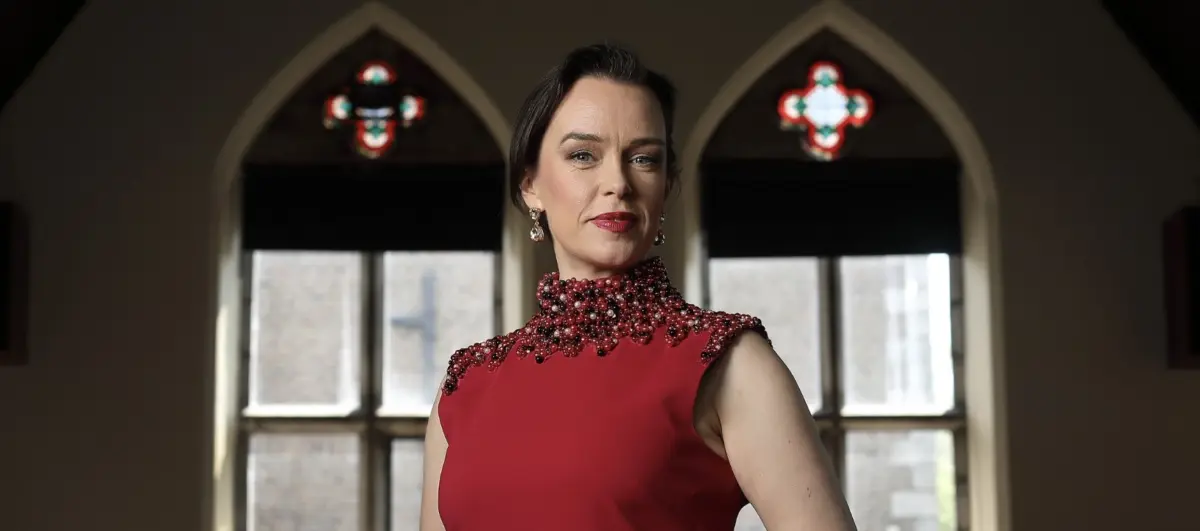
In the upper echelons of classical music, versatility is often touted as a virtue, but few artists embody it with the seamless dexterity of Irish mezzo-soprano Sharon Carty. Balancing a thriving international performance career with the rigorous demands of artistic directorship—specifically at the helm of the Sligo Baroque Festival—Carty has carved out a unique, multifaceted path in the contemporary arts landscape. Her journey defies the conventional, linear trajectory of classical vocalists, instead resembling an intricately assembled jigsaw puzzle where pedagogy, community engagement, and high-art performance intersect.
This profile explores Carty’s dynamic career trajectory, her experiences managing regional cultural institutions, and her critically acclaimed portrayal of Mary in Irish National Opera’s production of Testament. With a score by Tarik O’Regan and a libretto adapted from Colm Tóibín’s provocative novel The Testament of Mary, the opera has ignited both artistic acclaim and public debate. As Carty prepares to reprise the role in Dublin this October and looks ahead to upcoming engagements—including her debut as Mistress Page in Otto Nicolai’s The Merry Wives of Windsor at the Longborough Festival—she remains a defining voice in Irish and European classical music.
Detailed Chronology: From the Classroom to the International Stage
To understand Sharon Carty’s current prominence, one must trace a career path that began far from the glittering opera houses of Europe. Carty’s professional origin story is rooted in education. Trained initially as a teacher, she entered the professional singing sphere later than many of her peers. While this initial delay might have daunted others, Carty views her background as an indispensable asset that continues to inform her artistic philosophy.
The Formative Years and the Wexford Breakthrough
Carty’s early career required her to play professional catch-up, balancing vocal training with the development of a remarkably flexible instrument. Her stylistic adaptability—equally at home in intimate lieder recitals, expansive oratorios, and diverse operatic genres—quickly caught the attention of regional and international directors.
A pivotal milestone in her career occurred eight years ago when she appeared in William Bolcom’s satirical opera Dinner at Eight at the 2018 Wexford Festival Opera. This performance marked a significant turning point, elevating her profile from a respected national artist to a sought-after presence on European stages, particularly in Italy. Yet, true to her eclectic nature, Carty never restricted herself to traditional operatic staging. Her artistic footprint extends into unexpected territories, including non-singing collaborations with Gamelan music ensembles and extensive community choir projects.
Stepping into Leadership: The Sligo Baroque Festival
Less than two years ago, Carty assumed the role of Artistic Director for the Sligo Baroque Festival, marking her formal entry into institutional leadership. Tasked with steering a festival with a 31-year history, founded originally by Rod Alston and anchored by the Sligo Baroque Orchestra, Carty approached the challenge with the collaborative mindset honed through her dual passions: music and sport.
Her inaugural festival year in 2023 was widely regarded as a resounding success. By establishing a dedicated festival chorus that triumphantly performed Vivaldi’s Gloria and drawing the largest gala concert audience in the festival’s history, Carty proved her administrative mettle. Now, she is preparing for the late-September iteration of the festival, which centers on German Baroque music, featuring Handel’s formidable Dixit Dominus, Bach masterclasses led by tenor Simon Bode on the St Matthew Passion, and Telemann’s whimsical Gulliver Suite.
Supporting Context & Metrics: The Mechanics of a Hybrid Career
Balancing the responsibilities of an artistic director with the rigorous demands of a freelance operatic career requires meticulous time management and psychological compartmentalization. For Carty, the transition from collaborator to leader involved acquiring an entirely new set of professional competencies.
The Administrative Architecture
While freelance performance relies heavily on self-preservation and internal focus, artistic direction demands collective orchestration. Carty notes that while her background as a recitalist taught her the art of compromise—such as working intimately with a collaborative pianist—leading a festival introduces complex administrative layers:
- Strategic Planning & Budgeting: Navigating financial parameters and donor allocations.
- Stakeholder Management: Coordinating international artists, technical designers, and local community members.
- Audience Development: Tailoring programming to regional demographics while maintaining uncompromising artistic standards.
To protect her vocal instrument and psychological well-being, Carty enforces strict boundaries. During festival weeks, she deliberately limits her own performance footprint to a single event. "As a performer, you have to be a little bit selfish in order to be able to give the audience your best," she explains. By ring-fencing preparation time, she ensures her vocal health remains uncompromised by administrative stress.
Community Integration and Youth Outreach
A cornerstone of Carty’s vision for the Sligo Baroque Festival is deep community integration. Rather than operating as an insular high-art enclave, the festival actively dismantles barriers to classical music participation.
- Open Choral Rehearsals: Free, accessible events inviting local residents to participate or simply listen.
- Intergenerational Collaboration: The Sligo Baroque Orchestra engages young musicians ranging from early childhood to the early teens.
- The Carne Group Partnership: A newly funded pilot program launching in October aims to establish a dedicated junior choir, creating a sustainable talent pipeline that feeds directly into the main festival chorus.
Official Statements & Artistic Insights: The Anatomy of Testament
One of the most defining artistic achievements of Carty’s recent career is her portrayal of Mary in Testament, a new opera composed by Tarik O’Regan with a libretto by renowned Irish author Colm Tóibín. Following its premiere at the Galway Arts Festival, the production is scheduled for a high-profile reprise in Dublin this October.
Deconstructing the Biblical Narrative
Based on Tóibín’s controversial and introspective novel The Testament of Mary, the opera offers a starkly human, feminist counter-narrative to traditional hagiography. Instead of the serene, idealized icon of medieval and Renaissance art, Carty portrays a woman grappling with profound trauma, isolation, and the terrifying aftermath of her son’s crucifixion.
"I grew up a Catholic and not once did I think about what Mary actually thought about Jesus and what happened to him," Carty reflects. "We wanted to portray a normal woman thrown into this position, and to consider what she might have thought and what she would have said. She is a woman in a very vulnerable position."
Vocal Interpretation and Staging Aesthetics
The production’s aesthetic choices mirror Mary’s psychological state. Set in strict biblical times without modern updates, the visual palette draws inspiration from the Shroud of Turin, utilizing muted, earthy tones alongside Irish linen for the chorus. Mary herself is clad in stark mourning black, her physical movements deliberately slowed to reflect a woman in her mid-50s—an advanced age for the era—moving fluidly between memory and the present.
Musically, the production breaks conventional boundaries. Scored for an intimate ensemble of just seven musicians (cello, violin, viola, clarinet, flute, mandolin, and accordion) integrated directly into the village staging, the score requires specialized vocal techniques.
- Vibratoless Singing: Working closely with the composer and conductor, Carty utilized a stripped-back, vibratoless vocal delivery. This stylistic choice imbues the character with a self-contained, razor-sharp edge, punctuated by sudden, aggressive outbursts born of genuine existential threat.
- Harmonic Shifts: The score moves fluidly from quasi-recitatives and gentle, consonant choral writing to harsh, dissonant textures during the harrowing crucifixion sequence.
Despite opening-night protests from traditionalists uncomfortable with a reimagined narrative, Carty defends the artistic exploration. "Opera is art; it is a fictional take on her as a person… She went through an unbelievably horrific event, and I believe it is a worthwhile thing to explore."
Future Outlook: Sustaining Momentum Across Disciplines
As Sharon Carty looks to the horizon, her professional roadmap reflects an artist operating at the absolute peak of her powers, simultaneously honoring her roots while expanding her institutional and performance boundaries.
In the immediate future, Carty will bring her acclaimed interpretation of Mary back to Dublin audiences this October, closing out the autumn opera season before turning her full attention to the upcoming Sligo Baroque Festival. Beyond her commitments in Ireland, her international footprint continues to expand with anticipation building for her upcoming debut as Mistress Page in Otto Nicolai’s The Merry Wives of Windsor at the Longborough Festival, conducted by Christopher Ward and directed by Anna Morrissey.
Looking further ahead—perhaps a decade down the line—Carty acknowledges that the natural evolution of her voice may prompt a shift toward full-time artistic administration and curation. For now, however, she remains firmly dedicated to the stage. By masterfully weaving together the disparate threads of performance, education, and institutional leadership, Sharon Carty is not merely navigating the modern classical music landscape—she is actively helping to redefine it.