
Executive Overview
Nearly half a decade after the United Kingdom formally exited the European Union, the true economic toll of the geopolitical shift on the creative sector has been laid bare. For years, warnings from musicians, crew members, and industry advocacy groups echoed through Parliament, pointing to ballooning costs, insurmountable red tape, and logistical nightmares that threatened the lifeblood of British live music. Now, hard data has confirmed those worst fears.
A landmark study published by the UK government’s Department for Culture, Media and Sport (DCMS) quantifies the devastating fallout of Brexit on live music touring. According to the report, titled The Economic Benefits of Touring and Impact of EU Exit, the domestic creative economy has bled hundreds of millions of pounds and thousands of jobs since live entertainment resumed following the COVID-19 pandemic.
The financial damage is not limited to British shores. The restrictions, which have fundamentally altered how artists move across the English Channel, have also created a multi-billion-pound vacuum within the economies of EU member states that traditionally relied on UK talent for cultural enrichment and tourism revenue. As industry stakeholders digest these sobering figures, pressure is mounting on policymakers to address the complex web of immigration, customs, and transport barriers that continue to stifle one of Britain’s most successful cultural exports.
Detailed Chronology: From the Ballot Box to the Border
To understand the current crisis, one must trace the timeline of political decisions and operational hurdles that transformed European touring from a routine endeavor into a bureaucratic gauntlet.
June 2016: The Referendum and Early Warnings
When the UK voted to leave the European Union in June 2016, few within the music industry fully grasped the intricate operational dependencies that tied British creative output to the continent. Touring musicians and crew operated within a seamless single market and customs union. Equipment moved freely in flight cases across borders without carnets, crew members required no work visas, and merchandise sales were subject to streamlined tax frameworks.
As the reality of a "Hard Brexit" began to take shape during negotiations between London and Brussels, industry leaders grew increasingly vocal. Groups like UK Music and various artist-led coalitions warned that losing freedom of movement would disproportionately harm emerging and mid-level artists who lacked the deep pockets of arena-level superstars.
January 2020 – December 2020: The Transition Period and Missed Opportunities
The UK officially left the EU on 31 January 2020, entering a transition period that lasted until the end of that year. Throughout 2020, as the live music industry was brought to a standstill by the global COVID-19 pandemic, negotiations for the EU-UK Trade and Cooperation Agreement (TCA) were finalized.
To the dismay of the creative sector, the final TCA failed to include a pan-European cultural exemption or a bespoke, multi-country touring visa waiver. While the government insisted at the time that it had fought for a better deal, EU officials countered that the UK’s red lines—specifically ending the free movement of people—made such exemptions legally impossible under their third-country rules.
2022 – 2024: The Post-Pandemic Reality Check
As post-pandemic touring slowly ramped up between 2022 and 2024, artists attempting to cross the Channel were met with a wall of bureaucracy. The grace period of recovery was immediately overshadowed by skyrocketing expenses. What used to be a profitable three-week European club run suddenly became a financial liability.
The introduction of cabotage rules restricted how many stops a UK-registered haulage truck could make within the EU, forcing tours to either rent expensive local transport or split loads. Meanwhile, individual work permit regulations varied wildly from one member state to another, forcing tour managers to navigate up to 27 distinct sets of immigration laws, tax withholdings, and customs declarations.
Supporting Context & Metrics: The Cost of Red Tape
The DCMS report provides the first comprehensive empirical baseline for these hardships, separating speculation from concrete economic reality. The figures highlight an alarming contraction in cross-border cultural exchange.
The UK Domestic Impact
Between 2022 and 2024, the report estimates that the UK economy lost £208.0 million in Gross Value Added (GVA). Furthermore, the turbulence within the touring sectors covered by the study resulted in the loss of 2,490 full-time equivalent (FTE) jobs, capturing both direct employment (such as musicians, lighting technicians, and sound engineers) and indirect or induced effects (such as local equipment hire companies, rehearsal spaces, and hospitality venues).
The European Spillover Effect
The damage, however, was mutual. Because UK acts formed a critical component of the live entertainment ecosystem across the continent—performing in European festivals, grassroots clubs, and mid-sized theaters—their absence created a massive economic deficit abroad.
The report calculates that reduced touring by UK musicians after the EU exit resulted in staggering losses of approximately £1.04 billion in GVA and 17,010 FTE jobs across the included EU host countries. These metrics underscore the integrated nature of the European music market; when British artists cannot afford to tour Europe, European venues, promoters, hotels, and bars suffer a direct hit to their bottom lines.
The Disproportionate Burden on Grassroots Talent
Perhaps the most damaging aspect of the post-Brexit landscape is its asymmetrical impact. Mega-stars backed by major record labels and well-funded management teams can absorb the costs of carnets, multiple visa applications, and accounting fees for cross-border tax compliance.
For "smaller and mid-scale" touring acts, however, these fixed costs represent an insurmountable barrier. The DCMS report explicitly notes that this tier of the industry has been affected the most by the convergence of:
- Immigration requirements: Costly and time-consuming visa applications for crew and artists in non-visa-waiver countries.
- Customs declarations: Expensive ATA carnets required for musical instruments, merchandise, and technical gear.
- Transport limitations: Restrictive haulage and cabotage laws that inflate logistics budgets.
- Taxation and social security: Complex, fragmented local tax frameworks that require hiring expensive local accountants in every country visited.
Without a steady pipeline of grassroots international touring, the UK risks choking off the development of its future headliners, who traditionally built their fanbases across Europe one small club at a time.
Official Statements and Industry Reaction
The release of the government report has triggered a wave of responses from industry bodies, politicians, and artists who have spent years fighting for policy reform.
Government Perspective
While the DCMS report presents an unvarnished look at the economic damage, it also offers a subtle olive branch regarding the future. The findings explicitly suggest that "reduced touring activity has led to measurable economic losses for both the UK and EU," but crucially add that "easing current barriers could help restore lost value and support long-term sector sustainability."
This phrasing has been interpreted by many as an acknowledgment by current policymakers that the existing framework is unsustainable and that bilateral negotiations to ease cultural mobility should be prioritized.
Music Industry Voices
Leading music industry organizations have seized upon the report to renew calls for political action. Trade bodies representing musicians, managers, and live music venues have long advocated for specific remedies, including:
- A EU-wide Touring Visa Waiver: Allowing creative professionals to travel visa-free for short-term tours across member states.
- Streamlined Carnet Processes: Reducing the financial and administrative burden of moving equipment temporarily across borders.
- Resolution of Cabotage Rules: Exempting creative freight and touring transport from restrictive commercial haulage limitations.
"For years, artists have been gaslit about the realities of touring post-Brexit," said a spokesperson for a prominent UK music advocacy coalition. "These figures prove that this isn’t just about musicians complaining that travel is harder; it is about hundreds of millions of pounds drained from our economy and thousands of livelihoods destroyed. The government now has the empirical proof it needs to go back to the negotiating table with Brussels and secure a bespoke cultural exemption."
Future Outlook: Can the Damage Be Reversed?
As the live music sector looks toward the second half of the decade, the question is no longer whether Brexit damaged the industry—the DCMS report has settled that debate—but whether proactive policy changes can reverse the decline.
Rebuilding the bridges between the UK and European music markets will require political willpower on both sides of the English Channel. The European Union has historically maintained strict adherence to its third-country rules, arguing that bespoke exemptions for specific industries set a complicated precedent. However, the mutual economic losses highlighted in the new government report—over £1 billion in the EU alone—provide a compelling pragmatic argument for a specialized bilateral agreement.
For grassroots artists, time is of the essence. Every season that passes without reform sees another generation of emerging talent bypass European dates entirely, retreating inward to a domestic market that cannot fully replace the cultural and financial benefits of continental touring.
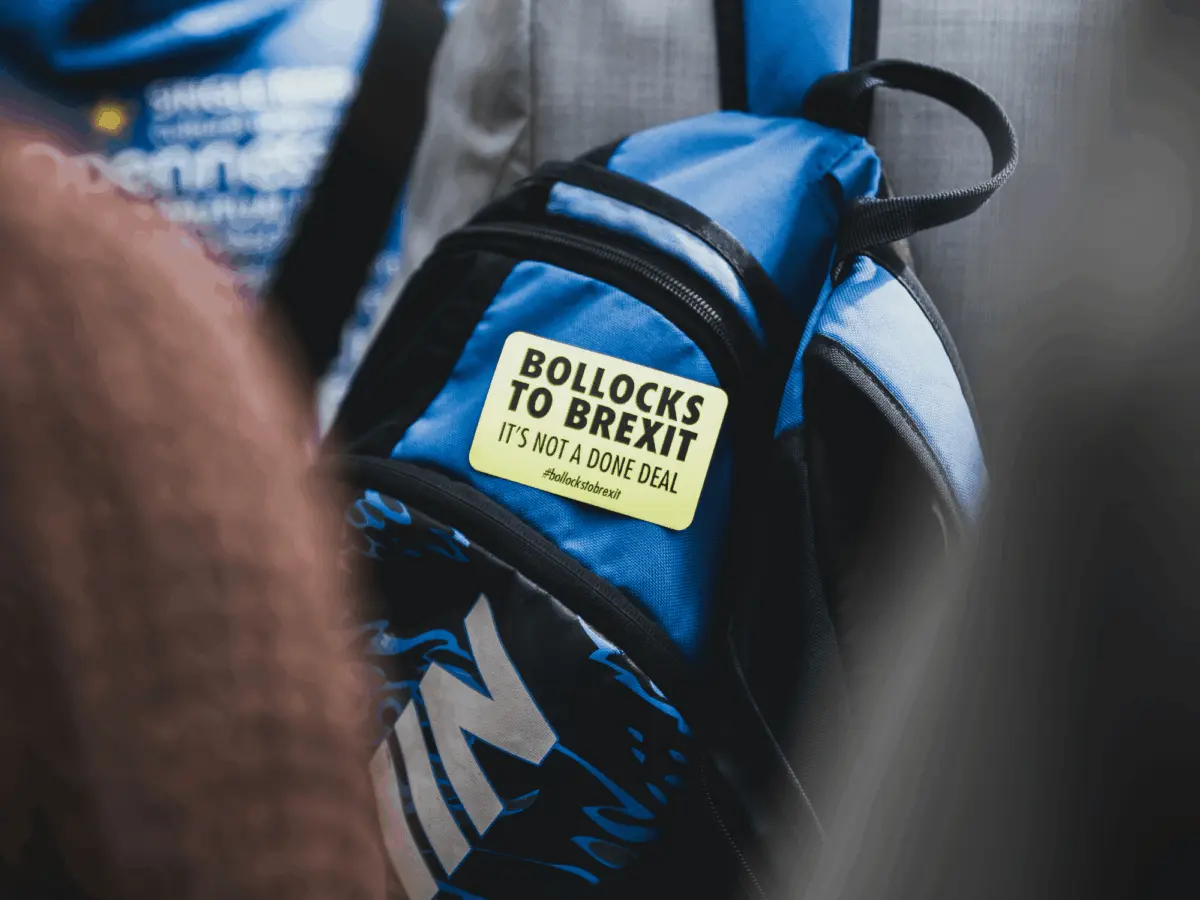
If policymakers heed the warning signs embedded in the Department for Culture, Media and Sport’s latest findings, there is hope that the bureaucratic thicket strangling live music can be pruned. Until then, the "Bollocks to Brexit" stickers on musician backpack straps will remain less of a political statement and more of an economic lament for a sector still counting the cost of isolationism.