
By Joe Sparrow | Country Profile
Published: October 21, 2026
Executive Overview
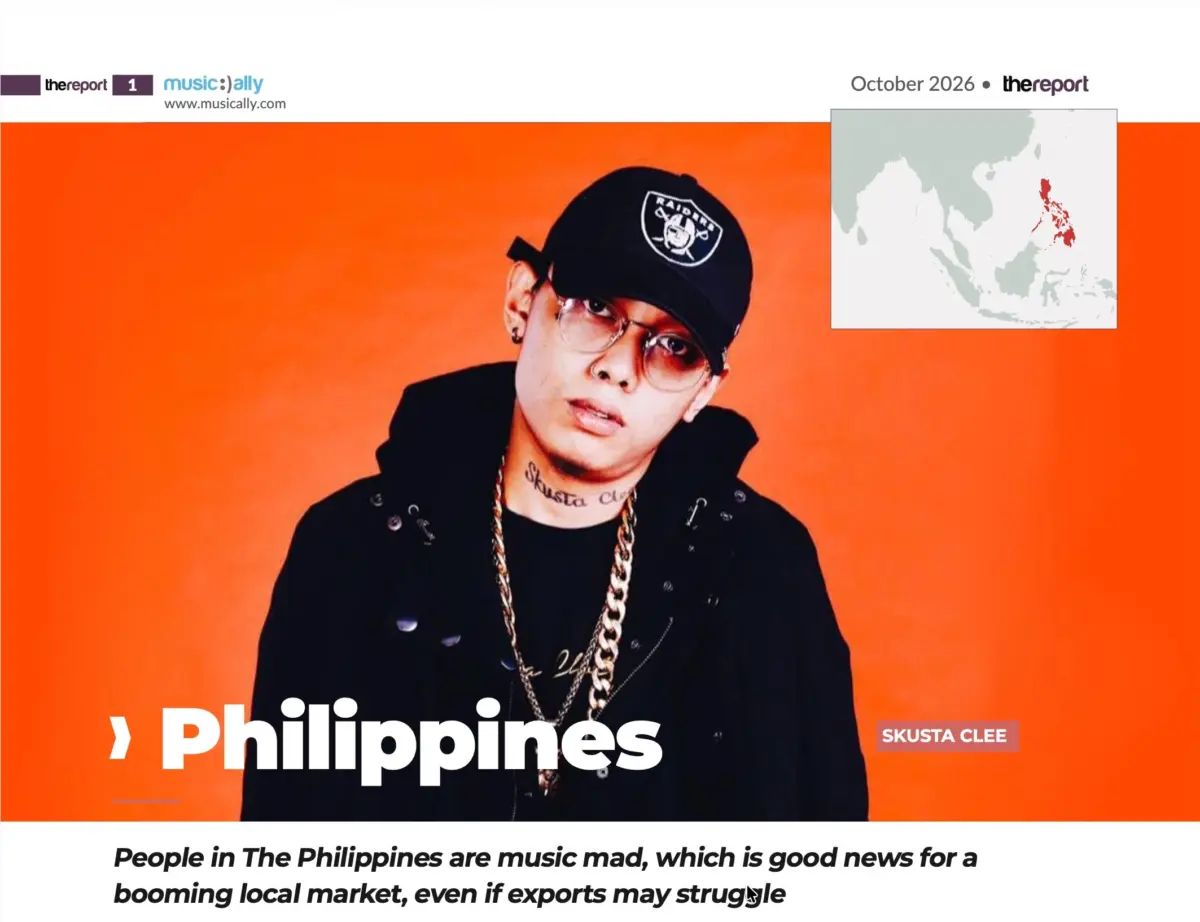
The music industry in Southeast Asia has spent the better part of the decade under the microscope of global investors, major labels, and digital streaming platforms. Within this fast-evolving regional landscape, the Philippines stands out as a fascinating paradox. Characterized by an intensely passionate population of listeners who consume music at staggering volumes, the nation boasts a thriving, highly lucrative domestic market. Yet, for all its local consumption power, the country faces a unique set of structural and cultural hurdles when it comes to exporting its homegrown talent to the global stage.
As streaming penetration deepens, smartphone adoption climbs, and local genres evolve, the Philippine music ecosystem is experiencing an unprecedented golden age of domestic engagement. However, the path from local viral sensation to international crossover remains fraught with difficulty. This report explores the dynamics driving the Philippines’ booming domestic market, the challenges inhibiting international music exports, and what the future holds for Filipino artists in an increasingly interconnected global industry.
Detailed Chronology: The Rise of Modern Filipino Music Consumption
To understand where the Philippine music market stands today, it is essential to trace how digital transformation, shifting consumer habits, and post-pandemic economic recovery have shaped the nation’s auditory landscape over recent years.

The Digital Shift and Mobile-First Adoption (2018–2020)
Long before the global disruptions of 2020, the Philippines was steadily emerging as a mobile-first digital economy. With a young, tech-savvy median age, the population quickly embraced smartphones as primary entertainment devices. While infrastructure challenges—such as fragmented archipelago geography and varying internet speeds—historically hampered physical distribution and desktop broadband penetration, affordable mobile data plans catalyzed a rapid shift toward digital streaming. Platforms recognized early on that Filipino consumers had an insatiable appetite for pop ballads, hip-hop, and acoustic love songs, laying the groundwork for a digital-first market.
The Lockdown Boom and Streaming Acceleration (2020–2022)
The COVID-19 pandemic acted as a powerful accelerator for digital media consumption across Southeast Asia, and the Philippines was no exception. Confined to their homes, millions of Filipinos turned to music and video-sharing platforms for comfort and connection. During this period, local independent artists leveraged social media ecosystems—particularly TikTok and YouTube—to bypass traditional gatekeepers. Tracks that resonated with the emotional zeitgeist went viral organically, proving that domestic audiences could propel local acts to massive streaming milestones without heavy radio play or traditional label backing.
Institutional Maturation and Global Interest (2023–2025)
As the live entertainment sector roared back to life, international streaming giants, global publishing houses, and major record labels began expanding their footprints in Manila. Investments flowed into local A&R (Artists and Repertoire) teams, digital marketing agencies, and localized playlist curation. Filipino artists began regularly dominating domestic streaming charts, frequently outperforming Western and K-pop acts on home turf. Simultaneously, industry stakeholders began hosting music camps, songwriting workshops, and showcase festivals aimed at professionalizing the local sector and exploring pathways for international export.
The Current Landscape: Domestic Dominance Meets Export Realities (2026)
Today, the Philippine music market is characterized by robust, self-sustaining domestic growth. Local consumers are fiercely loyal to homegrown talent, and the economics of domestic streaming, brand partnerships, and live touring are healthier than ever. Yet, as industry analysts examine the broader regional picture, a distinct narrative has emerged: while the Philippines is undeniably "music mad," its cultural exports have yet to capture the global imagination in the same way that K-pop from South Korea or Latin pop from South America have.

Supporting Context & Metrics: The Anatomy of a Music-Mad Nation
The numbers underlying the Philippine music market tell a story of profound engagement and untapped potential. With a population exceeding 110 million people—a vast majority of whom are under the age of 30—the demographic fundamentals are exceptionally strong.
High Engagement and Daily Listening Habits
Market research consistently shows that Filipino consumers spend more hours per week listening to music than the global average. Music is deeply woven into the social, cultural, and emotional fabric of daily life—from family gatherings and karaoke sessions (a national pastime) to commuting through Manila’s notoriously congested traffic. This high-frequency consumption translates directly into staggering streaming counts across Spotify, YouTube Music, and local platforms.
The Economics of the Domestic Market
Unlike markets where physical vinyl or high-priced concert tickets drive revenues, the Philippine market thrives on a mix of ad-supported streaming, micro-transactions, and massive live event turnouts. Brand sponsorships play a monumental role in the financial viability of local artists. Corporations in telecommunications, fast food, and lifestyle goods routinely partner with Filipino pop and hip-hop acts, creating a commercial ecosystem that heavily rewards domestic popularity.
The Language and Cultural Barrier
A primary factor influencing the export dynamic is language and lyrical content. While English proficiency is exceptionally high in the Philippines—making Western pop and hip-hop globally accessible—Filipino popular music is predominantly performed in Tagalog, regional dialects (such as Cebuano, Ilocano, and Hiligaynon), or a fluid mix of Tagalog and English known as Taglish.

- While Taglish resonates powerfully within the diaspora and neighboring Southeast Asian nations, it occasionally encounters friction in broader Western markets where listeners are accustomed to either strictly English lyrics or highly distinct, stylized foreign-language movements like K-pop or J-pop.
- Furthermore, the distinctively emotive, melodic, and romantic style of Filipino ballads—often referred to locally as hugot music—caters deeply to domestic emotional sensibilities, which may not always translate seamlessly to overseas markets seeking high-energy club anthems or aggressive hip-hop beats.
Official Statements and Industry Insights
Navigating the nuances of the Philippine music economy requires listening closely to the executives, creators, and analysts on the ground who are steering the industry forward.
-
On Domestic Passion:
“You cannot overstate how deeply music is embedded in the everyday life of the average Filipino,” notes a senior regional label executive based in Manila. “When a track connects here, it doesn’t just stream; it becomes part of the cultural lexicon overnight. The sheer velocity of local consumption is something international artists often find astonishing.” -
On the Export Dilemma:
“We have world-class vocalists, incredibly talented producers, and songwriters who can craft a hook with the best of them,” explains a prominent local independent publisher. “The challenge isn’t talent; it’s infrastructure, international marketing capital, and strategy. Breaking an artist outside of the Philippines requires significant, sustained financial backing and localized promotional campaigns in target territories—resources that many independent domestic players simply do not possess.” -
On Digital Infrastructure and Monetization:
“Streaming has democratized access, allowing artists from provinces outside of Metro Manila to find audiences globally and locally,” highlights a digital rights advocate. “However, average revenue per user (ARPU) in the Philippines remains relatively low compared to North America or Europe. While volume is massive, monetization models must continue to adapt to local purchasing power to ensure long-term sustainability for creators.”
Future Outlook: Unlocking the Next Phase of Growth
As the Philippine music market looks toward the remainder of the decade and beyond, stakeholders are charting strategic pathways to capitalize on domestic success while systematically addressing the barriers to international export.
1. Strengthening Regional Collaboration within Southeast Asia
Rather than immediately targeting saturated Western markets, many industry leaders view neighboring Southeast Asian countries as the most viable stepping stones for Filipino exports. Cultural affinities, growing digital platforms across Indonesia, Thailand, and Vietnam, and regional touring circuits present prime opportunities for cross-border collaboration and audience building.
2. Leveraging the Powerful Global Diaspora
The global Filipino diaspora—numbering in the millions across North America, the Middle East, Europe, and parts of Asia—represents an organic, highly supportive beachhead for international expansion. By targeting diaspora communities with localized marketing and live touring initiatives, labels can build sustainable overseas fanbases that eventually crossover into mainstream foreign markets.
3. Professionalization of A&R and Global Publishing Partnerships
To bridge the gap between local hits and global recognition, domestic labels are increasingly partnering with major international music companies. These partnerships bring global A&R expertise, sophisticated data analytics, cross-territory playlist pitching, and sync licensing opportunities in film, television, and gaming—crucial avenues for modern artist discovery.

4. Continued Domestic Innovation
Ultimately, the beating heart of the Philippine music industry will remain its domestic audience. As local genres continue to diversify—with burgeoning underground hip-hop scenes, alternative rock revivals, and electronic music experiments complementing mainstream pop—the local market will only grow more sophisticated.
The Philippines has already proven that it is one of the most vibrant, music-mad populations on earth. As the industry fine-tunes its export machinery and digital frameworks mature, the rest of the world may soon realize what millions of Filipinos have known all along: the archipelago is an absolute powerhouse of modern musical creativity.