
Executive Overview
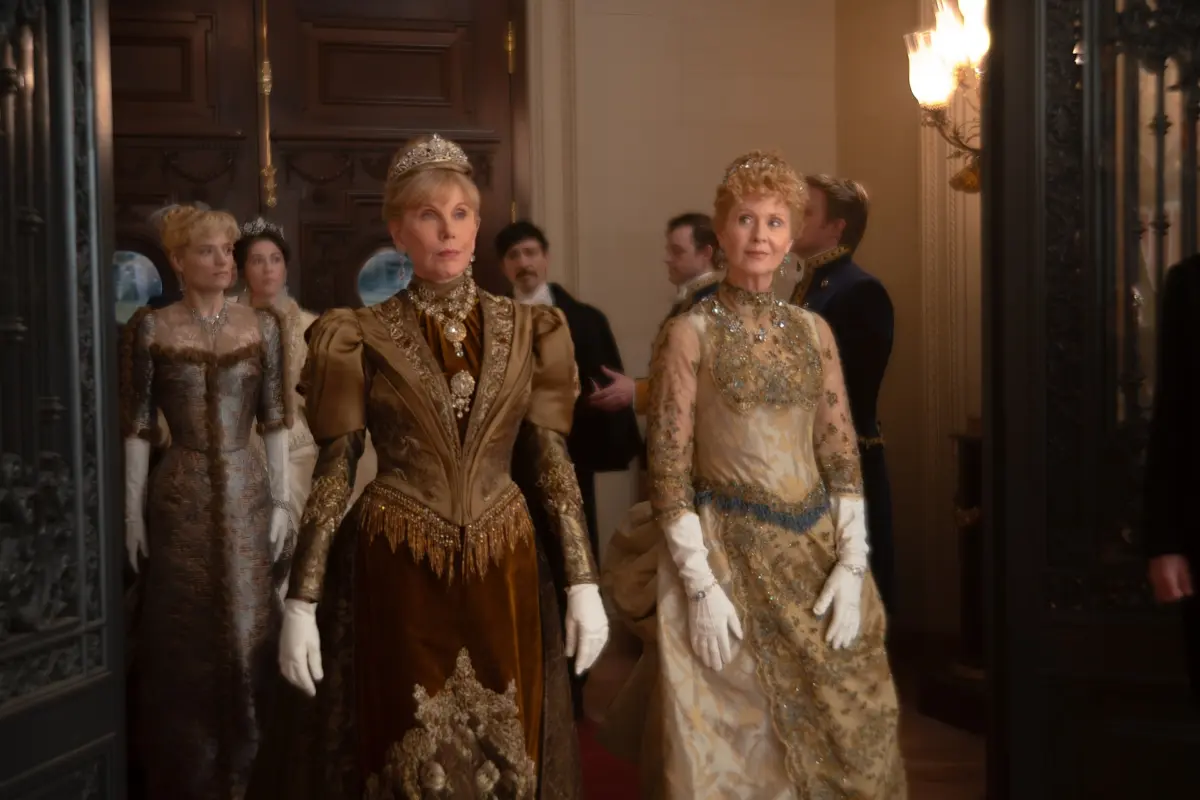
HBO has officially released the highly anticipated first-look teaser trailer for the fourth season of its hit period drama The Gilded Age, sending shockwaves of excitement through both television and theatrical communities. Set to premiere on November 1 at 9:00 PM EST/PST on HBO and streaming simultaneously on Max, the upcoming eight-episode arc promises a potent cocktail of high-society cutthroat maneuvering, sumptuous 19th-century costume design, and—most notably—an unprecedented concentration of celebrated stage talent.
Created by Julian Fellowes (Downton Abbey) alongside writer and executive producer Sonja Warfield, The Gilded Age has continually positioned itself as a premier sanctuary for world-class Broadway and West End performers. Season 4, which is officially confirmed to take place in the year 1886, doubles down on this theatrical DNA. The newly dropped teaser offers tantalizing glimpses of returning power players, tense domestic reconciliations, escalating class warfare, and a glittering slate of fresh faces from the theatrical firmament.
As the cultural zeitgeist prepares for the return of New York’s old-money gatekeepers and ambitious new-money interlopers, the intersection of prestige television and live theater has never been more pronounced. From Tony Award winners to West End headliners, the cast list for the upcoming season reads less like a standard television roster and more like a definitive directory of contemporary stage royalty.
Detailed Chronology & Narrative Arc: What to Expect in 1886
Picking up the narrative thread in the historically rich year of 1886, Season 4 of The Gilded Age will explore the shifting tectonic plates of New York City’s elite. According to details revealed in the teaser and previous casting announcements, the upcoming eight episodes will chart new territory for the show’s sprawling ensemble.
The Russells and the Battle for Supremacy
At the heart of the drama are Bertha and George Russell, portrayed by Broadway veterans Carrie Coon (Bug) and Morgan Spector. The teaser hints at a tense, high-stakes reconciliation between the ambitious power couple. Having navigated industrial espionage, architectural triumphs, and bitter opera wars in previous outings, the Russells must now confront the personal fallout of their meteoric rise through elite society. Bertha’s relentless drive to conquer the upper echelons of New York high life continues to test the limits of her marriage and her alliances.
Old Money on the Defensive: The Van Rhijns and Brookes
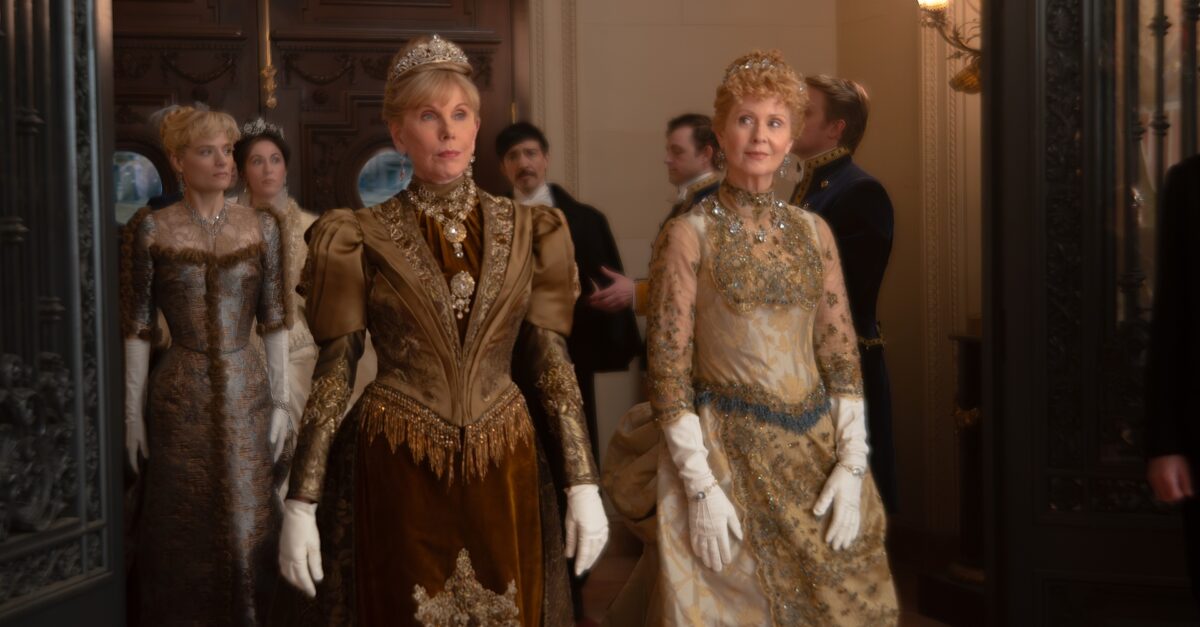
Across town, the aristocratic establishment is feeling the heat. Agnes van Rhijn, brought to life by television and stage icon Christine Baranski, finds herself grappling with a precarious loss of social status. Her descent is compounded by the ascendance of her sister, Ada Forte (portrayed by Cynthia Nixon, recently seen on Broadway in Marjorie Prime), whose newfound independence and authority have inverted the household dynamic at 61st Street.
Meanwhile, Agnes and Ada’s niece, Marian Brook (Louisa Jacobson), appears to have successfully navigated her romantic turbulence, signaling a potential stabilization in her relationship with her long-standing beau, Larry Russell (Harry Richardson). However, in the unforgiving universe crafted by Julian Fellowes, romantic harmony is rarely permitted to endure without complication.
Peggy Scott and William’s Trials
In Brooklyn and Manhattan alike, Peggy Scott (Dénée Benton, soon to be seen in School Girls; Or, the African Mean Girls Play) continues to break barriers as a brilliant young writer navigating a racially fraught society. The teaser highlights her deep affection for her fiancé, William (Jordan Donica, who will soon headline The Phantom of the Opera in London’s West End). Yet, domestic bliss remains elusive; the formidable presence of William’s mother—played by the legendary Phylicia Rashad—looms large, signaling calculated interference in the young couple’s path toward marital happiness.
A Nod to Theatrical History
Adding a meta-layer to the production, the teaser features a fleeting yet unmistakable glimpse of an opening night performance of Gilbert and Sullivan’s The Pirates of Penzance. While the historic New York opening of the classic operetta actually occurred in 1879—several years prior to the show’s 1886 timeline—historians and fans have speculated that the scene may depict a theatrical revival or another milestone within the era’s vibrant cultural landscape. Given how prominently the Metropolitan Opera feud factored into Season 2, industry observers are watching closely to see whether the performing arts will play a central thematic role in the unfolding plots of Season 4.
Supporting Context & Metrics: The Broadway-to-Television Pipeline
The symbiotic relationship between The Gilded Age and the New York theater community is not merely a casting preference; it is a foundational pillar of the series’ artistic identity. By populating its canvas with actors whose primary training and acclaim are rooted in live theater, HBO has cultivated a distinct texture of performance characterized by razor-sharp diction, heightened emotional delivery, and commanding physical presence.
Returning Stage Heavyweights
The roster of returning talent for Season 4 boasts an astonishing collection of theatrical accolades:
- Audra McDonald: The six-time Tony Award-winning powerhouse continues to anchor crucial narrative arcs with peerless authority.
- Donna Murphy: A two-time Tony winner whose commanding screen presence mirrors her legendary stage command.
- Ben Ahlers: Previously seen on Broadway in Death of a Salesman.
- Debra Monk: A Tony Award winner and dramatic fixture across stage and screen.
- Celia Keenan-Bolger, Brian Stokes Mitchell, Douglas Sills, and John Douglas Thompson: A masterclass in classical American acting talent.
The Class of Season 4: New Additions
The latest installment introduces an exceptional wave of new blood, further cementing the show’s reputation as a theatrical magnet:
- Bonnie Milligan: The breakout Tony Award winner from Kimberly Akimbo.
- Taylor Trensch: A celebrated Tony nominee known for acclaimed turns in Dear Evan Hansen and the upcoming Floyd Collins.
- James Scully: Fresh off triumphing in the theatrical phenomenon Oh, Mary!
- Maggie Kuntz: A rising talent transitioning from John Proctor is the Villain.
- Neal Huff: A veteran of stage classics including To Kill a Mockingbird.
This deliberate casting strategy ensures that every dinner party scene, board room confrontation, and aristocratic slight is delivered with the razor-sharp precision demanded by Fellowes’ dialogue-heavy scripts.
Official Statements & Production Insights
While official press releases from HBO have kept tight-lipped regarding specific plot twists, showrunner Julian Fellowes and executive producer Sonja Warfield have previously emphasized the historical rigor and character-driven evolution that guide the series.
In earlier interviews discussing the transition into the late 1880s, Fellowes noted that the economic expansion of the era provided fertile ground for escalating social warfare. "As these fortunes grow, so do the stakes," Fellowes remarked. "The characters are no longer just fighting for an invitation to a box at the Academy of Music; they are fighting for the very soul and definition of American aristocracy."
Sonja Warfield has similarly highlighted the deliberate expansion of minority narratives within the period drama, particularly through the eyes of Peggy Scott and her family. By anchoring historical events within deeply personal, intersectional struggles, The Gilded Age transcends standard costume drama tropes to offer a more nuanced examination of late-19th-century America.
Future Outlook & Industry Implications
As the November 1 premiere date approaches, industry analysts are projecting massive viewership numbers for The Gilded Age Season 4. The series has steadily built a passionate, multi-generational audience that rivals traditional broadcast network heavyweights while maintaining the prestige cachet associated with HBO’s premier Sunday night lineup.
Furthermore, the show’s sustained success proves that audiences maintain an insatiable appetite for meticulously researched, high-budget historical fiction that prioritizes character-driven scripts over cynical grit. By serving as a bridge between the struggling live-theater ecosystem and premium streaming platforms, The Gilded Age also provides invaluable employment and visibility for stage actors during an increasingly volatile economic climate for the arts.
With an eight-episode run guaranteed to deliver lavish set pieces, emotional reckonings, and world-class performances, The Gilded Age stands poised to dominate the autumn television landscape. When the velvet curtains part on November 1, viewers will once again be invited into a gilded cage where the stakes are high, the gowns are breathtaking, and the acting is, without question, second to none.