
Executive Overview
In an era defined by rapid technological disruption, the boundary between human creativity and synthetic generation has become one of the most fiercely contested battlegrounds of modern culture. Few voices, however, have entered this arena with quite the philosophical weight—or the unexpected frequency—of the Vatican.
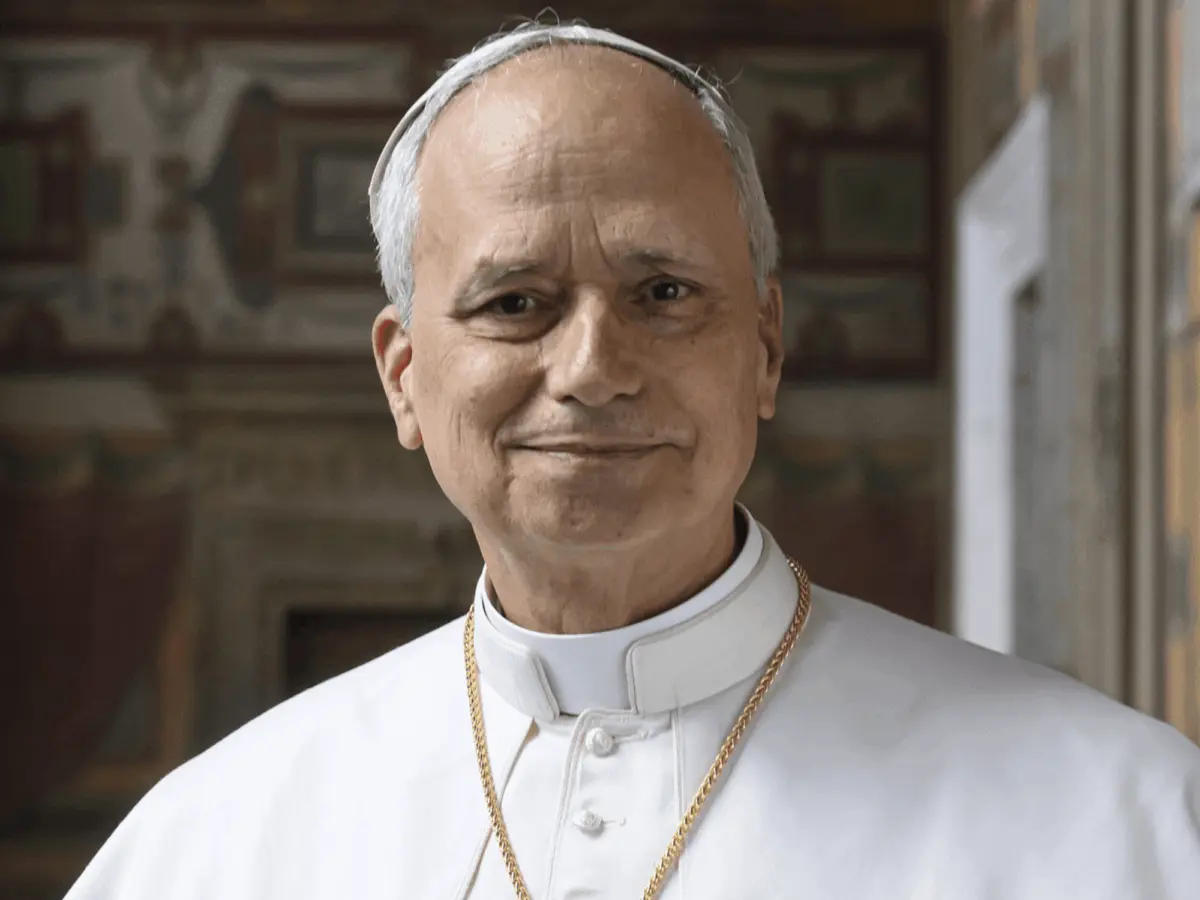
Pope Leo XIV has once again captured global attention by taking a definitive, hardline stance against the encroachment of artificial intelligence into the creative industries. In a widely discussed statement published on the social media platform X (formerly Twitter), the pontiff issued a stark warning regarding the soul of artistic expression. Arguing that an unbridgeable ontological chasm separates human creation from machine-generated output, the Pope’s intervention signals a deepening engagement by the Roman Catholic Church with the ethical, spiritual, and existential dilemmas posed by the generative AI boom.
This latest declaration is far from an isolated critique. It forms a central pillar of an ongoing Vatican campaign aimed at safeguarding human dignity, labor, and imagination from being systematically hollowed out by algorithms. As technology companies race to deploy models trained on millions of copyrighted works without consent or compensation, the highest office of the Catholic Church is positioning itself as an unexpected global ally for artists, musicians, writers, and cultural institutions.
By framing the debate not merely as a matter of economic survival or aesthetic preference, but as a defense of the human "spark," Pope Leo XIV has elevated the discourse surrounding generative AI into a profound moral imperative for the digital age.
Detailed Chronology: The Vatican’s Growing Engagement with AI Ethics
The Holy See’s commentary on artificial intelligence did not emerge in a vacuum. It represents the culmination of years of institutional reflection, theological study, and direct observation of how rapidly scaling technologies threaten to reshape human society.
The Seeds of Concern: Early Warnings from the Holy See
While technological advancements have long been a subject of interest for the Vatican—dating back to Pope John Paul II’s writings on the digital revolution and Pope Benedict XVI’s frequent engagement with media ethics—the specific threat posed by generative artificial intelligence began to crystallize prominently in the early 2020s. As text-to-image generators, large language models, and AI-driven music composition tools flooded the public sphere, Church intellectuals and pontifical councils quietly began studying the philosophical implications of synthetic media.
January 2026: The 60th World Day of Social Communications Address
The first major salvo of the current papal offensive came in January 2026, during the release of Pope Leo XIV’s official message for the Roman Catholic Church’s 60th World Day of Social Communications.
In a searing critique aimed directly at the commercial imperatives driving the tech sector, the Pope warned that human creative industries stood "at risk of being dismantled and replaced with the label ‘Powered by AI’." He cautioned that an uncritical embrace of these technologies threatened to reduce human beings to "passive consumers of unthought thoughts and anonymous products without ownership or love."
This address served as a vital theological and cultural marker, signaling that the Vatican viewed generative AI not just as a labor or copyright issue, but as a direct assault on the participatory, relational nature of human creativity, which Catholic theology often links to humanity being created imago Dei (in the image of God) as co-creators.
October 2026: The Intervention on X and the Call for a New Cultural Alliance
The narrative escalated sharply in October 2026, when Pope Leo XIV took his warnings directly to the digital public square. Addressing millions of followers on X, the pontiff emphasized the urgency of distinguishing genuine human art from the hollow mimicry of machines.
"In this era of artificial intelligence, it is becoming urgent to distinguish human art from what machines produce," the papal account declared.
Elaborating on the philosophical underpinnings of this distinction, a subsequent post noted: "There is an ontological difference, even before an aesthetic one, between art and what a machine can generate through statistical calculation based on millions of images created by others."
Concluding his message with a direct call to action, the Pope asserted: "Algorithms lack the spark of humanity. For this reason, the Church wishes to renew an alliance with artists and cultural institutions to safeguard our humanity."
While specific policy proposals or institutional structures for this proposed "alliance" remain undefined, the statement immediately reverberated across cultural capitals, creative unions, and technology hubs worldwide.
Supporting Context & Metrics: The Crisis Facing Creative Industries
To understand why the Vatican’s warnings resonate so deeply within the artistic community, one must examine the unprecedented economic and existential pressures currently facing the creative sector. The rise of generative AI has disrupted traditional career pathways across visual arts, music, literature, and film, sparking intense global debates over intellectual property, fair compensation, and the definition of labor.
The Economics of Data Scraping
At the heart of the Pope’s observation regarding "statistical calculation based on millions of images created by others" lies the contentious practice of web scraping. Generative AI models—whether designed to synthesize oil paintings, write screenplays, or generate vocal tracks—require vast training datasets. Tech corporations have routinely vacuumed up copyrighted works from the internet without the explicit consent, attribution, or financial compensation of the original creators.
For artists and musicians, this represents a structural injustice: human creators are essentially being asked to train the very algorithms designed to undercut their market value. Studies from creative sector unions indicate that a significant majority of independent creators fear losing their livelihoods to automated tools capable of producing "good enough" content at a fraction of the cost and time.
The Devaluation of "Ownership and Love"
Pope Leo XIV’s January reference to products "without ownership or love" touches upon a critical philosophical debate in modern aesthetics: the role of intent, suffering, and lived experience in art.
Human art is inherently relational; it is a medium through which one human soul communicates with another, shaped by mortality, emotional depth, and cultural context. AI models, by contrast, possess no interior life, no subjective experience of joy or grief, and no moral agency. They synthesize probabilities based on past human outputs.
When corporate entities flood the market with algorithmic content designed to maximize engagement metrics rather than express human truth, the cultural ecosystem risks becoming saturated with what critics term "digital gray goo"—homogenized, derivative media that lacks cultural resonance or authentic emotional weight.
Official Statements and Global Reactions
The Vatican’s interventions have drawn a complex web of reactions from cultural figures, legal scholars, labor advocates, and technology defenders.
The Artistic and Cultural Response
Creative guilds, musicians’ unions, and artists’ collectives have largely welcomed the Pope’s statements. In a secular age, the moral authority of the Vatican provides a unique megaphone for grievances that have often been dismissed by the tech industry as mere technophobia or protectionism.
"The Pope has articulated what millions of creators feel in their bones," noted a representative for an international coalition of visual artists. "When you strip the human element out of art, you aren’t just changing the medium; you are dismantling the fundamental bond between creator and audience. Having the Holy See name this as an ontological threat brings a necessary gravity to the conversation."
The Tech Industry and Secular Observers
Predictably, defenders of the artificial intelligence sector have pushed back against the Vatican’s framing. Proponents of generative AI argue that these tools represent the next logical evolution in human expression, acting not as replacements for artists, but as powerful brushes and canvases that democratize creativity and accelerate productivity.
Tech commentators have also questioned the practical implications of the Vatican’s proposed "alliance" with artists, pointing out that the Church itself has historically wrestled with the boundaries of art, censorship, and mechanization. Furthermore, critics argue that technological progress cannot be halted by philosophical appeals to ontology, and that the focus should instead be on equitable regulatory frameworks rather than outright moral condemnation.
Future Outlook: What Lies Ahead for the Vatican-Artist Alliance?
As the dust settles on Pope Leo XIV’s autumn pronouncements, the crucial question remains: What will this proposed "alliance" between the Church, artists, and cultural institutions actually look like in practice?
Building Institutional Bridges
While concrete details are sparse, Vatican insiders suggest that the Holy See is exploring ways to leverage its vast global network of cultural institutions, universities, museums, and foundations to support human creators. This could manifest in several ways:
- Moral and Legal Advocacy: The Vatican’s diplomatic corps and Pontifical Academies could lend moral weight to international regulatory efforts aimed at enforcing strict transparency in AI training data, protecting copyright, and ensuring fair remuneration for artists.
- Cultural Sanctuaries and Patronage: Historically, the Catholic Church has played a monumental role as a patron of the arts. In an era where commercial markets are increasingly dominated by algorithmic optimization, the Church could position itself as a patron of purely human-generated art, establishing prizes, exhibitions, and residencies that explicitly celebrate human craftsmanship.
- Theological Frameworks for Digital Ethics: Pontifical universities are expected to expand their curricula and research output regarding digital ethics, providing intellectual ammunition for policymakers attempting to navigate the intersection of human rights, labor, and artificial intelligence.
The Long-Term Cultural War
The debate over AI and art is ultimately a proxy war for a much larger question: What does it mean to be human in the twenty-first century?
As generative algorithms become more sophisticated, seamlessly mimicking human speech, painting styles, and musical composition, society will increasingly be forced to confront the value it places on human effort, intention, and vulnerability.
By repeatedly inserting itself into this debate, the papacy under Leo XIV has made it clear that the Catholic Church intends to remain a vocal participant in defining the contours of the digital future. Whether this "alliance" can successfully stem the tide of algorithmic homogenization remains to be seen. However, by drawing a hard line in the digital sand, the Vatican has ensured that the soul of art will not surrender to the machines without a spirited, high-stakes philosophical defense.