
Executive Overview
The traditional boundaries separating physical performance, digital simulation, and youth culture are dissolving at an unprecedented pace. In a single news cycle, the convergence of high-end virtual reality (VR), holographic enterprise, and the unstoppable rise of generation-alpha digital natives has showcased a massive paradigm shift in how music is created, distributed, and experienced.
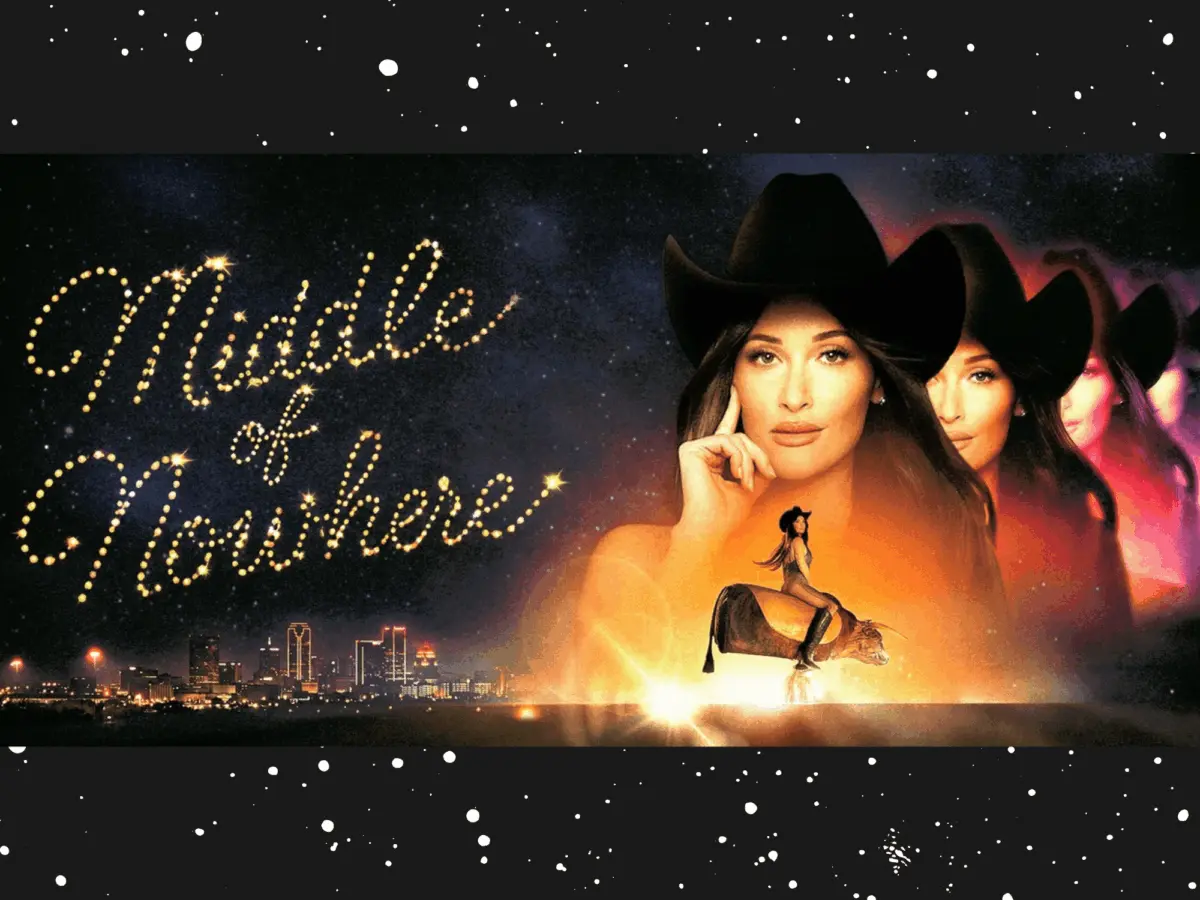
At the forefront of this movement is multi-Grammy-winning country-pop artist Kacey Musgraves, who has officially stepped into the metaverse with Kacey Musgraves Middle of Nowhere: An Immersive Experience—a feature-length, 49-minute VR concert experience exclusive to Meta Quest headsets. Filmed against the atmospheric backdrop of Fort Worth’s iconic Billy Bob’s Texas venue, Musgraves’ immersive concert represents the maturing intersection of cinematic production and virtual reality.
Simultaneously, the foundational infrastructure supporting immersive music is undergoing a quiet revolution. Innovative startups like Soapbox are scaling up the capture of life-size holographic artist performances, backed by foundational deals with all major record labels and an active roster exceeding 140 artists—including heavyweights such as T-Pain, Waka Flocka Flame, and blues icon Buddy Guy. As co-founder Kevin Sellors asserts, today’s VR headsets are merely the "shellac records" of an emerging medium that will soon migrate seamlessly into augmented reality (AR) glasses and untethered holographic projections.
Yet, perhaps the most disruptive cultural signal of this technological wave comes not from legacy superstars or venture-backed tech startups, but from a nine-year-old rapper named Young Roddo. Fresh off signing a high-profile record deal with Empire, Young Roddo has released what is believed to be the first official music video filmed entirely within the metaverse gaming ecosystem Roblox. Set inside the immensely popular virtual municipality of Brookhaven, his breakout track "Robux" bridges the gap between digital economies and physical-world streaming success, underscoring a fundamental truth: the future generation of music consumers—and creators—live natively in virtual worlds.
Detailed Chronology: Milestones in Immersive Audio and Virtual Performance
To understand how the music industry arrived at this crossroads of VR concerts, holographic captures, and Roblox music videos, one must trace the rapid technological evolution that has accelerated over the past decade.
Phase One: The Gimmick Era (2016–2020)
When consumer virtual reality first captured mainstream attention in the mid-2010s, music industry experiments were largely novelty-driven. Early VR concert applications offered static 360-degree video feeds captured from a single stationary camera point. While novel, these experiences suffered from low resolution, motion sickness, and a lack of true interactivity. Artists occasionally dipped their toes into gaming platforms—most notably during the COVID-19 pandemic when quarantine protocols forced the live entertainment industry online. Massive virtual concerts inside games like Fortnite (featuring Travis Scott and Marshmello) proved that millions of concurrent users would gather for digital spectacles, establishing a commercial blueprint for virtual monetization.
Phase Two: Cinematic Fidelity and Dedicated Headsets (2021–2024)
As hardware matured—exemplified by the evolution of the Meta Quest ecosystem—the production quality of virtual music experiences scaled dramatically. Artists stopped viewing VR as a mere marketing add-on and began treating it as an alternative performance medium. Capturing spatial audio, high-definition volumetric video, and constructing tailor-made digital or hyper-realistic physical environments became standard practice for top-tier acts seeking to bypass geographic limitations and tour fatigue.
Phase Three: The Convergence of VR, Holograms, and Gaming Nativeism (2025–Present)
Today, we are witnessing the third phase: ecosystem integration. The launch of Kacey Musgraves Middle of Nowhere marks a maturation point where traditional country music aesthetics merge seamlessly with cutting-edge spatial computing. Concurrently, infrastructure providers like Soapbox are preparing the groundwork for the post-headset era by capturing volumetric data designed for lightweight AR glasses.
At the same end of the spectrum, Gen Alpha creators like Young Roddo are bypassing traditional gatekeepers entirely. By launching career-defining music videos directly inside virtual gaming environments like Roblox, these young artists are proving that digital worlds are no longer just promotional tools—they are the primary cultural epicenters where hits are born.
Supporting Context & Metrics: The Numbers Behind the Shift
The intersection of immersive technology, spatial computing, and youth-driven platform economics is supported by compelling quantitative data across streaming metrics, hardware adoption, and investor confidence.
Kacey Musgraves’ VR Experiment
- Runtime: 49 minutes of continuous performance, blending classic tracks with selections from her latest studio projects.
- Production Location: Billy Bob’s Texas, Fort Worth—the world’s largest honky-tonk, blending traditional Americana heritage with futuristic spatial recording techniques.
- Platform Exclusivity: Meta Quest VR ecosystem via Oculus media distribution channels.
The Hologram Infrastructure (Soapbox)
- Roster Scale: Over 140 prominent recording artists captured to date.
- Industry Alignment: Comprehensive licensing and collaboration agreements secured with all major global record labels (Universal Music Group, Sony Music Entertainment, and Warner Music Group).
- Genre Diversity: Spanning legacy acts and modern innovators, including blues legend Buddy Guy, hip-hop icon Waka Flocka Flame, and auto-tune pioneer T-Pain.
- Hardware Roadmap: Transitioning from enclosed VR headsets (the "shellac records" phase) to consumer-ready augmented reality (AR) glasses and direct holographic projections.
The Gen Alpha Phenomenon: Young Roddo
- Artist Age: 9 years old.
- Label Partnership: Signed to independent powerhouse Empire.
- Breakthrough Track: "No Bad Grades" (released May 2026), which has amassed nearly 7.4 million streams on Spotify alone.
- Secondary Catalog Hit: "Ms. Jackson" (distinct from the classic Outkast track), which has mirrored its predecessor’s streaming momentum.
- Milestone Release: "Robux," featuring the viral lyrical refrain "Girl, you got me spendin’ Robux on you," accompanied by the historic music video filmed entirely within the Roblox game world (Brookhaven).
Official Statements and Industry Perspectives
The rapid evolution of virtual performance formats has sparked intense dialogue among tech pioneers, label executives, and cultural commentators.
Speaking on the strategic vision behind volumetric capture and the impending hardware revolution, Soapbox co-founder Kevin Sellors offered a striking historical analogy during a recent industry interview:
"VR headsets are our shellac records," Sellors explained, mapping out the trajectory of immersive audio-visual media. "It will go to AR glasses—coming this year—to hologram projection, and beyond. As soon as the devices look cool, they’re outta here. The glasses will change the game."
Sellors’ sentiment highlights an acute awareness within the tech sector that bulky, closed-face headsets are merely a transitional phase. The ultimate goal for immersive music creators is ambient, frictionless integration—allowing fans to summon life-size holograms of their favorite artists directly into their living rooms via lightweight, fashionable eyewear.
Meanwhile, industry analysts observing the rise of artists like Young Roddo note that the traditional pipeline of music discovery has been entirely inverted. Rather than starting with local live gigs and traditional radio promotion, modern youth-market hits are incubated inside interactive gaming sandboxes. Platforms like Roblox and Fortnite function simultaneously as social networks, video game engines, and massive global broadcast channels. When a nine-year-old artist can secure an Empire distribution deal while generating multi-million stream counts on Spotify from virtual-world origins, it signals that the music business must fundamentally re-evaluate where talent is scouted and how audiences consume media.
Future Outlook: Where Music, VR, and the Metaverse Collide
As we look toward the remainder of the decade, the implications of these developments point toward a radically decentralized and immersive music economy.
1. From Headsets to Ambient AR
As predicted by infrastructure innovators, the hardware bottleneck constraining VR adoption is rapidly dissolving. Within the next few years, high-bandwidth wireless networks and consumer-grade AR glasses will replace heavy face-mounted displays. For artists like Kacey Musgraves, this means future concert experiences will not require fans to sit isolated in a virtual living room; instead, fans will be able to project a hyper-realistic, volumetric performance of an entire band directly onto their physical coffee tables or into local outdoor amphitheaters.
2. The Institutionalization of Gaming-Native Pop Culture
The signing of Young Roddo to Empire and the viral success of "Robux" serve as a clear warning shot to traditional artist and repertoire (A&R) departments. The next generation of superstars will not emerge from garage bands or local open-mic nights alone—they will emerge from digital playgrounds. Record labels are already racing to establish dedicated gaming divisions capable of scouting, signing, and marketing artists who build their fanbases inside Roblox, Minecraft, and Fortnite Creative.
3. Monetization of Virtual Real Estate
As virtual economies mature, the monetization model for recorded music will expand far beyond traditional streaming royalties and physical merch. Virtual currencies like Robux, cross-platform digital wearables, and interactive in-game concert ticket sales will form primary revenue streams for independent and major-label artists alike.
Ultimately, the barrier between the "real world" and the "virtual world" is becoming porous. Whether through a 49-minute cinematic VR journey through an iconic Texas honky-tonk or a rap video shot inside a digital suburb, music has proven once again that it will inhabit whatever space captures the human imagination.