
Executive Overview
Forty years ago, a quartet of musicians draped in matching yellow and black Spandex executed a maneuver that, on paper, defied the laws of the 1980s music industry. They fused the thunderous, high-gain guitar tones and theatrical bombast of arena heavy metal with an uncompromised, explicitly Christian theological message. When they released their landmark third studio album, To Hell with the Devil, in October 1986, the trajectory of both Christian rock and mainstream heavy metal shifted permanently.
What began as an underground experiment in Orange County, California, rapidly escalated into a global phenomenon. Stryper—comprising brothers Michael and Robert Sweet, alongside Oz Fox and later bass player Tim Gaines—did not merely carve out a niche; they assaulted the mainstream fortress. They achieved what many industry executives deemed impossible: landing a multi-platinum-certified Christian metal record that went toe-to-toe with the era’s secular giants on MTV’s flagship countdown shows.
Yet, the band’s ascent was fraught with fierce paradox. While secular headbangers embraced their virtuosic musicianship and infectious hooks, portions of the traditional church community branded them as heretics, famously picketing their arena shows while ignoring secular acts playing down the hall.
Four decades later, the reverberations of To Hell with the Devil are undeniable. The album stands as a monument to boundary-pushing artistry, paving the way for contemporary crossover acts and proving that faith-based music could command a massive, global audience without sacrificing its core convictions. In an exclusive retrospective conversation, founding members Michael and Robert Sweet reflect on the divine sparks, industry shockwaves, and enduring legacy of the record that changed their lives—and the music world—forever.
Detailed Chronology: From Orange County Clubs to Global Stardom
To understand the seismic impact of To Hell with the Devil, one must trace the arduous trajectory of Stryper from their humble beginnings under the moniker "Roxx Regime" to the pinnacle of 1980s rock stardom.
The Genesis and the Breakthrough (1983–1985)
Formed in 1983, the band emerged from the fertile and highly competitive Sunset Strip heavy metal incubator. While bands like Mötley Crüe, Ratt, and Quiet Riot dominated the local club circuit with songs fixated on hedonism, debauchery, and excess, the members of Stryper injected a radically opposing ethos into the same sonic template. Armed with blazing guitar harmonies, soaring multi-octave falsettos, and a distinct visual motif of yellow and black—inspired, according to the band, by warning signs of danger and urgency—they quickly commanded attention.
Their debut EP, The Yellow and Black Attack (1984), followed by their full-length debut Soldiers Under Command (1985), established their musical chops. However, it was the convergence of talent, timing, and production value in 1986 that would define their legacy.
The October 1986 Release and the "Holy Moly Moment"
As the autumn of 1986 approached, the band members sensed they were capturing lightning in a bottle. Drummer Robert Sweet vividly recalls the visceral rush of hearing the unreleased tracks for the first time.
"I remember driving home in my IROC-Z Camaro and popping in ‘Sing-Along Song,’ and I was just like, wow, something’s going to happen here," Robert shared during our interview.
Frontman Michael Sweet shared an equally palpable memory, recounting the exact moment the band listened to the final mix of the album’s title track. Crammed into a black Ford Escort, the brothers popped a cassette into the modest factory stereo. As the powerful opening chords and symphonic intro of "To Hell with the Devil" echoed through the car speakers, the musicians locked eyes.
Michael describes it as a "holy moly moment."
"We got something going on here. And you could just feel it," Michael recalled. Beyond the technical brilliance of the tracking and mixing, Michael maintains that an unseen hand was orchestrating their success. "It was definitely a God thing. It was anointed, and the power came out of that album. God’s power, unlike anything else."
Supporting Context & Metrics: Breaking MTV and Defying the Industry
To contextualize the magnitude of Stryper’s breakthrough, one must examine the absolute cultural hegemony of Music Television (MTV) in 1986. MTV was the ultimate kingmaker of the decade, capable of turning regional acts into overnight superstars, driving millions of physical record sales, and dictating the youth culture of an entire generation. Christian music, historically relegated to specialized distribution networks, Christian bookstores, and niche radio stations, simply did not belong in that ecosystem.
And yet, Stryper breached the gates.
"We had TV," Michael explained, pointing to the pivotal role of MTV’s interactive viewer-voted countdown show, Dial MTV. "When Dial MTV started, that really pushed To Hell with the Devil over the top."
Unlike Sunday-morning television ministry slots or late-night specialty programming, Stryper was competing in real-time, prime-time rotation alongside secular heavyweights.
"Here is the difference with us," Michael continued. "We were on a countdown of ten videos, ten songs up in the countdown against Mötley, Bon Jovi, Poison, and going to number one. It was unheard of. I even think MTV was floored by that. They didn’t know what to think about that."
Commercial Milestones
- Multi-Platinum Status: To Hell with the Devil became the first-ever Christian metal album to achieve Platinum status, eventually surpassing sales of over one million copies.
- Grammy Recognition: The album earned Stryper a Grammy Award nomination in 1988 for Best Gospel/Contemporary Christian Performance, bringing heavy metal into the hallowed halls of the National Academy of Recording Arts and Sciences.
- Chart Dominance: Singles like "Free," "Honestly," and the title track dominated rock radio formats, proving that the band’s appeal extended far beyond purely devotional circles.
Official Statements & The Paradox of Opposition
Sonically, Stryper fit effortlessly into the 1986 heavy metal landscape, wielding neoclassical guitar solos, crunching power chords, and anthemic choruses. Lyrically, however, they occupied an entirely different universe. Yet, mainstream rock fans frequently demonstrated a surprising openness, embracing the music purely on its artistic merits while largely bypassing industry genre tags.
The most profound irony of Stryper’s career, however, lay not in the secular world’s reaction, but in the hostility they frequently encountered from the very demographic they sought to uplift.
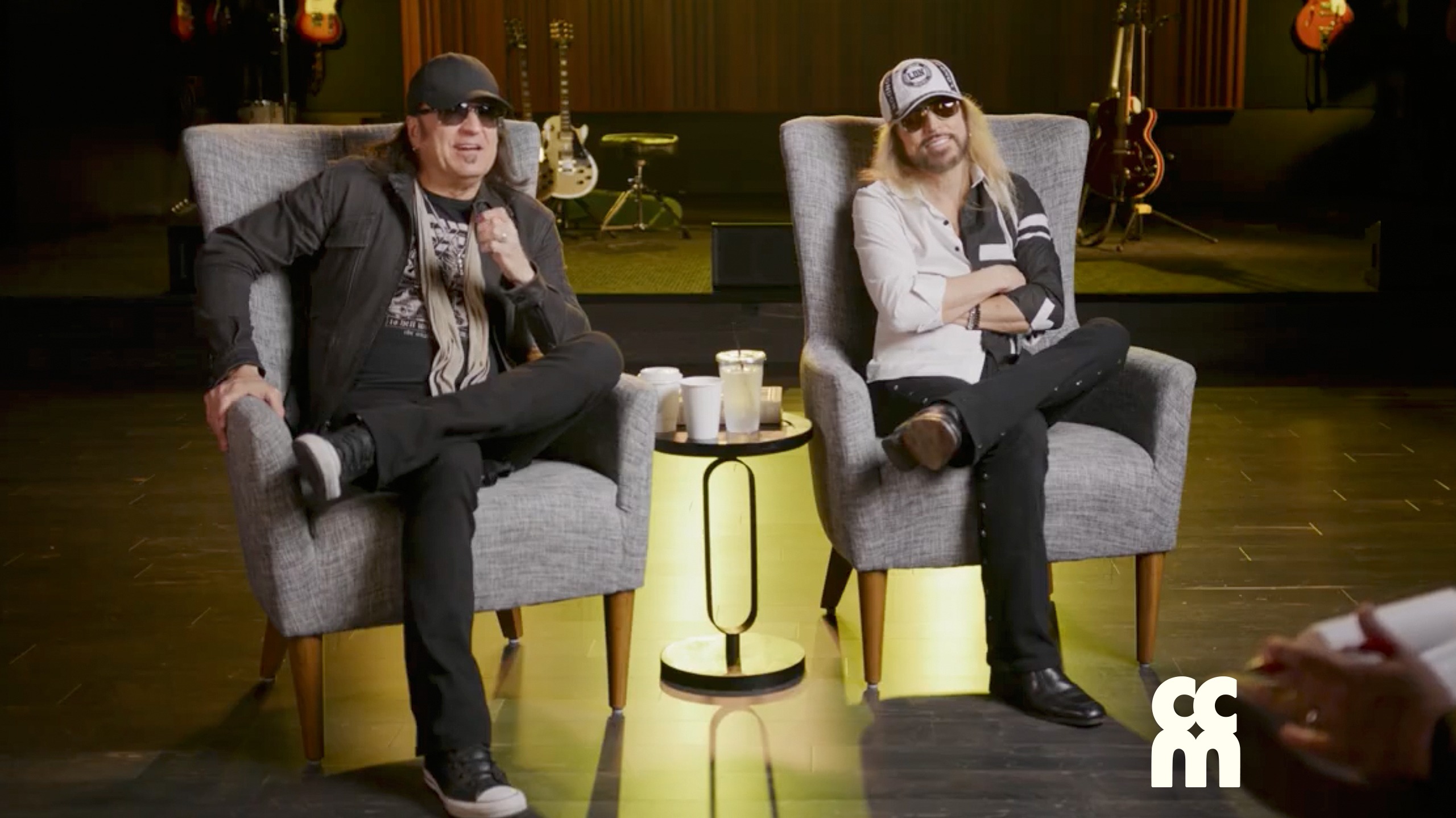
"Back then, you had a lot of people going, ‘These guys are the devil, you know, have nothing to do with these guys,’" Robert recalled.
Michael jumped in to finish the thought: "Preaching against us."
The cognitive dissonance reached absurd theatrical heights on tour. Robert remembers pulling up to a major arena venue in a major metropolitan city, preparing to walk inside for soundcheck, only to be met by a massive, angry mob of picketing Christians condemning the band for playing "devil’s music" (heavy metal).
The kicker? Iconic hard rock legends AC/DC were performing at a venue right next door on the exact same night—and they weren’t being picketed at all.
"How many people would have been touched if they could have understood what we were saying?" Robert muses, reflecting on the opposition with a mixture of sorrow and steadfast conviction. "And we were legitimate. We were sincere. We meant it. And it’s so out front. It’s right there. You can’t deny it."
The cultural gatekeeping within the religious community was so pervasive that it even touched future generations of artists. During our discussion, Michael referenced Skillet frontman John Cooper, who has frequently spoken about his upbringing. Cooper—now one of the most prominent and unapologetic voices in modern Christian rock—was famously forbidden from listening to Stryper by his parents growing up.
Let that sink in: one of the definitive architects of modern Christian rock grew up in a household where consuming Stryper’s groundbreaking output was strictly taboo.
"But still, despite all that, we still broke out," Michael noted.
Future Outlook: A Legacy That Refuses to Fade
The most astonishing aspect of the Stryper narrative is that it is not merely a historical artifact preserved in amber. The band is actively recording, touring, and cultivating vibrant new generations of fans across the globe.
There was a time, however, when Michael Sweet believed the story had reached its final page. Following internal friction and shifting musical tides in the early 1990s, the band dissolved.
"I thought it was over in ’91 when we went our separate ways… and I really, truly thought that that was one part of my life," Michael admitted.
Instead, a fortuitous reunion in 2003 ignited a creative renaissance that has far outpaced their initial 1980s run.
"We got back together in ’03, and we’ve done more now from ’03 to ’26 than ’84 to ’91," Robert observed with genuine awe. "And I mean way more—three times as much."
Reflecting on longevity, Robert admits that the teenage and twenty-something versions of himself and Michael never mapped out a four-decade career plan. "I don’t think Michael and I sat down and went, ‘Wow, we’re going to be doing this when we’re 66 and 63.’ But God’s given us the ability to do it."
Michael encapsulates their ongoing journey with an unyielding sense of divine calling and personal purpose:
"This is what we do. This is what we were born to do. This is what we always dreamed about doing. So let’s enjoy the ride… the ride is still going. It’s not over."
The Modern Landscape
Forty years after To Hell with the Devil smashed through glass ceilings, the sight of a Christian artist or band crossing over into mainstream entertainment is no longer an anomaly. Today’s faith-fueled artists routinely share festival stages with secular acts, stream to millions on secular platforms, and compete openly within the broader global entertainment industry.
That paradigm shift did not occur by accident. It happened because four young men in yellow and black refused to ask for permission, plugged their instruments into overdriven stacks, and delivered world-class heavy metal with an unshakeable message.
The yellow and black attack still means everything. And for a record that some religious conservatives once tried to banish from airwaves, its ultimate victory is absolute: rock and roll history will forever reserve a gold-plated chapter for the day Stryper sent the devil packing.