
Executive Overview
Forty years ago, four musicians draped in high-contrast yellow-and-black spandex achieved an operational impossibility on paper: they married the thunderous, high-octane sonic architecture of 1980s heavy metal and the over-the-top theatrical spectacle of arena rock with an unapologetically orthodox Christian message. When Stryper released their landmark third studio album, To Hell with the Devil, in October 1986, the landscape of both sacred and secular music shifted permanently.
It was not merely a stylistic milestone for Christian rock; it was an industry-shaking event that challenged the rigid gatekeeping of the American recording complex. Stryper proved that a explicitly Christian band could compete toe-to-toe with the titans of hair metal on mainstream charts, MTV, and global concert circuits without diluting its theological convictions.
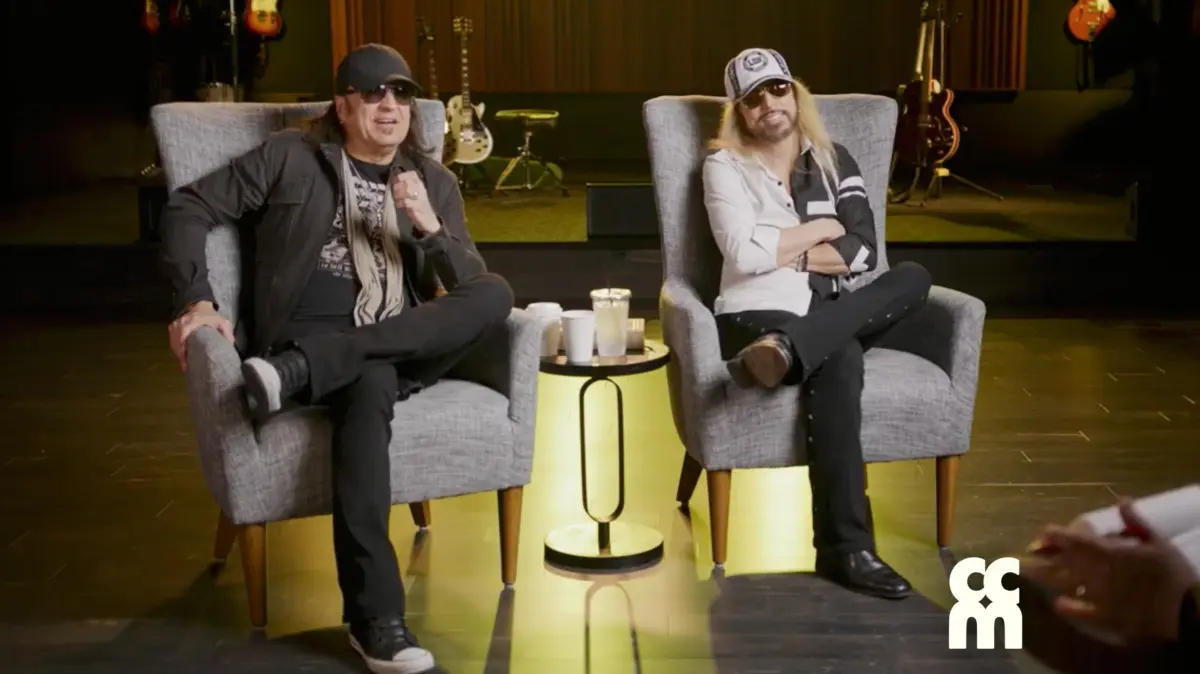
Today, the reverberations of that cultural collision are still felt across the modern entertainment landscape. To mark this milestone, an exclusive retrospective conversation with founding brothers Michael and Robert Sweet reveals the internal friction, miraculous breakthroughs, and enduring legacy of a record that changed the trajectory of heavy metal. Far from being a mere nostalgic flash-in-the-pan, Stryper’s journey has evolved into a multi-decade endurance test—one that defied hostile critics from both secular and sacred camps to forge an unexpected, enduring path in rock history.
Detailed Chronology: From Garage Ambitions to MTV Stardom
The Spark of Conviction (Pre-Release 1986)
Long before To Hell with the Devil hit retail shelves, the members of Stryper—originally formed under the name Roxx Regime in Orange County, California—knew they were operating on an entirely different frequency. The internal realization that they had captured lightning in a bottle did not dawn in a corporate boardroom; it happened in the front seats of everyday automobiles.
Drummer Robert Sweet recalls the visceral clarity he felt while driving his IROC-Z Camaro. Popping a cassette tape of "Sing-Along Song" into the deck, the sheer magnitude of the production hit him instantly. "I remember driving home… and I was just like, wow, something’s going to happen here," he reflects.
Similarly, frontman and primary songwriter Michael Sweet experienced an unshakeable moment of validation while reviewing early mixes. Sitting in a modest black Ford Escort, the brothers listened to the album’s title track playback on a basic factory cassette player. Exchanging a profound, silent glance, Michael describes it as a "holy moly moment"—a realization that the collective creative energy yielded something far beyond their individual capacities. "It was definitely a God thing," Michael asserts. "It was anointed and the power came out of that album. God’s power, unlike anything else."
Conquering the MTV Hegemony
To understand the magnitude of Stryper’s breakthrough in 1986, one must contextualize the absolute cultural monopoly held by Music Television (MTV). In the mid-1980s, MTV was the primary engine driving pop culture, an omnipotent tastemaker that minted superstars, moved millions of records, and dictated generational aesthetics. Heavy metal bands relied heavily on the network’s rotation blocks to achieve platinum status.
For a band singing explicitly about salvation and scripture, breaking past the network’s editorial filters seemed insurmountable. Yet, Stryper achieved precisely that through the fan-voted interactive program Dial MTV.
"We had TV," Michael Sweet explains. "When MTV started Dial MTV, that really pushed To Hell with the Devil over the top."
Unlike niche religious programming safely sequestered in late-night Sunday slots, Stryper competed in real time against the era’s reigning secular royalty. Their music videos for tracks like "Free" and the power ballad "Honestly" regularly squared off in the top-ten countdown against Mötley Crüe, Bon Jovi, and Poison—ultimately climbing to the coveted #1 spot.
"Here is the difference with us," Michael notes. "We were on a countdown of ten videos, ten songs up in the countdown against Mötley, Bon Jovi, Poison and going to number one. It was unheard of. I even think MTV was floored by that. They didn’t know what to think about that."
Supporting Context & Metrics: Cultural Crossfire and Industry Irony
The Paradox of Dual Opposition
While sonically indistinguishable from the elite Sunset Strip metal acts of the decade—boasting soaring three-part vocal harmonies, lightning-fast guitar solos, and thunderous double-bass percussion—Lyrically, Stryper traveled in the exact opposite direction. Yet, mainstream rock audiences largely dismissed industry categorization in favor of high-energy musicianship. They loved the music, proving that teenagers in the 1980s cared far more about a memorable hook and a blistering guitar riff than ideological purity tests.
The deepest irony of Stryper’s meteoric rise, however, came not from secular critics, but from the very communities whose values the band sought to champion. While secular crowds packed arenas, segments of the conservative Christian church launched fierce opposition campaigns.
"Back then you had a lot of people going, these guys are the devil, you know, have nothing to do with these guys," Robert Sweet recalls.
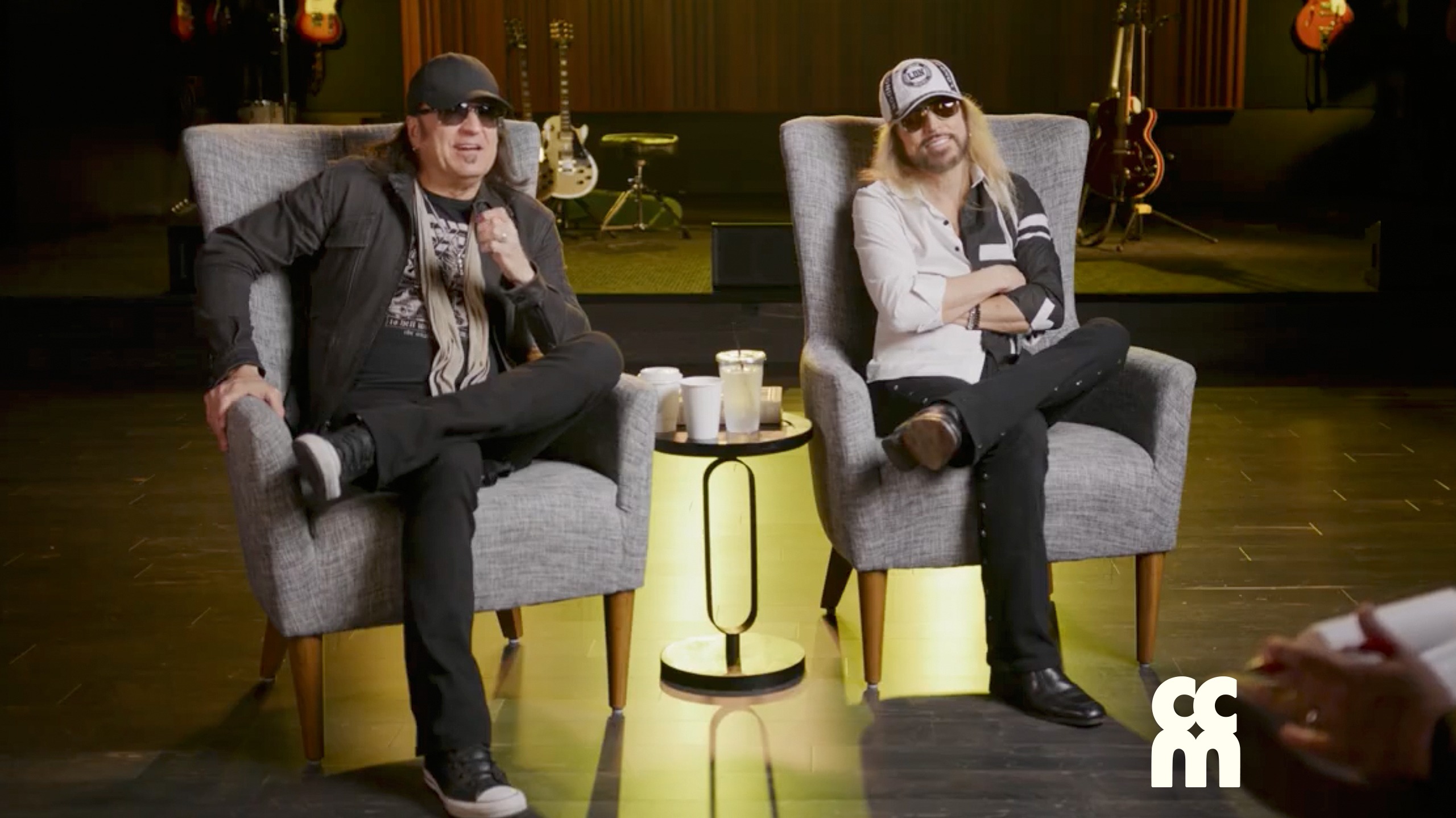
Michael immediately echoes the sentiment: "Preaching against us."
The cognitive dissonance reached absurd theatrical heights on tour. Robert remembers pulling up to a major mainstream arena venue, only to be met by an aggressive picket line composed of local church groups protesting the band’s presence. The biting irony? AC/DC was performing at a nearby venue that very same night, completely unbothered by protestors.
"We were playing in an arena on that tour and pulling up, getting ready to go inside, and we were being picketed by a large crowd of Christians," Robert remembers. "And AC/DC is playing right next to us and they’re not picketed."
The Multi-Generational Impact of Gatekeeping
This intra-faith hostility left lasting scars. Robert often reflects on the lost potential of that era, wondering how many more lives the band’s message might have reached had traditional religious gatekeepers not actively discouraged their congregations from listening. "How many people would have been touched if they could have understood what we were saying?" he asks. "And we were legitimate. We were sincere. We mean it. And it’s so out front. It’s right there. You can’t deny it."
The insular fear of rock music within the 1980s church extended even to future leaders of the genre. During their conversation, Michael Sweet referenced Skillet frontman John Cooper, who has frequently spoken about growing up in a religious household where listening to Stryper was strictly forbidden.
The historical weight of that reality is staggering: one of the defining standard-bearers of modern Christian rock grew up in an environment where engaging with the genre’s foundational pioneers was considered taboo. "But still, despite all that, we still broke out," Michael notes.
Official Statements & Retrospective Reflections
| Artist / Subject | Key Quote / Stance | Significance |
|---|---|---|
| Robert Sweet (Drummer) | "I remember driving home… and I was just like, wow, something’s going to happen here." | Highlights the immediate internal validation and pre-release confidence in the material. |
| Michael Sweet (Frontman) | "It was a holy moly moment. We got something going on here." | Captures the pivotal realization during the initial mixing sessions of the title track. |
| Michael Sweet (On MTV Success) | "We were on a countdown… against Mötley, Bon Jovi, Poison and going to number one." | Underscores the unprecedented crossover appeal into mainstream pop culture charts. |
| Robert Sweet (On Church Pickets) | "We were being picketed by a large crowd of Christians. And AC/DC is playing right next to us and they’re not picketed." | Illustrates the profound irony and resistance faced from conservative religious communities. |
Future Outlook: A Continuing Legacy at Four Decades
If the narrative of Stryper were confined to the 1980s, To Hell with the Devil would still stand as a monumental cultural artifact. The true miracle of the band, however, is that their story did not end when the grunge movement swept traditional heavy metal off the charts in the early 1990s.
Michael Sweet admits that he once believed the band’s operational lifespan had permanently expired. "I thought it was over in ’91 when we went our separate ways… and I really, truly thought that that was one part of my life."
Instead, a subsequent reunion in 2003 unlocked a prolific second act that has far outpaced their initial run. Reflecting on the timeline, Michael points out a staggering metric: "We got back together in ’03, and we’ve done more now from ’03 to ’26 than ’84 to ’91, and I mean way more, three times as much."
For Robert Sweet, the longevity is a humbling, unexpected grace. "I don’t think Michael and I sat down and went, wow, we’re going to be doing this when we’re 66 and 63. But God’s given us the ability to do it."
The Unbroken Ride
Today, the paradigm shifted by To Hell with the Devil is standard practice. Contemporary Christian artists routinely cross over into mainstream spaces, share festival bills with secular acts, and compete comfortably within the global entertainment industry without sacrificing their spiritual identity.
Stryper did not wait for permission to enter the room; they simply plugged in their amplifiers, turned up the volume, and delivered undeniable musicianship. Forty years after unleashing their signature yellow-and-black aesthetic upon an unsuspecting world, the message remains unchanged—and the road ahead shows no signs of terminating.
As Michael Sweet aptly concludes: "This is what we do. This is what we were born to do. This is what we always dreamed about doing. So let’s enjoy the ride… the ride is still going. It’s not over."