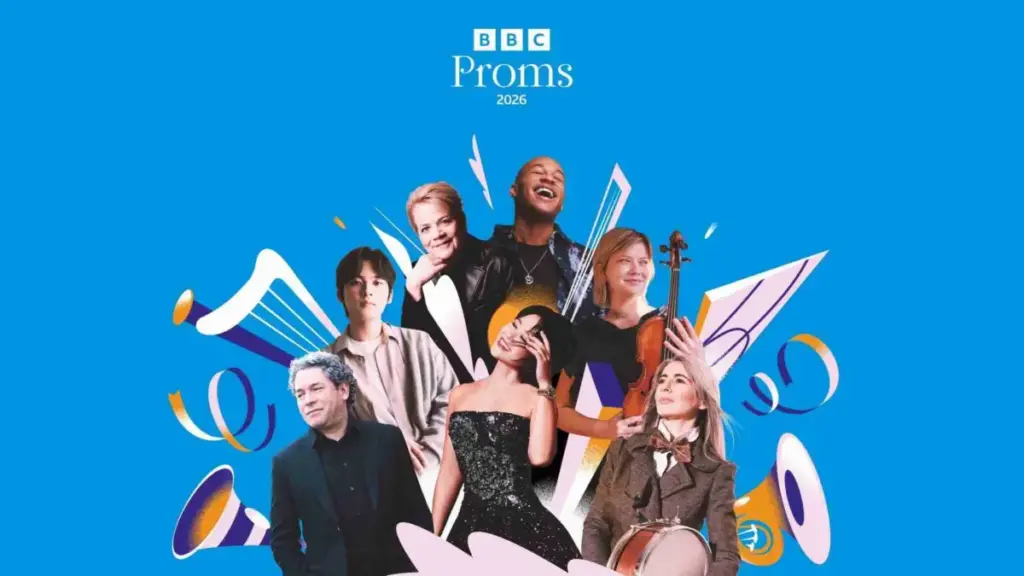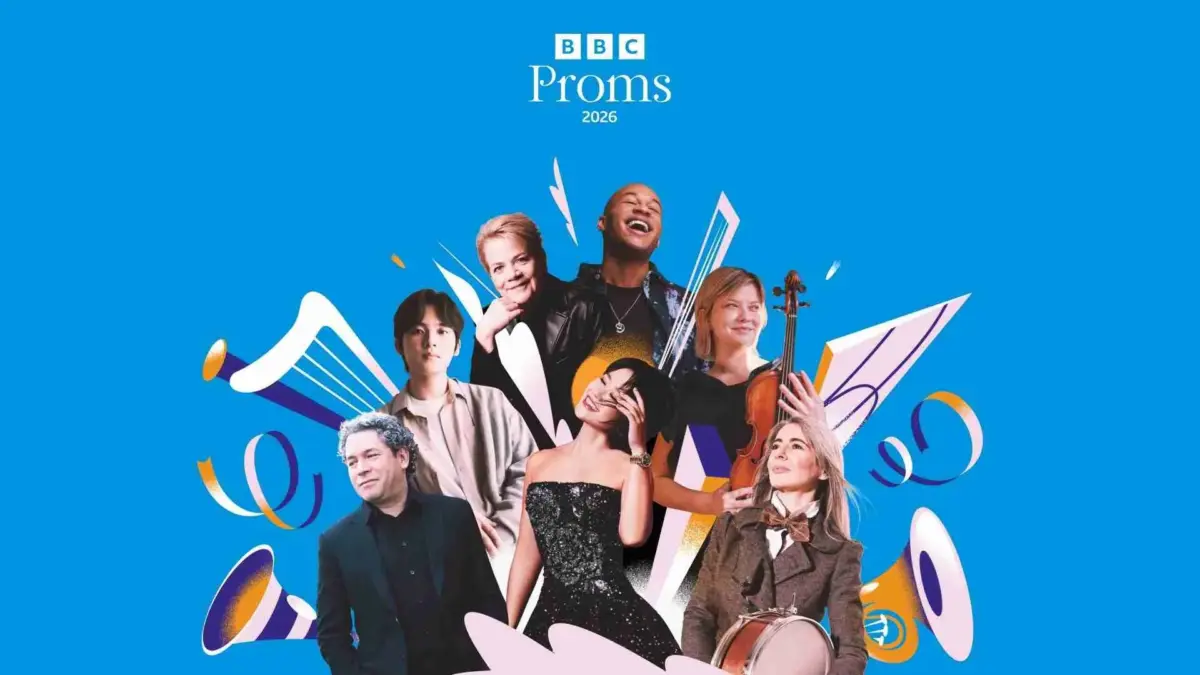

LONDON — The world’s greatest classical music festival is preparing for another monumental summer. Spanning eight weeks from July 17 to September 12, 2026, the BBC Proms will once again transform the iconic Royal Albert Hall in London—alongside venues nationwide—into the epicenter of the global musical universe.
The 2026 festival arrives with a swaggering, globe-spanning program that feels both celebratory and strategically designed for modern audiences. Featuring 86 distinct concerts, more than 3,000 participating musicians, and an expansive repertoire that bridges centuries and genres, this year’s line-up successfully balances international star power with a renewed, deeply committed emphasis on British creativity and radical audience accessibility.
True to its historic founding mission of bringing "great music for the widest possible audience," the festival continues to prioritize equity of access. More than 70,000 highly coveted £8 standing tickets ("Promming passes") will be made available, while every single note of the eight-week festival will be broadcast across BBC platforms. Yet, behind the impressive logistical scale lies a distinct artistic narrative—one that is unmistakably transatlantic.
Executive Overview: A Season of Scale and Strategy
The 2026 BBC Proms is more than a seasonal compilation of canonical masterworks; it is a meticulously curated dialogue between old-world heritage and new-world dynamism. Marking the 250th anniversary of the United States Declaration of Independence, the programming leans heavily into American repertoire, iconic orchestras, and visionary contemporary composers, while simultaneously doubling down on the festival’s UK-wide footprint and genre-defying collaborations.
The sheer scale of the operation underscores the BBC’s enduring commitment to cultural enrichment. Across 56 days, audiences at the Royal Albert Hall and regional hubs in Bristol, the North-East of England, and Mold in North Wales will experience a living laboratory of sound. From long-overdue orchestral returns to cutting-edge digital instruments and cross-genre spectacles, the 2026 Proms is engineered to challenge, comfort, and captivate in equal measure.
Detailed Chronology: From Opening Night Spectacle to the Last Night Grandeur
The trajectory of the 2026 season is mapped through a series of thematic watersheds, tracing a narrative arc from transatlantic celebrations to homegrown milestones.
The Opening Fortnight: An American Accent
The festival launches on July 17 with a First Night that immediately establishes the season’s transatlantic ambitions. Under the baton of chief conductors, the programme juxtaposes the sweeping American idioms of Aaron Copland and George Gershwin with the refined textures of Maurice Ravel. Crucially, the evening also introduces a major new BBC commission by contemporary composer Josephine Stephenson, signaling right from the outset that the Proms refuses to rest solely on its historical laurels.
As July transitions into August, the schedule explodes with historic international arrivals. Most notable is the long-awaited return of the Los Angeles Philharmonic under the charismatic leadership of Gustavo Dudamel—an ensemble absent from the Proms for nearly a quarter of a century. Hot on its heels is the Metropolitan Opera Orchestra, making its historic Proms debut under Yannick Nézet-Séguin. The ensemble will bring the monumental, late-romantic architectural works of Richard Strauss and Gustav Mahler to the hallowed acoustics of Kensington Gore, a pairing destined to be remembered as one of the defining highlights of the summer.
Mid-Summer: Modern Masterpieces and Jazz Icons
August brings a rigorous exploration of contemporary American and international composition. Marin Alsop leads an eagerly anticipated "American Classics" showcase, while the festival pays homage to a titan of 20th-century music with a major centenary tribute to Miles Davis. This integration of jazz within the classical canon highlights the Proms’ expanding stylistic remit.
Simultaneously, the festival honors British anniversaries. Benjamin Britten’s 50th memorial milestone is marked through a series of dedicated performances spanning his intimate early works to his towering, emotionally complex orchestral statements.
The Closing Weeks: Tradition Meets Innovation
As the season nears its September conclusion, the tempo accelerates. The final weeks serve as a showcase for virtuosic masterclasses, culminating in a Last Night of the Proms on September 12 that marries traditional pageantry with daring novelty.
In a Proms first, superstar pianist Yuja Wang will tackle Samuel Barber’s ferocious Piano Concerto, performing alongside the BBC Symphony Orchestra and Chorus under the steady, inspiring direction of Sakari Oramo. Complete with the requisite flag-waving, ceremonial favorites, and boundary-pushing contemporary artistry, the Last Night will encapsulate everything the festival strives to be.
Supporting Context & Metrics: By the Numbers
To truly appreciate the monumental footprint of the 2026 BBC Proms, one must look beyond the marquee headliners and examine the quantitative architecture supporting the festival:
- 86: Total number of distinct concerts taking place across the eight-week season.
- 3,000+: Musicians, vocalists, and conductors performing throughout the summer.
- 70,000+: Affordable £8 standing tickets ("Promming spaces") guaranteed to ensure inclusivity for students, young people, and budget-conscious concertgoers.
- 42: Performances delivered by the BBC’s dedicated in-house ensembles (including the BBC Symphony Orchestra, BBC Philharmonic, BBC Concert Orchestra, and BBC Singers).
- 41: External UK orchestras and choirs contributing to a truly national collaborative effort.
- 20: World and UK premieres scheduled for the season, comprising 17 direct BBC commissions.
- 3: Major regional residency hubs outside London, expanding the festival’s physical reach into Bristol, the North-East, and Wales.
This statistical density highlights a vital truth: while international orchestras capture headlines, the heartbeat of the Proms remains inextricably linked to British institutions and the relentless creation of new music.
Official Statements and Artistic Vision
Curatorial leadership has emphasized that the 2026 season is not an exercise in nostalgic preservation, but a proactive statement on the relevance of orchestral music in the 21st century.
In statements released ahead of the general booking period, festival organizers stressed the intentionality behind the American focus. "Marking 250 years of US independence gave us a thematic lens, but our goal was never merely to import American heritage," noted a senior festival programmer. "Instead, we wanted to create a vibrant sonic conversation between North American innovation—exemplified by artists like Wynton Marsalis, Jessie Montgomery, and Gustavo Dudamel—and the deep, enduring roots of European and British classical traditions."
Furthermore, the BBC has doubled down on its commitment to living composers. With 20 premieres spanning generations—from nonagenarian luminaries like Thea Musgrave and Betsy Jolas to established contemporary voices like Mark-Anthony Turnage and the next wave of talent in the Young Composer showcase—the Proms continues to act as a living laboratory.
"New music is not a box-ticking exercise for us," festival representatives affirmed. "It is the oxygen of the art form. If we stop commissioning, performing, and sometimes challenging audiences with the unfamiliar, the classical tradition becomes a museum. The Proms must always be a living, breathing ecosystem."
Future Outlook: A Festival Without Borders
As the classical music landscape evolves in an increasingly digital and fractured media environment, the BBC Proms faces the dual challenge of preserving its august traditions while aggressively courting new demographics. The 2026 season suggests the festival is passing this test with flying colors.
Crossing Genres and Breaking Boundaries
The modern Proms has long since abandoned rigid genre silos, and the 2026 schedule accelerates this philosophy. Highlights designed to draw diverse, non-traditional audiences include a high-concept 40th-anniversary celebration of Paul Simon’s landmark album Graceland, a symphonic Progressive Rock night, immersive tributes to Marvin Gaye, and cinematic explorations of classic James Bond film scores. For world-music enthusiasts, the inclusion of Turkish psych-folk courtesy of Altın Gün proves that the Royal Albert Hall’s dome can house virtually any acoustic tradition.
Accessibility and the Digital Frontier
Inclusivity in 2026 extends far beyond physical pricing models. The festival is expanding its family programming—ranging from Disney composer Alan Menken’s magical scores to the educational, interactive Horrible Science: The Big Bang Proms Experiment. Moreover, accessibility initiatives feature relaxed performances designed for neurodivergent patrons, alongside technological innovations like the pioneering Clarion concerto, which utilizes tablet-based instruments to allow performers with physical disabilities to make music alongside traditional symphony orchestras.
Regionally, the festival’s footprint is more expansive than ever. By establishing robust residencies in Bristol and the North-East, alongside a landmark first-ever visit to Mold in North Wales, the Proms is actively decentralizing its offerings. These regional strands are not scaled-down afterthoughts; they bring world-class premieres and major repertoire directly to communities that historically had to travel to London to experience them.
Building on record-breaking digital audiences from previous years, the BBC’s multi-platform strategy—leveraging Radio 3, BBC Sounds, and BBC iPlayer—ensures that millions more will experience the festival from their living rooms, classrooms, and mobile devices across the globe.
The Critical Eye
As the world’s largest classical music festival prepares to take over London and the UK, industry watchers and critics alike are sharpening their pencils. True to form, Classical Source will be embedded throughout the summer—reviewing, assessing, and celebrating as many Proms as humanly possible. Expect rigorous insight, unfiltered enthusiasm, and the occasional spirited dissenting voice as this massive cultural engine rolls into action.
The countdown to the First Night has officially begun. The instruments are tuned, the scores are open, and a summer of extraordinary sound awaits.