
Executive Overview
In the contemporary landscape of independent music production, the pursuit of high-definition polish often threatens to erode the raw, bruising intimacy that gives a song its initial pulse. For emerging singer-songwriter G DeGroot, preserving that unvarnished spark became the definitive artistic battleground for their latest release.
Titled "Can’t Stop," the new single arrives on the heels of preceding promotional tracks "Never Tell Me" and "Whole Thing," serving as a tonal anchor that showcases the more understated, lo-fi underbelly of their forthcoming full-length album.
Yet, the track’s journey from a casual bedroom software project to an official release reveals a compelling narrative about creative instinct over traditional industry standards. Born out of an impromptu GarageBand session that was never originally intended to see the light of day, "Can’t Stop" encapsulates the serendipitous magic of first takes.
Far from being a polished studio creation, the song features subtle, atmospheric details—ranging from reversed pedal steel guitar textures to field recordings captured by friends echoing inside a concrete tunnel. These elements weave a deeply personal tapestry that mirrors the album’s overarching thematic exploration: the agonizing, cyclical nature of ruminating on a defunct romance.
This comprehensive report examines the structural anatomy of "Can’t Stop," traces its chronological evolution from a casual demo to a key promotional single, contextualizes its sonic footprint within the broader indie-folk and lo-fi movements, and analyzes the thematic resonance of what is shaping up to be one of the year’s most introspective releases.
Detailed Chronology: From GarageBand Genesis to the Final Tracklist
To understand the unique sonic architecture of "Can’t Stop," one must retrace the timeline of its creation—a process that subverts the conventional, multi-tiered pipeline of modern record production.
Phase I: The Incidental Demo
The genesis of "Can’t Stop" began in the intimate, solitary confines of a digital audio workstation. Operating inside Apple’s GarageBand, G DeGroot laid down the initial structural framework of the song. At this preliminary stage, the track was conceived strictly as a working blueprint—a rough sketch intended to guide the band through chord progressions, vocal melodies, and rhythmic pacing before entering a professional studio environment.
In modern music production, this phase is ephemeral. Demos are generally treated as disposable scaffolding, discarded the moment tracking begins on expensive hardware with seasoned engineers. However, the emotional resonance captured during this solitary writing session possessed an elusive quality that would prove impossible to replicate later.
Phase II: The Studio Re-recording Attempt
Recognizing the strength of the underlying songwriting, DeGroot and their collaborators made the conventional push to translate the demo into a "nice and official" studio recording. The objective was clear: elevate the sonic fidelity, clean up the transient responses, re-record the instrumentation through high-end preamplifiers, and deliver a radio-ready master that aligned with industry standards for clarity and dynamic range.
However, music history is replete with instances where the pursuit of sonic perfection inadvertently sterilizes a performance. As DeGroot notes, the translation process stripped away the fragile vulnerability that gave the original demo its heartbeat. The timing was too rigid, the vocal delivery too guarded, and the ambient atmosphere too clinical.
Phase III: The Artistic Pivot and Preservation
Facing a creative crossroads, the artistic team made a bold decision that would define the track’s identity: they abandoned the high-budget studio recordings in favor of the original GarageBand project file.
This pivot required a reconciliation with lower audio fidelities, digital artifacting, and unconventional mixing choices. Yet, by choosing to preserve the original rough cut, DeGroot ensured that the listener experiences the exact emotional state in which the song was conceived. The imperfections—the room noise, the digital clipping tendencies, the unpolished vocal takes—transmuted from technical liabilities into artistic assets.
Supporting Context & Metrics: The Anatomy of a Lo-Fi Aesthetic
To contextualize the release of "Can’t Stop," one must examine the broader cultural and technical shift toward lo-fi production methodologies in contemporary indie music. Over the past decade, listeners have increasingly gravitated toward music that bears the sonic fingerprints of its creation.
The Psychology of Lo-Fi Production
In an era dominated by hyper-compressed streaming masters and algorithmic optimization, lo-fi recordings offer a psychological counter-weight. They signal authenticity, vulnerability, and human error. When a listener hears a track built from a home demo, the psychological distance between artist and audience collapses.
"Can’t Stop" weaponizes this dynamic. By utilizing a stripped-back, unmastered aesthetic, the song invites the listener into the physical space where it was written. The inclusion of accidental or ambient audio elements—such as the reversed pedal steel and the environmental vocal samples—functions as a form of sonic world-building.
Deconstructing the Audio Elements
A forensic listen to "Can’t Stop" reveals a masterclass in atmospheric arrangement operating under minimalist constraints:
- The Reversed Pedal Steel: One of the track’s most haunting textures is the inclusion of pedal steel guitar lines that have been reversed in post-production. This technique lends a surreal, dreamlike quality to the instrumentation, pulling the listener backward in time and mirroring the song’s theme of psychological regression.
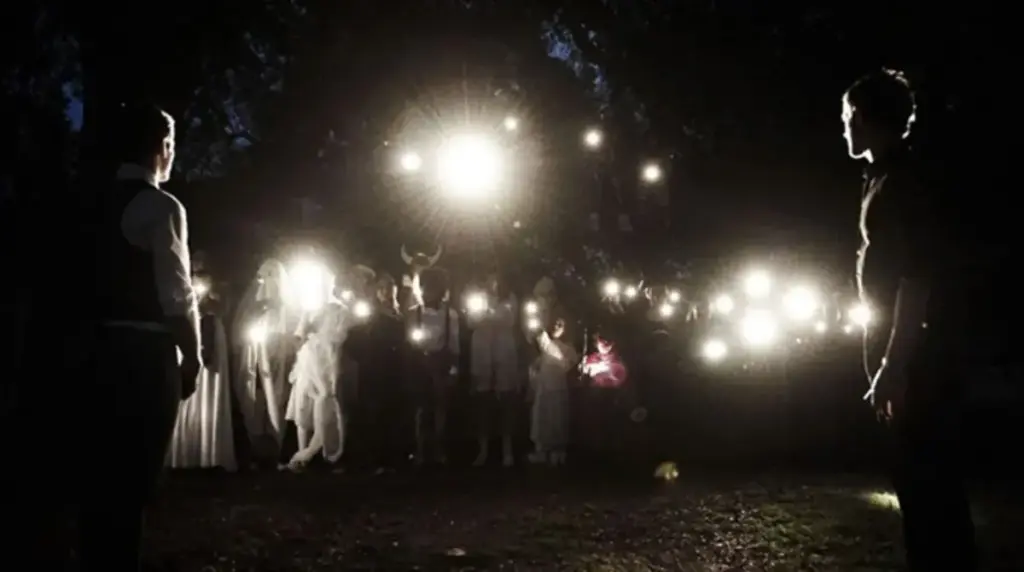
- The Tunnel Vocal Sample: At the termination of the track, a distinct vocal sample emerges. This audio artifact captures a moment in time when a group of friends were singing communally inside a tunnel in the woods.
- The Album Cover Connection: The aforementioned tunnel is not merely a sonic Easter egg; it serves as the visual centerpiece of the album’s cover art. This cross-pollination between visual and auditory motifs creates a secret, intimate narrative layer for dedicated listeners to uncover.
Official Statements: In the Artist’s Own Words
Artistic intent is frequently obscured by the machinery of press releases and PR campaigns. In the case of G DeGroot, however, the artist has been remarkably transparent about the mechanics and emotional underpinnings of "Can’t Stop."
Speaking candidly about the track’s unusual production history, DeGroot explains:
"I made ‘Can’t Stop’ on GarageBand—it was supposed to be a demo that we recreated to be more nice and official, but the feel just wasn’t the same, so we kept the original."
This commitment to feeling over fidelity underscores a broader philosophy of modern independent musicianship—one that prioritizes emotional resonance over acoustic immaculate-ness. Elaborating on the intricate layers embedded within the track and its thematic architecture, DeGroot continues:
"I’m proud of that. It has some reversed pedal steel on it, and there’s this one vocal sample at the end from a time some friends were singing in a tunnel in the woods—the same tunnel is featured on the cover of the album, which feels significant in this secret little way. The song speaks to the feeling of being stuck on a past relationship, revisiting things over and over and looking for glimmers of hope that it could be real again. This is a big theme in the album—being stuck on the past—although each song has its own subtle emotional valence to that experience."
Through these statements, the interconnected nature of the album comes into sharp focus. "Can’t Stop" is not an isolated experiment in lo-fi recording; it is a thematic cornerstone that anchors the entire artistic statement of the project.
Thematic Analysis: The Architecture of Obsession
While the sonic profile of "Can’t Stop" utilizes lo-fi textures and ambient field recordings, its lyrical core tackles one of the most universally agonizing human experiences: psychological fixation.
The Trajectory of Rumination
The phrase "can’t stop" acts as both a confession and a symptom. Throughout the track, the lyrical narrative explores the compulsive loop of memory retrieval. In the wake of a failed relationship, the human psyche often engages in a protective yet destructive mechanism: re-analyzing past interactions in search of alternative outcomes, missed warning signs, or illusory evidence that the bond can be resurrected.
DeGroot captures this emotional paralysis with stark vulnerability. The songs on the forthcoming album do not offer easy resolutions or tidy paths toward closure. Instead, they sit comfortably within the discomfort of unresolved grief. Each track approaches this central theme from a distinct emotional angle, ensuring that the exploration of the past remains nuanced, varied, and deeply human.
The Role of Nostalgia in Production and Lyricism
It is a profound artistic symmetry that a song about being trapped in the past was constructed by preserving a piece of the past itself—the original GarageBand demo. The medium mirrors the message. Just as the protagonist in the song cannot escape the gravitational pull of an old romance, the production refuses to sever ties with its own initial conception. The demo is the final product because, in matters of emotional fixation, the first iteration is often the most honest one.
Future Outlook: What Lies Ahead for the Album Campaign
As the release date for G DeGroot’s full-length album approaches, the rollout strategy has demonstrated a deliberate, calculated progression.
Analyzing the Singles Run
- "Never Tell Me": Established the foundational vocal identity and storytelling capacity of the project.
- "Whole Thing": Expanded the sonic palette, introducing richer instrumental arrangements and dynamic shifts.
- "Can’t Stop": Strips away the sheen, offering a vulnerable, lo-fi counterweight that exposes the raw emotional nerve at the center of the album.
This triad of singles positions the upcoming record as a dynamic, multifaceted body of work capable of balancing polished folk sensibilities with unpolished, avant-garde intimacy.
Industry Implications and Audience Reception
For independent artists navigating the algorithmic demands of modern music distribution, choosing to lead with a raw GarageBand demo as a core single is a courageous gamble. Yet, in an era where audiences are increasingly fatigued by over-processed pop and hyper-sanitized indie music, DeGroot’s authenticity is likely to yield strong dividends.
As listeners begin to decode the hidden layers of "Can’t Stop"—from the reversed pedal steel to the tunnel vocal sample and its accompanying album art—the track is poised to become a fan favorite. It serves as a masterclass in how limitations can be converted into strengths, proving that emotional resonance will always outweigh transient sonic perfection.
With the stage now set by "Can’t Stop," anticipation reaches a fever pitch for the full-length album. If this single is any indication of the emotional depth and sonic adventurousness waiting within the tracklist, G DeGroot is well on their way to cementing a vital, enduring voice in the contemporary independent landscape.