In the sprawling, often mythologized annals of New York City’s late-20th-century underground music scene, few figures loom as large, dangerous, and defiantly innovative as Alan Vega. As the incendiary frontman of the pioneering protopunk-electronic duo Suicide—alongside collaborator Martin Rev—Vega helped map the DNA of post-punk, synth-pop, industrial, and techno. Now, nearly a decade after his passing in July 2016, the vaults have yielded another vital piece of his sonic legacy.
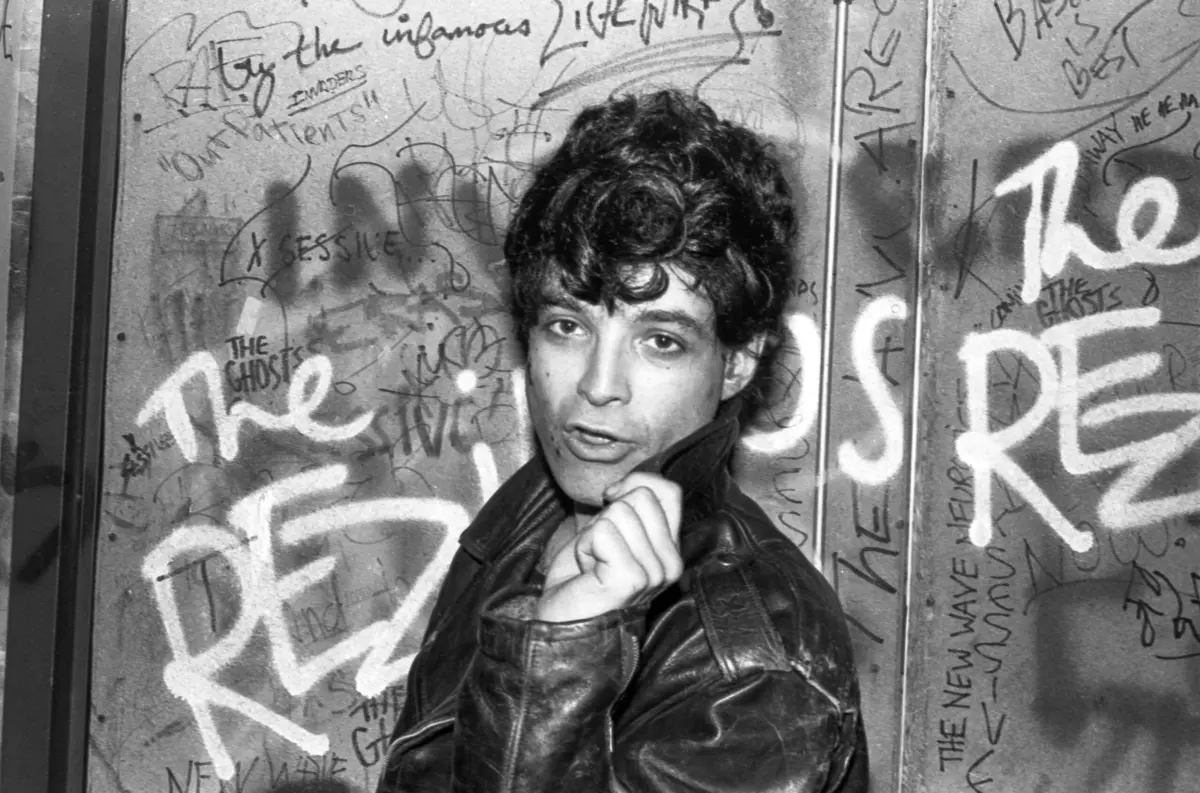
Unearthed by Liz Lamere (Vega’s longtime collaborator, wife, and co-producer) and Jared Artaud (co-producer and creative director of The Vega Vault Project), Live at Max’s Kansas City captures a pivotal historical moment. Recorded live on July 18, 1980, at the legendary Manhattan watering hole and performance incubator, the album documents Vega on the precipice of releasing his monumental, self-titled solo debut.
Long lost to the mists of downtown lore, this previously unheard recording is slated for a commercial release across streaming platforms and physical vinyl editions, marking a major milestone for The Vega Vault Project. To whet the appetite of fans and historians alike, the ferocious lead single, "JUKEBOX BABE (Live at Max’s Kansas City, 1980)," has been made available to stream online immediately.
This comprehensive report examines the provenance of the recording, places it within the turbulent chronology of Vega’s career, analyzes the technical and aesthetic breakthroughs of his solo transition, and explores what this unearthing means for the preservation of electronic music’s most vital heritage.
Detailed Chronology: The Summer of 1980 and the Max’s Kansas City Performance
To understand the weight of Live at Max’s Kansas City, one must cast their mind back to the sweltering New York summer of 1980. The city was a crucible of economic decay, soaring crime rates, and unmatched artistic vitality. The downtown punk explosion of CBGB and Max’s Kansas City was mutating into new, darker, and more abrasive forms. Suicide had already terrified and mesmerized audiences with their self-titled 1977 debut album—an LP featuring the blood-curdling noir epic "Frankie Teardrop"—and had notoriously caused riots across Europe while opening for Elvis Costello and The Clash.
By 1980, Vega was preparing to step out on his own temporarily, pivoting toward a sound that fused his foundational love of rockabilly with the shivering, futuristic pulse of raw electronic hardware. The self-titled solo album Alan Vega, released later that year on Celluloid Records, would prove to be a masterclass in minimalist swagger.
Recorded live just weeks before that landmark release, the July 18, 1980 concert at Max’s Kansas City serves as a missing link. Max’s Kansas City was not merely a venue; it was a societal ecosystem where Andy Warhol’s superstars, jazz musicians, punks, poets, and high-fashion elite collided over cheap booze and neon lights. By 1980, the club was nearing the end of its iconic run, making performances like Vega’s carry a desperate, end-of-an-era electricity.
The newly revealed tracklist for the release demonstrates the raw, unadulterated power of that evening:
"JUKEBOX BABE (Live at Max’s Kansas City, 1980)"
"KUNG FOO COWBOY (Live at Max’s Kansas City, 1980)"
"LOVE CRY (Live at Max’s Kansas City, 1980)"
"BYE BYE BAYOU (Live at Max’s Kansas City, 1980)"
"ICE DRUMMER V1 (Live at Max’s Kansas City, 1980)"
"FIREBALL (Live at Max’s Kansas City, 1980)"
"ICE DRUMMER V2 (Live at Max’s Kansas City, 1980)"
Each song acts as a sonic postcard from a vanished Manhattan, capturing a visionary artist testing the boundaries of what a solo performer could achieve on stage with little more than a microphone, a drum machine, and sheer, unfiltered charisma.
Supporting Context & Metrics: The Mechanics of The Vega Vault Project
The recovery, restoration, and eventual dissemination of archival material such as Live at Max’s Kansas City do not happen by accident. They are the result of meticulous archival practices spearheaded by Liz Lamere and Jared Artaud through The Vega Vault Project.
The Technological and Aesthetic Pioneer
To look at Alan Vega’s performance style in 1980 is to witness the blueprint for modern electronic live performance. Long before the era of laptops, MIDI sync, and pre-programmed backing tracks dominating mainstream pop and EDM festivals, Vega was utilizing backing tracks out of both practical necessity and aesthetic conviction.
In a statement reflecting on the technological philosophy of her late husband, Liz Lamere noted:
"Alan was an early pioneer of using backing tracks for live performances. This was partly out of necessity, but very much an aesthetic choice. He had a natural gift for making electronic music sound like it was pulsing with hot blood."
This distinction is crucial. Critics and purists of the late 1970s and early 1980s often dismissed electronic backing tracks as cold, mechanical, or "fake" compared to traditional rock instrumentation. Yet Vega subverted this criticism entirely. By coupling icy, repetitive rhythm boxes and synthesizer drones with his ferocious, Elvis-channeling vocal delivery—complete with motorcycle jacket, slicked-back hair, and an imposing physical presence—he injected visceral human emotion into synthetic spaces. He proved that machines could bleed.
The Scale of the Archives
The sheer volume of material left behind by Vega in his extensive personal archives remains staggering. Decades of unreleased studio sessions, alternate takes, live soundboard cassette recordings, and visual art prototypes have languished in climate-controlled storage waiting for the right curatorial touch.
Jared Artaud, reflecting on the magnitude of the discovery, shared his initial reaction to unearthing the Max’s Kansas City tapes:
"Alan left behind so much material that we are still uncovering. It’s an unreal feeling when you stumble across something that feels like a Holy Grail. Live at Max’s Kansas City blew me away the first time I heard it."
From a metric and preservation standpoint, projects like this involve high-resolution audio transfers from deteriorating analog magnetic media (such as cassette tapes, quarter-inch reels, and broadcast masters), careful restoration to remove physical degradation and hums without compromising dynamic range, and mastering specifically tailored for both modern digital streaming algorithms and the warm, physical constraints of vinyl records.
Official Statements & Curatorial Perspectives
The unveiling of Live at Max’s Kansas City, 1980 is more than a commercial product drop; it is an act of cultural custodianship. Liz Lamere and Jared Artaud have taken on the mantle of preserving an artistic legacy that defies easy categorization.
In the broader music industry, posthumous releases often face cynicism—they are frequently viewed as cash grabs by estates looking to milk a dead artist’s catalog. However, the meticulous care evident in The Vega Vault Project separates these releases from standard industry filler. Every piece of audio pulled from the vaults is contextualized within Vega’s broader narrative arc as a visual artist, sculptor, and sonic terrorist.
Lamere’s perspective as both a life partner and creative equal gives the project an authenticity that cannot be faked. Having worked side-by-side with Vega through his later years, she understands the exact lineage of his sound—how his work in the visual arts directly informed his sonic sculptures.
Similarly, Artaud’s role as co-producer and creative director bridges the gap between historical preservation and contemporary presentation. By ensuring that the visual branding—including the striking album artwork—aligns with the gritty, neon-soaked aesthetic of 1980s New York, the team guarantees that the listener’s journey begins long before the needle drops on the vinyl.
Future Outlook: The Ongoing Legacy of Alan Vega
As the music world prepares for the full release of Live at Max’s Kansas City, 1980, questions naturally arise regarding what else remains hidden within the legendary vaults. If a recording of this caliber—capturing a transformative artist at the exact apex of transitioning from a groundbreaking duo to an equally formidable solo act—was sitting quietly in the archives, what other masterpieces are waiting for their turn in the light?
The Vega Vault Project has positioned itself as a vital engine for contemporary music history. By systematically cataloging, restoring, and releasing these archival gems, Lamere and Artaud are not merely servicing die-hard fans of Suicide and Alan Vega; they are educating a new generation of musicians who take for granted the genre-blending freedom that Vega fought so hard to establish.
Today’s electronic producers, industrial noise artists, and darkwave revivalists owe a massive, foundational debt to Alan Vega. He demonstrated that you did not need virtuosic technical skill on a traditional instrument to move an audience; you needed vision, nerve, and an unwavering commitment to emotional honesty.
With the release of "JUKEBOX BABE (Live at Max’s Kansas City, 1980)" currently streaming and the full vinyl and digital rollout imminent, listeners are invited to step back in time. They are being offered a front-row seat at a sweaty, dangerous, and utterly transcendent club performance in the heart of a bygone New York City. Alan Vega may no longer walk among us, but through the relentless dedication of The Vega Vault Project, his electronic heartbeat continues to echo across the decades, pulsing with hot blood.