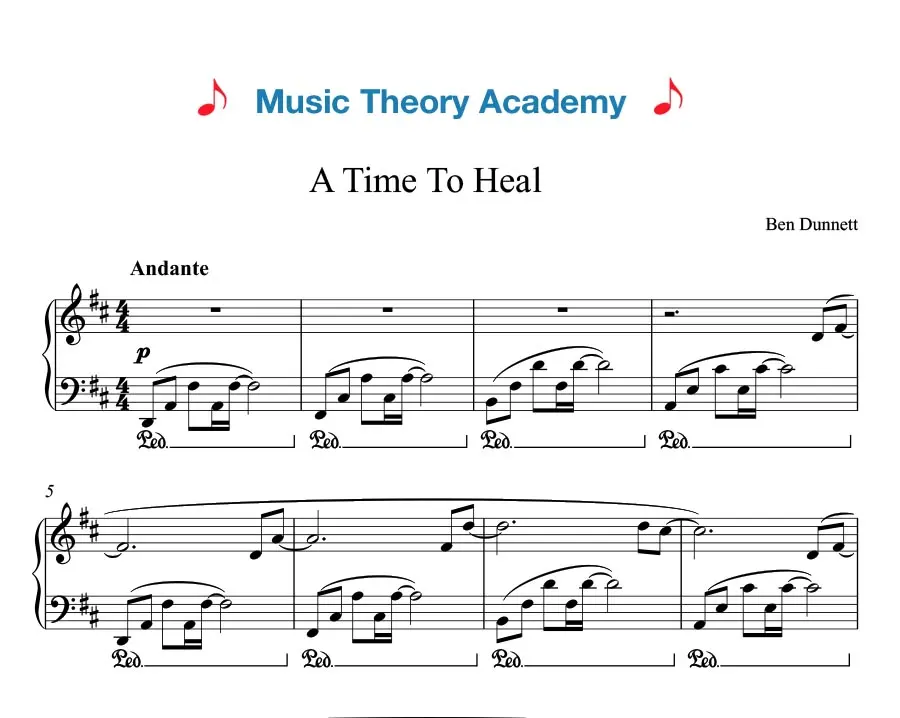
In an era defined by rapid digital consumption, algorithmic streaming, and paywalled creative content, composer and music educator Ben Dunnett LRSM has chosen a refreshing path of accessibility and generosity. Dunnett, the founder of the esteemed Music Theory Academy, has officially made the complete sheet music for his reflective solo piano composition, "A Time to Heal," available to the public as a completely free download. Taken from his contemplative studio album, A Time for Everything, the piece is designed to offer solace, emotional resonance, and technical gratification to pianists of varying skill levels.
This release is far more than a simple promotional giveaway; it represents a philosophical statement on the role of music in modern society. For decades, the barrier to entry for high-quality, contemporary classical and neoclassical sheet music has remained artificially high, restricted by licensing fees, physical publishing monopolies, and cumbersome subscription models. By bypassing these barriers, Dunnett is democratizing access to contemporary art, allowing pianists across the globe to bring his compositions to life in their own homes, classrooms, and concert halls.
This comprehensive report examines the background of "A Time to Heal," the pedagogical philosophy of Ben Dunnett, the intricate musical architecture of the piece, and the broader implications of free sheet music distribution within the contemporary music education ecosystem.
Detailed Chronology & Background
The journey of "A Time to Heal" traces its roots back to the conceptual development of Dunnett’s broader artistic project, the album A Time for Everything. As a composer with a deeply ingrained background in classical traditions, Dunnett sought to explore the emotional duality of human experiences—balancing moments of grief, reflection, and quiet introspection with themes of restoration and hope.
The Genesis of A Time for Everything
During the early phases of conceptualizing the album, Dunnett aimed to create a cohesive collection of piano works that could speak directly to the listener’s inner emotional landscape. Unlike virtuosic romantic concertos designed to showcase technical dexterity, the tracks on A Time for Everything—including companion pieces like "A Time to Mourn" and "Solace"—are structured around minimalism, space, and expressive nuance.
"A Time to Heal" emerged as a pivotal piece within this thematic framework. It serves as the emotional counterweight to darker, more somber movements on the record, capturing the gradual process of psychological and emotional recovery.
From Digital Streaming to Printed Page
Initially introduced to audiences via digital streaming platforms such as Spotify, "A Time to Heal" quickly garnered attention for its tranquil atmosphere and hauntingly memorable melodic contour. Listeners frequently reached out to Dunnett inquiring about the availability of the score, prompting a shift in distribution strategy.
Rather than partnering with traditional print publishers—which often necessitates locking sheet music behind paywalls or expensive physical anthologies—Dunnett utilized the Music Theory Academy digital infrastructure to release the score directly. By publishing high-resolution previews across multiple pages and offering a direct, unencumbered PDF download link, Dunnett bridged the gap between passive listening and active musical participation.
Supporting Context & Musical Analysis
To fully appreciate the significance of this release, one must examine both the pedigree of its creator and the technical composition of the work itself.
The Pedagogical Authority of Ben Dunnett
Ben Dunnett is not merely a modern composer; he is a seasoned veteran of music education. Holding an LRSM (Licentiate of the Royal Schools of Music), Dunnett has accumulated over twenty years of hands-on experience as a piano teacher, music examiner, composer, and author. As the driving force behind the Music Theory Academy, he has dedicated a significant portion of his career to demystifying the complexities of music theory for students and educators worldwide.
This educational background heavily informs his composition style. Pieces like "A Time to Heal" are meticulously crafted not only to sound beautiful in a professional performance setting but also to serve as invaluable pedagogical tools. They encourage students to focus on:
Tone Production: Developing a warm, singing piano tone through careful weight distribution and legato phrasing.
Rubato and Timing: Learning how to breathe with the music rather than adhering strictly to a rigid metronomic pulse.
Harmonic Nuance: Understanding how contemporary chord voicings create emotional tension and release.
Inside the Score: "A Time to Heal"
Spanning three pages of cleanly engraved sheet music, "A Time to Heal" is accessible to intermediate pianists while offering enough expressive depth to satisfy advanced players.
Harmonic Language: The piece utilizes a rich, modal harmonic language reminiscent of contemporary neoclassical masters like Ludovico Einaudi and Ólafur Arnalds, while retaining a distinct lyrical clarity.
Texture and Accompaniment: The left hand typically features rolling arpeggiated figures or sustained bass anchors that provide a stable, comforting foundation, mimicking the steady passage of time.
Melodic Development: The right hand carries a poignant, vocal-like melody that develops organically, moving gracefully through registers to symbolize emotional uplift and eventual resolution.
Pianists eager to learn the piece can stream the track on Spotify to absorb the intended tempo and phrasing before downloading the complete 3-page PDF score directly from the Music Theory Academy portal.
Official Statements & Industry Perspectives
The release of free, high-tier contemporary sheet music has sparked discussions within educational and publishing circles regarding the future of copyright and accessibility in the arts.
While commercial publishing houses have traditionally relied on strict licensing controls to sustain revenue, independent creators are increasingly recognizing the power of direct-to-consumer models. By offering core resources for free, creators like Dunnett build loyal, engaged communities of practice.
"Music education should be a bridge, not a tollbooth," notes an independent conservatory instructor based in London. "When composers like Ben Dunnett share their scores freely, they empower teachers who may be working on tight budgets and inspire students who might otherwise be priced out of learning contemporary repertoire."
Furthermore, Dunnett’s initiative aligns with the mission of the Music Theory Academy, which has long advocated for democratizing music fundamentals. By removing financial obstacles to learning original compositions, the academy fosters an environment where creative exploration takes precedence over commercial gatekeeping.
Future Outlook & Next Steps for Learners
The success of "A Time to Heal" signals a growing appetite for contemplative, accessible piano music in the digital age. As home music-making experiences a cultural renaissance—driven in part by adults returning to the instrument and students seeking mental respite through creative outlets—composers who embrace open-access distribution are uniquely positioned to shape modern musical tastes.
What’s Next for Fans and Pianists?
Explore the Complete Catalog: Fans of "A Time to Heal" are encouraged to explore Dunnett’s broader collection of works, which includes related reflective pieces such as "A Time to Mourn" and "Solace," as well as accessible classical arrangements like his interpretation of Bach’s "Air on the G String."
Join the Community: Pianists and educators can subscribe to the Music Theory Academy newsletter to receive regular updates, composition drops, and exclusive sheet music directly to their inboxes.
Connect and Share: Performances of "A Time to Heal" can be shared across social media platforms like X (formerly Twitter) and Facebook, allowing the global piano community to engage with Dunnett’s growing body of work.
Ultimately, "A Time to Heal" stands as a testament to the healing, unifying power of music. By making the score freely available to all, Ben Dunnett invites musicians everywhere to sit at the keyboard, slow down, and participate directly in the creative act of healing through sound.