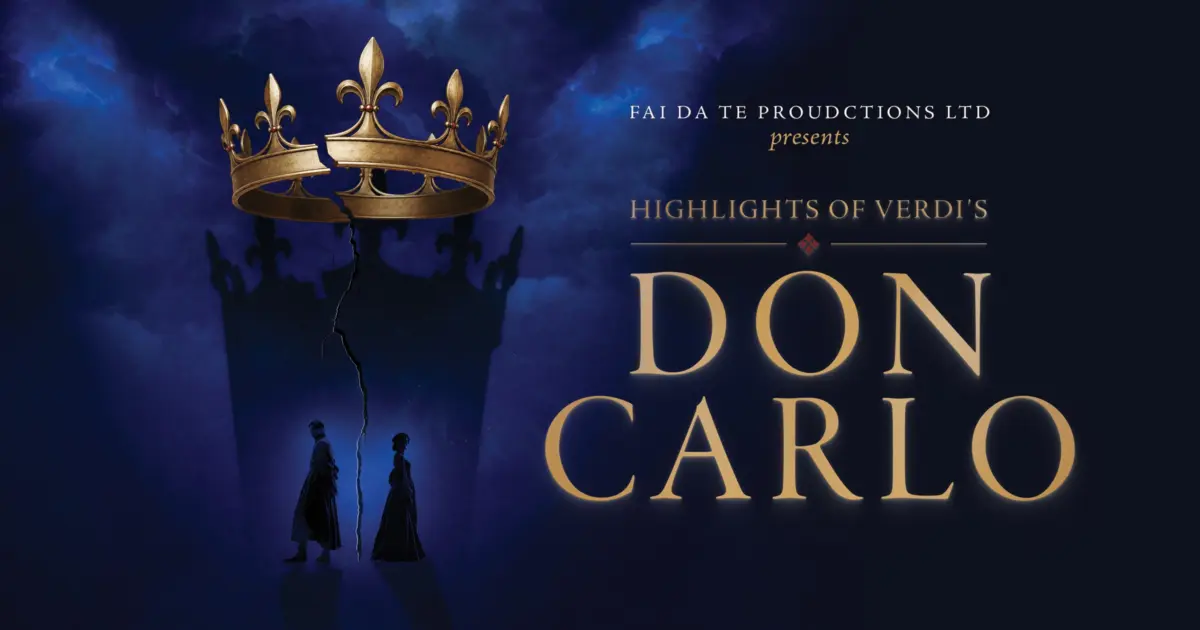

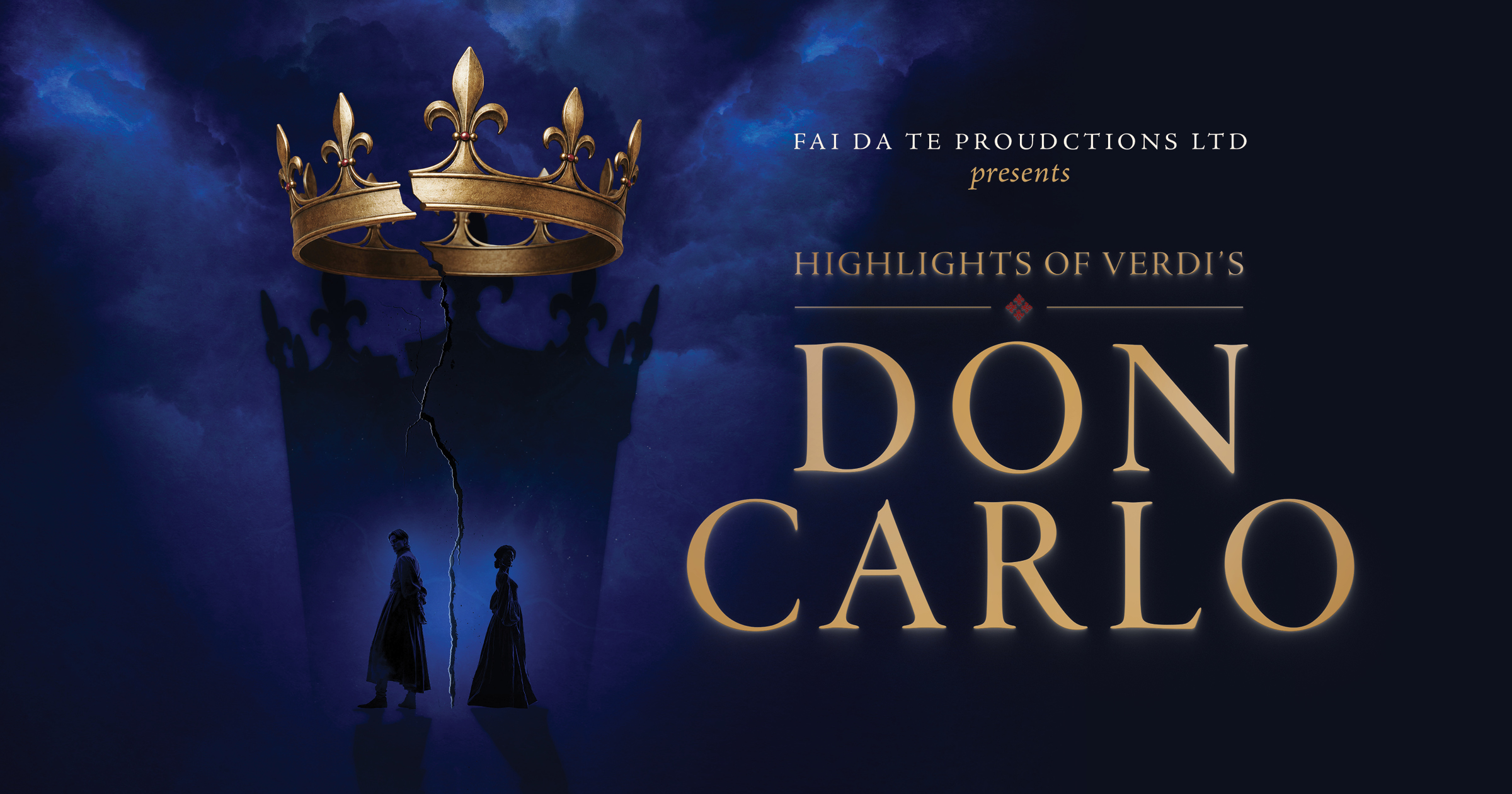
LONDON — In what is rapidly shaping up to be one of the most anticipated vocal events of the 2026 classical music calendar, Fai Da Te Productions has officially unveiled plans for a major operatic showcase. On November 24, 2026, London’s prestigious Cadogan Hall will play host to Highlights of Verdi’s Don Carlo, a meticulously curated concert performance designed to bring the monumental scale, profound psychological depth, and sweeping emotional resonance of Giuseppe Verdi’s masterpiece to British audiences.
Promising an evening of world-class vocalism, dramatic intensity, and symphonic brilliance, the production will spotlight the 1886 Modena version of the score—the definitive four-act revision of Verdi’s sprawling grand opera. Leading a cast of internationally renowned artists is celebrated tenor Gwyn Hughes Jones in the grueling and emotionally fractured title role, alongside acclaimed soprano Elizabeth Llewellyn as the tragic French princess, Elisabeth de Valois.
Supported by a stellar roster of principal singers, a prestigious youth chorus, and instrumentalists drawn from the upper echelons of the British orchestral scene, this production aims to deliver an uncompromised operatic experience. Under the baton of rising maestro Matthew Kofi Waldren, the concert offers London operagoers a rare opportunity to experience some of the most transcendent music ever written for the lyric stage, compressed into an accessible yet emotionally expansive format.
Executive Overview: A Masterpiece Refined for Modern Audiences
The upcoming presentation by Fai Da Te Productions is more than just a standard opera gala; it is an ambitious attempt to distill one of the most complex works in the theatrical canon without sacrificing its dramatic integrity. Don Carlo—based loosely on the dramatic poem Don Karlos, Infant von Spanien by Friedrich Schiller—stands alongside Otello and Falstaff as the pinnacle of Verdi’s late creative period. It is a work of immense philosophical weight, exploring the suffocating intersections of political tyranny, religious fanaticism, and agonizing personal sacrifice.
For this specific staging, Fai Da Te Productions has opted for the 1886 Modena edition. This version represents Verdi’s final thoughts on the opera, streamlining the original five-act 1867 Paris premiere by cutting the initial Fontainebleau act while sharpening the narrative focus on the claustrophobic court of King Philip II of Spain. By focusing on a carefully curated sequence of highlights running approximately two hours and forty-five minutes (inclusive of an interval), the producers aim to offer both seasoned opera aficionados and curious newcomers a concentrated dose of Verdi’s dramatic genius.
The production boasts an enviable cast of heavyweights from the contemporary operatic circuit. Gwyn Hughes Jones, renowned globally for his heroic spinto tenor roles, takes on the tortured Spanish infante. Opposite him, Elizabeth Llewellyn brings her trademark vocal warmth and dramatic poise to the role of Elisabeth de Valois. Bass David Soar steps into the formidable shoes of King Philip II, while baritone Patrick Alexander Keefe and mezzo-soprano Anna Werle round out the principal quartet as Rodrigo (Marquis of Posa) and the seductive, doomed Princess Eboli, respectively.
Detailed Chronology & Production Anatomy: Bringing the 1886 Modena Version to Life
The Genesis of the Project
Planning for Highlights of Don Carlo has been underway for over a year, with Fai Da Te Productions quietly assembling a dream team of performers and instrumental forces. The decision to center the performance on the 1886 Modena version is a deliberate artistic choice. While the massive five-act 1867 Paris version (sung in French) is celebrated by musicologists for its historical scope, the four-act Italian revision tightens the dramatic narrative, concentrating the emotional and political fallout squarely upon the relationships between Carlo, Elisabeth, Philip, and Rodrigo.
Rehearsals are scheduled to commence in early November 2026, bringing together a uniquely collaborative ensemble. Uniquely, the production bridges the gap between seasoned international veterans and the next generation of classical talent by integrating students from the Royal Conservatoire of Scotland into the core chorus. This mentorship-in-performance model provides emerging artists with an invaluable professional platform alongside established industry leaders.
The Instrumental and Conducting Forces
The orchestral accompaniment will be drawn from the players of the Glyndebourne Sinfonia, an ensemble celebrated for its precision, versatility, and deep affinity for the operatic repertoire. Glyndebourne’s instrumentalists are uniquely positioned to navigate the rich, chromatic orchestrations of late Verdi, which look forward to the expressive innovations of the 20th century while retaining the surging, vocal-driven momentum of Italian Romanticism.
Guiding these forces from the podium is conductor Matthew Kofi Waldren. Waldren has rapidly established himself as one of the most dynamic and perceptive conductors of his generation, most recently earning critical acclaim for his commanding performances leading Puccini’s La Fanciulla del West at Opera Holland Park. Waldren’s reputation for theatrical vitality and sensitive vocal collaboration makes him an ideal match for the psychological nuances of Don Carlo.
Supporting Context & Metrics: The Anatomy of a Verdi Masterpiece
To understand the magnitude of Fai Da Te Productions’ undertaking, one must examine the unique place Don Carlo holds within the operatic canon. Often considered Verdi’s most sophisticated score, the opera premiered at the Paris Opéra in 1867. Commissioned during the height of the Second French Empire, the work was required to adhere to the conventions of French grand opera—including a generous running time, spectacular ballet sequences, and massive choral tableaux.
Key Production Metrics & Data Points
- Event Date: November 24, 2026
- Venue: Cadogan Hall, Sloane Terrace, London
- Version Performed: 1886 Modena Version (Four-Act Italian Revision)
- Estimated Running Time: 2 hours and 45 minutes (including one interval)
- Principal Cast Size: 5 lead vocalists (Tenor, Soprano, Bass, Baritone, Mezzo-Soprano)
- Choral Forces: Student artists from the Royal Conservatoire of Scotland
- Orchestral Collaborators: Players of the Glyndebourne Sinfonia
- Conductor: Matthew Kofi Waldren
The Vocal Demands
Don Carlo is notoriously demanding on its performers. The title role requires a tenor who can marry lyric vulnerability with heroic heft—qualities that Gwyn Hughes Jones has repeatedly demonstrated in houses like the Royal Opera House, English National Opera, and the Metropolitan Opera. Similarly, the role of King Philip II demands a bass of cavernous depth and immense psychological gravitas, a brief that David Soar is uniquely equipped to fulfill.
The female leads face equally steep hurdles. Elisabeth de Valois requires soaring high notes balanced by a rich, melancholic middle register to convey her impossible position as a queen torn between duty and forbidden love. Princess Eboli, meanwhile, must navigate one of the most notoriously treacherous mezzo-soprano parts in the repertoire, culminating in the dazzling vocal fireworks and deep remorse of “O don fatale.”
Official Statements & Artistic Perspectives
While formal press conferences are slated closer to the autumn 2026 rehearsal window, preliminary insights shared by the creative team underscore a unified commitment to dramatic clarity and emotional truth.
Producers at Fai Da Te Productions have emphasized that while the evening is presented in a "highlights" format, there will be no compromise on theatrical intensity. "Our goal is not merely to string together a succession of greatest hits," an institutional representative noted during initial planning announcements. "We have structured the selection of scenes to form a cohesive narrative arc—one that preserves the claustrophobia of the Spanish Inquisition, the personal tragedies of the royal court, and the transcendent, haunting finale where political ideals collide with human frailty."
Conductor Matthew Kofi Waldren has frequently spoken about the symphonic richness of late Verdi, noting that the orchestra in Don Carlo functions almost as an omniscient Greek chorus, commenting on the inner psychological states of the characters long before they articulate them in song. By pairing the seasoned expertise of the Glyndebourne Sinfonia players with the enthusiastic energy of the Royal Conservatoire of Scotland choral students, Waldren intends to strike a delicate balance between youthful immediacy and profound maturity.
Cast members have also expressed deep enthusiasm for the upcoming London date. Gwyn Hughes Jones, celebrated for his idiomatic handling of Verdi’s demanding vocal lines, views the role of Don Carlo as one of the most rewarding psychological challenges in the tenor repertoire. The interplay between Jones’s Carlo and Elizabeth Llewellyn’s Elisabeth is expected to form the emotional anchor of the evening, recalling their shared history of artistic collaboration on major UK stages.
Future Outlook: Implications for London’s Classical Music Scene
As London’s cultural landscape continues to evolve in a post-pandemic era of shifting funding models and changing audience habits, boutique productions like Fai Da Te’s Highlights of Don Carlo represent a vital, agile model for presenting grand opera. By stripping away the logistical bloat and prohibitive costs associated with full-scale theatrical stagings—while retaining the highest possible caliber of musical performance—producers are finding innovative ways to serve passionate opera lovers.
The choice of Cadogan Hall further enhances the evening’s appeal. Known for its superb acoustic clarity and intimate yet grand architectural proportions, the former church in Sloane Square allows audiences to experience the raw power of unamplified operatic voices in a space where every nuance, whisper, and soaring high note can be fully appreciated.
Looking forward, the success of the November 2026 performance could well pave the way for similar curated symphonic-operatic hybrids in the capital. For classical music enthusiasts, ticket buyers, and vocal aficionados, November 24, 2026, is rapidly becoming a red-letter day on the cultural calendar. With a cast of this magnitude, an orchestra of such distinguished pedigree, and a masterpiece as enduring as Verdi’s Don Carlo, London is set to witness an unforgettable evening of vocal artistry.