
Executive Overview
Ask any music educator to identify the single greatest hurdle in their professional life, and you are unlikely to hear complaints about tightening school budgets, scheduling conflicts, or the acoustic horrors of performing arts centers with wheezing sound systems. Instead, educators will almost unanimously point to a far more elusive and pervasive obstacle: getting students to practice effectively outside of formal instruction hours.
Recent pedagogical findings and teacher surveys reveal that independent student practice—or the distinct lack thereof—remains the single most formidable barrier to musical proficiency, outstripping administrative or resource challenges by a factor of more than two to one. This dynamic creates a heartbreaking paradox for instructors. They can vividly hear the immense artistic potential harbored by their students, knowing precisely what raw talent could blossom into given twenty minutes of daily, focused repetition. Yet, because educators cannot sit in thirty different living rooms every evening, a massive chasm opens up between the weekly lesson and the next.
For generations, this gap has been managed through a combination of trust, paper assignment sheets, mechanical metronomes, and blind hope. However, the modern educational landscape is shifting. Emerging digital ecosystems, exemplified by tools like MakeMusic Cloud, are redefining the boundaries of the classroom. By bridging the gap between student and instructor through real-time, interactive feedback, these platforms aim to transform how the other six days of the week are utilized. This report investigates the psychology of independent practice, the hidden mechanics of student burnout, and the technological interventions reshaping the future of music education.
Detailed Chronology: The Evolution of Independent Practice Challenges
To understand the modern crisis of at-home music practice, one must trace how the ecosystem of instruction has evolved alongside domestic life, student schedules, and educational technologies.
The Era of the Paper Log and Metronome (Mid-to-Late 20th Century)
For decades, the standard prescription for home practice relied on analog tools. Students left their weekly lessons armed with a sheet of manuscript paper, a list of targeted measures, and an admonition to "practice twenty minutes a day."
- The Practice Journal: Parents were often conscripted as uncertified supervisors, expected to sign practice logs based purely on elapsed time rather than quality of execution.
- The Isolation Factor: Once the student closed the bedroom door, they operated in an absolute vacuum. Without a second pair of trained ears in the room, practice sessions frequently devolved into mindless repetition of comfortable passages, entirely avoiding difficult technical hurdles.
The Digital Shift and Multimedia Frustration (Early 2000s)
As personal computers and early internet access penetrated households, music education attempted to digitize through static media.
- Compact Discs and MP3s: Students were given backing tracks or recordings of master performances to emulate.
- The Limitation: While helpful for ear training, these resources lacked interactivity. A recorded track could not slow down when a student stumbled, nor could it highlight the specific rhythmic error in measure 14. The practice loop remained fundamentally broken: execute, guess, repeat incorrectly, and discover the error days later in front of the teacher.
The Rise of Intelligent Feedback Ecosystems (Present Day)
Recognizing that the traditional paradigm was failing a growing generation of digitally native students, educational developers began engineering adaptive systems capable of listening, evaluating, and responding in real-time.
- Immediate Intervention: Platforms such as MakeMusic Cloud emerged to serve as an interactive bridge. By integrating sheet music with real-time assessment technology, these tools began to replicate the immediate feedback loop of an in-person instructor.
- Data-Driven Teaching: For the first time, educators gained asynchronous visibility into their students’ home habits, shifting the paradigm from retroactive correction to proactive coaching.
Supporting Context & Metrics: The Anatomy of a Practice Breakdown
To treat the disease of stagnant student progress, educators must first diagnose the root causes. Decades of classroom observation and educational psychology suggest that the core issue is rarely a lack of student discipline; rather, it is a structural failure in how independent practice is conceptualized and executed.
The Myth of Laziness
The conventional wisdom among frustrated observers is that unmotivated students are simply lazy or indifferent to their art. Empirical observations from experienced instructors paint a vastly different picture. The vast majority of students who fail to practice consistently want to succeed. They care deeply about how they sound and often experience genuine distress when their musical aspirations collide with harsh performance realities.
The breakdown occurs because practicing alone is fundamentally difficult, profoundly lonely, and intellectually taxing. Consider the cognitive load placed upon a student sitting alone in a bedroom:
- They must decode complex visual notation.
- They must physically manipulate an instrument with correct posture and technique.
- They must monitor their own intonation, rhythm, phrasing, and dynamics.
- They must maintain psychological resilience in the face of persistent errors.
When a student lacks an immediate feedback loop, this process frequently goes awry. If they play a passage incorrectly twenty times in a row, the human brain begins to hardwire that mistake as the correct execution. The student believes they have practiced diligently, only to arrive at their next lesson and face immediate correction from a teacher. Over time, this demoralizing cycle erodes confidence, culminating in the fatalistic conclusion: "I’m just not musical."
Traditional Practice Loop (Broken):
[Student Plays] ➔ [No Immediate Feedback] ➔ [Error Becomes Permanent] ➔ [Demoralizing Lesson Correction] ➔ [Retreat & Shrug]

Modern Interactive Loop (Optimized):
[Student Plays] ➔ [Real-Time Assessment] ➔ [Immediate Correction] ➔ [Correct Execution Hardwired] ➔ [Visible Progress & Motivation]
The Power of the Instant Feedback Loop
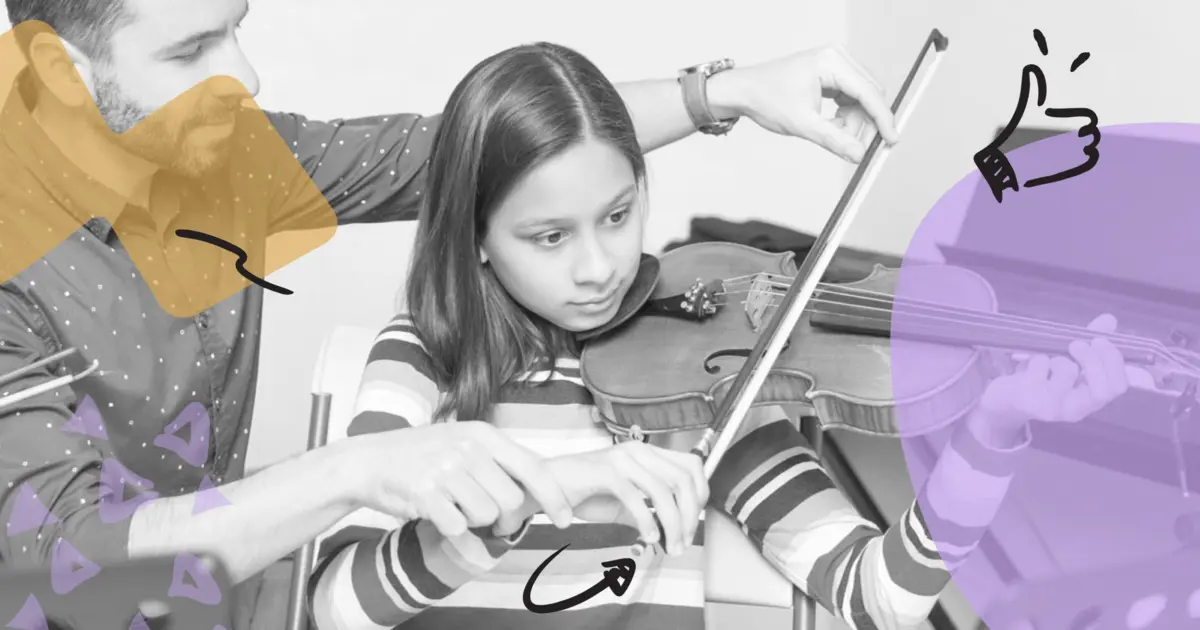
In instructional psychology, the promptness of reinforcement dictates the speed and durability of learning. When an educator sits beside a student, corrections are instantaneous—a raised eyebrow, a hummed correction, a gentle redirection of hand placement. This micro-correction closes the loop before a mistake can solidify into a bad habit.
The fundamental challenge for modern music education has been scaling this instantaneous feedback loop across the six days a week when the instructor is absent. Platforms that successfully bridge this gap achieve remarkable psychological shifts in students. When a learner receives objective, non-judgmental confirmation that a note was correct or a rhythm was precise at the exact moment they play it, the nature of practice changes. It transforms from a high-stakes guessing game into a gamified, empowering exploration of capability.
Official Perspectives and Industry Insights
Leading voices in music pedagogy and educational technology emphasize that digital tools are not designed to replace the human element of mentorship, but rather to protect and elevate it.
"The hardest part of teaching music isn’t the music itself," notes a senior curriculum developer at MakeMusic. "It is managing the vast, unmonitored wilderness of what happens during the hours and days when the instructor is not in the room. If you can solve that single variable—if you can provide reliable, immediate feedback the moment a student produces a sound—the dynamic of the entire studio changes."
Educators who have integrated interactive assessment tools into their curricula report a dramatic reduction in wasted lesson time. Instead of spending the first fifteen minutes of a thirty-minute session acting as forensic investigators—trying to determine where a student derailed during their home practice—teachers can dive immediately into musical interpretation, artistic expression, and advanced technique.
Furthermore, instructors note a profound psychological transformation in students who utilize real-time evaluation software. Because the system offers objective visual and aural cues regarding accuracy, students shed the performance anxiety often associated with human evaluation. They can experiment, fail privately, and correct their course iteratively without feeling judged. When they finally return to their instructor, they carry the quiet confidence of a musician who has already done the heavy lifting of note-learning independently.
Future Outlook: The Next Frontier in Music Pedagogy
As we look toward the future of arts education, the intersection of pedagogy and technology promises even deeper integrations. Several key trends are poised to shape the next decade of independent music practice:
- Adaptive Repertoire Generation: Future iterations of practice platforms are expected to utilize machine learning to dynamically adjust the difficulty of technical exercises based on a student’s specific historical error patterns, offering hyper-personalized etudes tailored to individual weak spots.
- Biometric and Ergonomic Monitoring: Emerging hardware integrations may soon offer real-time feedback on physical posture, muscle tension, and hand positioning, helping students prevent repetitive strain injuries before they manifest.
- Collaborative Remote Ensembles: As latency reduction technologies improve, students separated by geographic boundaries will be able to engage in synchronized, real-time chamber music practice, expanding the social dimensions of independent study.
Redefining the Studio Experience
Ultimately, the future of music education hinges on freeing the human instructor to do what only humans can do: inspire, interpret, and connect. By delegating the mechanical supervision of note and rhythm accuracy to intelligent software like MakeMusic Cloud, educators are reclaiming their primary role as artistic mentors.
When students are equipped with the right tools for independent learning, the familiar defensive shrug in response to "How was practice?" fades away. It is replaced by an enthusiastic, eager invitation: "Wait—listen to what I figured out." And for any music educator, that is the exact answer worth waiting for.