
Executive Overview
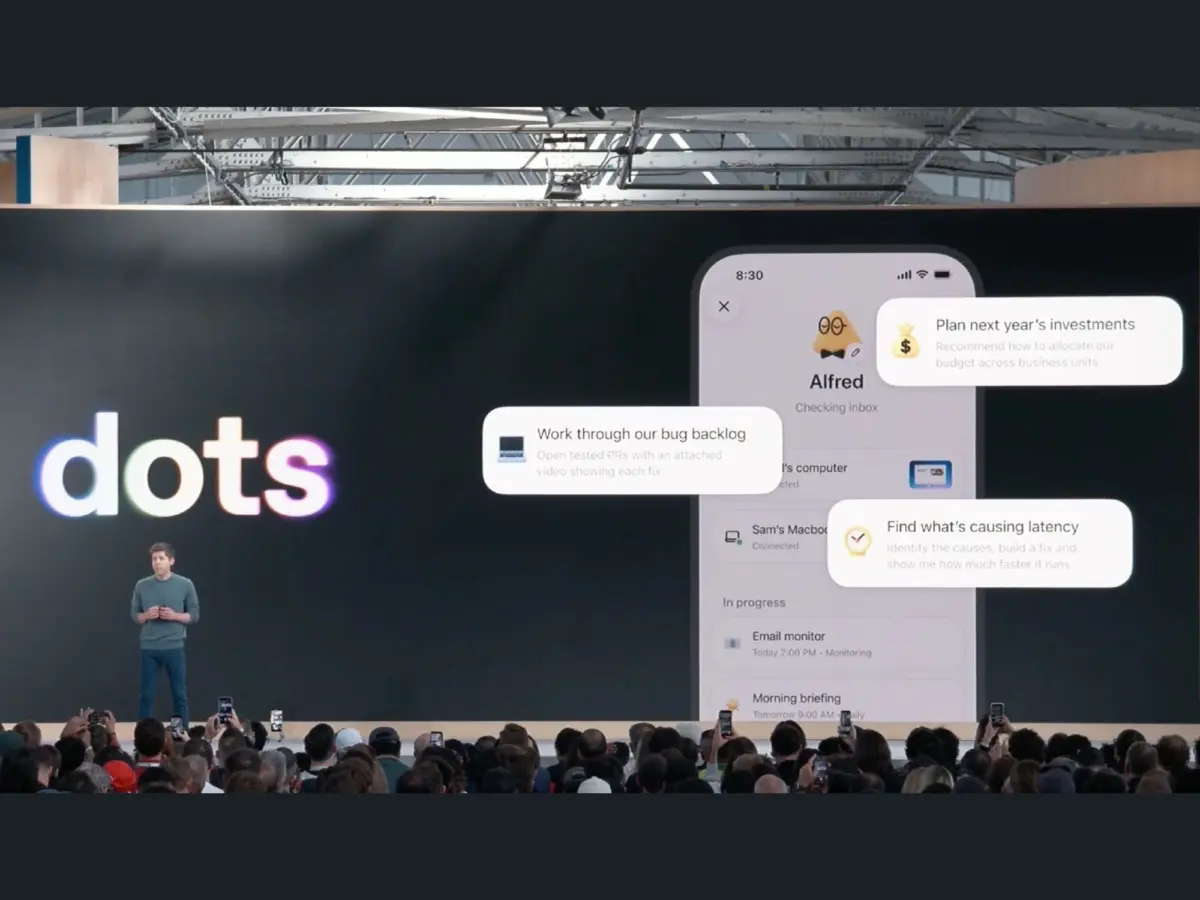
The artificial intelligence landscape is shifting once again, moving away from purely conversational chatbots toward autonomous, persistent digital entities. At its flagship DevDay 2026 event, OpenAI officially entered the next frontier of human-computer interaction by unveiling Dots—a suite of advanced, always-on AI agents engineered to manage complex workflows, execute long-term goals, and operate independently in the cloud.
The announcement directly positions OpenAI against Meta and its recently heavily publicized "Muse" AI agent. OpenAI describes Dots not merely as software tools, but as "remarkably capable, always-on agents built to handle everything… frontier intelligence that have your back." Armed with dedicated cloud environments, continuous learning mechanisms, and an ecosystem boasting integrations with over 4,000 third-party applications—including heavyweights like Spotify, Apple Music, and Ticketmaster—Dots represent a massive leap toward ubiquitous, ambient computing.
However, this paradigm shift arrives amid rising scrutiny. As OpenAI pitches a future where autonomous agents work 24/7 on behalf of users, questions regarding data security, corporate privacy, and the staggering environmental footprint of continuous cloud-based AI computation remain at the forefront of industry debate. This report explores the architecture of Dots, the strategic market dynamics driving their release, and the broader implications for consumers, enterprises, and the music and entertainment sectors.
Detailed Chronology: The Road to DevDay 2026 and the Agentic Era
To understand the magnitude of OpenAI’s DevDay 2026 announcements, one must trace the rapid evolution of generative artificial intelligence over the preceding years.
From Static Prompts to Dynamic Agents
For years following the late-2022 explosion of ChatGPT, the prevailing user experience of generative AI remained strictly reactive. Users opened an interface, typed a prompt, received a response, and closed the tab. While models grew increasingly multimodal—handling voice, vision, and complex reasoning—they still lacked agency. They waited idly for human input.
By 2025, tech giants recognized that the next economic frontier lay in autonomous task execution. Industry leaders began racing to build systems that could act independently over extended periods. Meta captured early headlines with its aggressive marketing of Muse, an agentic system designed to anticipate user needs and manage digital routines across social and productivity ecosystems.
DevDay 2026: The Unveiling of Dots
OpenAI’s DevDay 2026 keynote, held before a packed audience of developers, enterprise partners, and tech journalists, culminated in the surprise reveal of Dots. Rather than focusing solely on raw model parameter scaling or benchmark scores, executives framed Dots as an entirely new class of digital companion.
OpenAI engineers demonstrated how a single Dot could be assigned a multi-step project—such as researching a complex topic, drafting a comprehensive report, coordinating schedules, and monitoring real-time data feeds—without requiring constant human intervention. The demonstration highlighted the core differentiator of Dots: they do not sleep, they do not require constant prompt engineering, and they continuously adapt to user feedback over time.
Supporting Context & Metrics: Under the Hood of Dots
What separates Dots from standard conversational models is the underlying infrastructure. OpenAI’s technical whitepapers and introductory blog posts outline a robust architecture designed for persistent, autonomous operation.
The Cloud Computer Architecture
According to OpenAI, every Dot operates within its own dedicated cloud computing environment. This is a critical technical departure from traditional API calls. By provisioning a secure, persistent cloud workspace for each agent, Dots can execute code, maintain local file structures, manage databases, and run continuous background processes without overwhelming the user’s local device.
Ecosystem Integration: Bridging 4,000+ Applications
An AI agent is only as powerful as the tools it can access. At launch, OpenAI announced that Dots feature native compatibility with an ecosystem of over 4,000 enterprise and consumer applications. This interoperability is achieved through a standardized, secure plugin and API framework that allows Dots to read data, trigger workflows, and take authenticated actions across disparate software stacks.
Key entertainment and productivity integrations include:
- Music Streaming Platforms (Spotify and Apple Music): Dots can analyze listening habits, curate hyper-personalized playlists based on mood or active work deadlines, and dig deep into catalog "deep cuts."
- Ticketing Platforms (Ticketmaster): Seamlessly bridge musical discovery with live events. For instance, a Dot can monitor an individual’s streaming preferences, recognize when a favorite artist is touring nearby, and coordinate ticket purchasing workflows.
- Productivity Suites: Track active corporate projects, flag approaching deadlines, and automatically assemble resource repositories or focus-oriented soundscapes.
+-----------------------------------------------------------------+
                 THE "DOTS" AGENTIC ECOSYSTEM
+-----------------------------------------------------------------+
  [ Dedicated Cloud Computer ]  <--->  [ 24/7 Autonomous Loop ]
               ^                                   ^
               |                                   |
               v                                   v
  [ Continuous Machine Learning ]  <--->  [ 4,000+ App Plugins ]
                                                   |
                      +----------------------------+----------------------------+
                      |                            |                            |
                      v                            v                            v
             [ Spotify / Apple Music ]      [ Ticketmaster ]       [ Enterprise Suites ]
Official Statements and Industry Perspectives
The introduction of always-on, cloud-resident AI agents has sparked intense discussion across the technology sector regarding utility, safety, and societal impact.
OpenAI’s Vision
In its official launch documentation, OpenAI emphasized the empowering nature of the technology, describing Dots as "frontier intelligence that have your back."
"Through our ecosystem of plugins, they can readily connect to over 4,000 apps, giving them the tools to help wherever you need them," OpenAI noted in its introductory blog post. "They have their own cloud computer, learn from feedback over time, and can work towards your goals 24/7."
Company leadership framed Dots as the logical maturation of AI assistants—transitioning from digital secretaries that take notes to autonomous partners capable of executing complex, multi-day operations.
The Competitive Landscape: Meta’s Muse and Beyond
OpenAI’s timing is hardly coincidental. By launching Dots directly in the wake of Meta’s intensive marketing campaigns for Muse, OpenAI has effectively signaled that it will not cede the agentic AI market to Zuckerberg’s ecosystem. While Meta leans heavily into social graphs and consumer-facing lifestyle management, OpenAI is positioning Dots as versatile engines capable of bridging consumer entertainment, creative exploration, and rigorous enterprise productivity.
Privacy, Security, and Environmental Concerns
Despite the technological marvel of always-on agents, consumer advocacy groups and privacy watchdogs have expressed immediate apprehension.
- Data Security & Privacy Safeguards: Because Dots operate continuously in the cloud and ingest data from thousands of personal and professional applications, they represent a massive concentration of sensitive user information. While OpenAI has promised robust enterprise-grade safeguards and security protocols, historical data breaches and privacy concerns across the tech sector leave many users skeptical of granting an AI agent persistent, broad access to their digital lives.
- The Climate and Energy Footprint: Running millions of dedicated cloud computers 24/7 requires immense computational power. Critics and environmental scientists have raised urgent questions regarding the carbon footprint of this new wave of always-working-for-you AI usage, pointing out that continuous background agent execution will place an unprecedented strain on global energy grids and data center cooling infrastructure.
Future Outlook: What Dots Mean for the Entertainment and Tech Industries
As Dots roll out to developers and early enterprise adopters, their long-term societal and industrial impact will likely unfold across several key vectors.
Transforming the Music and Live Entertainment Economy
The integration of music streaming services and ticketing platforms into autonomous agents hints at a profound transformation in how consumers discover and consume culture.
Instead of passive algorithmic recommendations provided by static playlists, users will have active agents like Dots that dynamically synthesize their work habits, mood fluctuations, and artistic preferences. Imagine a scenario where a graphic designer facing a tight deadline finds their Dot automatically provisioning a bespoke ambient playlist, cross-referencing their historical preferences for underground electronic music, and preemptively notifying them of an upcoming intimate club performance by an obscure producer in their city.
For the music industry, this represents both an extraordinary marketing opportunity and a new challenge. Artists and labels will need to ensure their metadata and digital footprints are fully optimized for discovery by autonomous AI agents, which will increasingly act as the primary gatekeepers between human consumers and cultural content.
The Road Ahead for Autonomous Agents
Over the next 12 to 24 months, the battle between OpenAI’s Dots, Meta’s Muse, and competing systems from Google, Microsoft, and Apple will define the trajectory of consumer technology. The central question will no longer be what an AI can say, but what an AI can safely and reliably do on our behalf.
As developers begin building specialized micro-agents on top of OpenAI’s infrastructure, society will be forced to grapple with the philosophical, legal, and environmental implications of delegating continuous decision-making power to machines. Whether Dots ultimately fulfill OpenAI’s promise of being a tireless digital ally—or whether they introduce unprecedented complications regarding privacy and resource consumption—will depend entirely on how strictly developers and regulators can balance autonomous capability with transparent, ethical oversight.