
Executive Overview
In the volatile landscape of late-summer 2001, the American mainstream was riding a wave of glossy pop, hip-hop opulence, and calculated post-grunge angst. Yet, lurking at the top of the Billboard 200 charts was an entirely different beast: Toxicity, the sophomore major-label studio album by Los Angeles alternative metal outfit System of a Down. A chaotic, uncompromising, and incendiary collection of art-metal tracks, the album openly protested war, lambasted governmental corruption, mocked American complacency, and demanded that its listeners wake up to structural disorder.
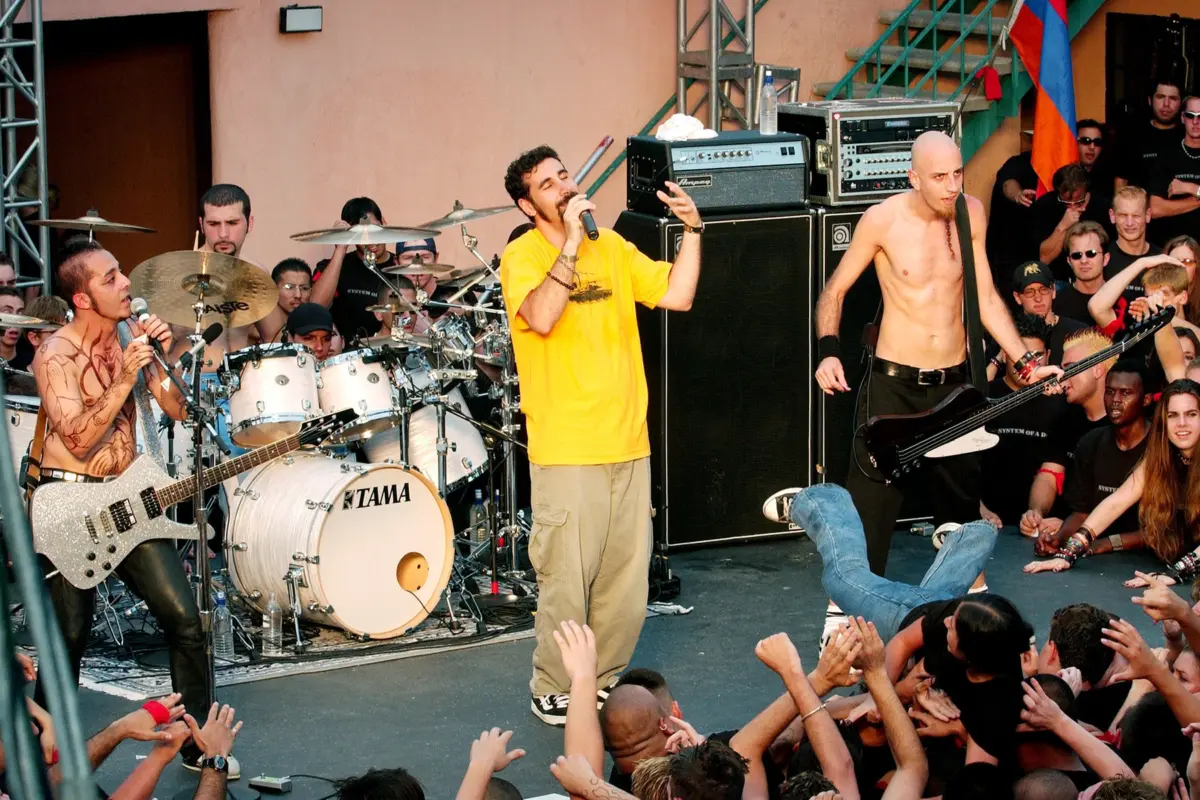
Released precisely one week before the catastrophic terrorist attacks of September 11, 2001, Toxicity was not written or recorded in anticipation of that national trauma. However, through a haunting historical irony, it instantaneously became the unofficial, visceral soundtrack for a nation reeling from the unthinkable. Composed of four Armenian-American musicians—Serj Tankian, Daron Malakian, Shavo Odadjian, and John Dolmayan—System of a Down achieved an improbable leap into superstardom. They did so not by softening their edges for radio play, but by doubling down on a confrontational, high-velocity blend of thrash metal rhythms, sweeping Middle Eastern harmonies, deadpan dark humor, and unyielding socio-political commentary.
This retrospective examination looks back at the whirlwind of 2001, tracing how a fringe, art-damaged metal outfit captured the pulse of a fractured empire, navigated the oppressive media censorship of post-9/11 America, and left a permanent, highly resonant mark on the history of modern rock.
Detailed Chronology: The Road to September 2001 and the Ascent of Toxicity
The Formation and Underground Ferocity (1994–2000)
Long before they were dominating commercial radio or trading blows with mainstream pop titans, System of a Down forged their identity in the crucible of the Los Angeles underground scene. Formed in 1994 under the moniker Soil before settling on System of a Down (derived from a poem written by guitarist Daron Malakian titled "Victims of a Down"), the group brought a perspective entirely foreign to the mainstream rock landscape. As children or descendants of survivors of the Armenian Genocide, Tankian, Malakian, Odadjian, and Dolmayan infused their aggressive music with generational trauma, political outrage, and a deep-seated distrust of imperialist state power.
Their self-titled 1998 debut album, released through American Recordings/Columbia Records, established their unique sonic blueprint: a dizzying amalgamation of Slayer-esque thrash, traditional Armenian folk melodies, jagged avant-garde jazz structures, and hardcore punk ethos. Songs like "Sugar" and "Spiders" became underground college radio staples, earning them a fiercely loyal cult following through relentless touring on packages like Ozzfest. However, nothing could have prepared the industry—or the band itself—for the seismic cultural shift that accompanied their follow-up record.
The Storm Before the Calm: August to September 11, 2001
By the summer of 2001, anticipation for the band’s second album was reaching a fever pitch. Lead single "Chop Suey!"—originally bearing the working title "Suicide"—was sent to radio stations and music video outlets, instantly shocking programmers with its frantic tempo shifts, operatic vocal deliveries, and cryptic existential lyrics ("I cry when angels deserve to die").
On September 4, 2001, Toxicity was officially released to retail stores across North America. Propelled by the undeniable urgency of its musicianship and the viral power of MTV rotation, the record debuted at No. 1 on the Billboard 200 chart for the week ending September 22, 2001. System of a Down had achieved the ultimate commercial milestone, but the world into which their victory lap was delivered had transformed overnight.
The Post-9/11 Shockwave and Media Censorship
When the towers fell on the morning of September 11, the American media landscape froze. In the immediate aftermath, radio conglomerates and media watchdogs sought to manage the collective grief, anger, and paranoia of the public. Most notoriously, Clear Channel Communications (now iHeartMedia) distributed an internal, advisory memo containing a sprawling list of over 150 "lyrically questionable" songs that stations were strongly discouraged from playing.
System of a Down found themselves squarely caught in the crosshairs of this cultural lockdown. Despite Toxicity sitting at the apex of the charts, "Chop Suey!"—with its provocative themes surrounding self-harm and mortality—was abruptly pulled from heavy rotation across many corporate radio networks. Concurrently, the album’s overarching lyrical themes—which critiqued the prison-industrial complex ("Prison Song"), blind patriotism ("Forest"), and the sanitization of warfare—suddenly carried an uncomfortable, explosive weight in a country rushing headlong into the "War on Terror."
Rather than silencing the band, this atmosphere of fear and censorship transformed Toxicity into an emblem of counter-cultural resistance. For millions of disaffected youth, metalheads, and independent thinkers navigating a hyper-nationalist media ecosystem, System of a Down provided a vital outlet for complex grief and skepticism.
Supporting Context & Metrics: Analyzing the Toxicity Phenomenon
To fully appreciate the gravity of System of a Down’s 2001 breakthrough, one must examine the empirical data and critical reception that defined the era.
Chart Performance and Commercial Reach
- Billboard 200 Peak: No. 1 (September 2001)
- Sales Milestone: Certified multi-platinum by the RIAA, ultimately selling over 6 million copies in the United States alone and upwards of 12 million copies worldwide.
- Chart Longevity: Toxicity remained on the Billboard 200 chart for over two years, an extraordinary feat for an extreme metal record during the peak era of teen pop and nu-metal commercial dominance.
Critical Acclaim
While mainstream gatekeepers were initially baffled by the band’s erratic song structures and uncompromising politics, highbrow music criticism quickly embraced the album’s brilliance. Most notably, SPIN magazine named Toxicity the No. 1 Album of the Year for 2001, praising its rare ability to fuse intellectual socio-political critique with visceral, mosh-pit-ready catharsis.

| Metric / Honor | Detail |
|---|---|
| Release Date | September 4, 2001 |
| Lead Single | "Chop Suey!" (Released August 2001) |
| Subsequent Hit Singles | "Toxicity", "Aerials" |
| Grammy Nominations | Best Metal Performance ("Chop Suey!", 2002; "Aerials", 2003) |
| Genre Classification | Alternative Metal, Progressive Metal, Nu Metal, Art Metal |
The Internal Chemistry and Creative Friction
Much of System of a Down’s singular brilliance stemmed from the volatile ideological and personal friction between its members—specifically the creative push-and-pull between frontman Serj Tankian and guitarist/vocalist Daron Malakian. Tankian, possessing a degree in business marketing and a deeply intellectual, poetically pacifist worldview, brought the overarching political framework to the band. Malakian contributed a chaotic, childlike theatricality and razor-sharp melodic instincts.
This internal tension—balancing Tankian’s academic protest-art ethos with Malakian’s raw, street-level thrash instincts—created a diamond-hard pressure cooker. It was a combustible dynamic that fueled their finest recorded work while laying the groundwork for the eventual creative fatigue that would stall the band’s output in later decades.
Official Statements and Retrospective Perspectives
Reflecting on the strange convergence of their commercial peak with a historic national tragedy, members of System of a Down have frequently spoken about the surreal nature of September 2001.
In retrospective interviews, frontman Serj Tankian has frequently addressed how the band’s messaging was often misconstrued in the reactionary jingoism of the post-9/11 era. Commenting on the controversy surrounding his post-9/11 essay “Understanding Oil”—wherein he urged Americans to analyze the geopolitical and economic roots of Middle Eastern conflicts rather than blindly supporting military escalation—Tankian noted the heavy professional cost of speaking truth to power in a frightened nation:
"When you write songs questioning the very fabric of how government and media operate, you expect pushback. But the sheer volume of fear in the air in late 2001 made any nuance impossible for a lot of people to process. We weren’t trying to be unpatriotic; we were trying to save lives by asking people to think before the bombs started falling."
Guitarist Daron Malakian often emphasized that the music on Toxicity was born from the streets of Los Angeles—dealing with urban decay, police brutality, and internal existential dread—long before the band had any inkling of the geopolitical storms brewing overseas:
"We were just four guys from Hollywood writing about what we saw out our car windows every day. The fact that the album became a mirror for a terrified country on the day the towers fell is something we still look back on with heavy hearts. Music is supposed to heal, but sometimes it just forces you to stare right into the fire."
Cultural critics looking back at the era note that Toxicity has aged far better than many of its nu-metal contemporaries. While bands like Limp Bizkit and Korn captured the aggressive adolescent angst of the turn of the millennium, System of a Down offered a global, historically conscious perspective that anticipated the geopolitical anxieties of the next twenty-five years.
Future Outlook: The Legacy of Toxicity and the State of the Band
As Toxicity crosses the threshold of a quarter-century since its release, its influence on modern heavy music is absolute. Countless contemporary metal, hardcore, and experimental rock acts trace their sonic lineage directly back to the dizzying tempo changes and fearless stylistic hybridization pioneered by the Hollywood quartet.
Will System of a Down Ever Record New Music Again?
The most pressing question that continues to haunt the global fanbase remains the prospect of new recorded material. Aside from releasing two surprise standalone singles in 2020 ("Protect the Land" and "Genocidal Humanoidz") to raise awareness and funds for the humanitarian crisis in Artsakh (Nagorno-Karabakh), System of a Down has remained functionally dormant in the studio since releasing their twin albums Mezmerize and Hypnotize in 2005.
Creative differences, diverging artistic visions between Tankian and Malakian, and the logistical challenges of keeping four strong-willed veterans aligned have frequently stymied full-length reunion efforts. While the members continue to perform select live dates to massive, adoring festival crowds around the world, fans must content themselves with the reality that Toxicity—alongside their broader catalog—stands as a completed, untouchable monument to a singular moment in rock history.
In an era defined by institutional distrust, information overload, and global uncertainty, the frantic, soaring, and deeply human cries of Toxicity sound just as urgent today as they did on that fateful September morning in 2001. System of a Down may have missed out on becoming conventional pop stars, but in achieving something far rarer—becoming the conscience of a traumatized generation—they secured an immortal legacy in the pantheon of modern music.