
Executive Overview
Nearly three decades after his passing, the towering cultural footprint of Frank Sinatra remains indelible across the global musical landscape. Widely acknowledged as the definitive male vocalist of the 20th century, Sinatra continues to cast a long, benevolent shadow over successive generations of interpreters. This enduring influence is vividly demonstrated in the current month’s release cycle, which notably features two distinct vocal jazz projects directly inspired by the stylistic ethos of "Ms. S."
This review provides an exhaustive critical analysis of two major additions to the contemporary vocal jazz canon: Get Out And Get Under The Moon, the eagerly anticipated debut album from British vocalist Sam Furlonger, and From My Heart, the eclectic new offering from American actress and singer Linda Purl. Both records engage deeply with the Great American Songbook and mid-century vocal traditions, yet they approach their source material through radically different conceptual frameworks, instrumental configurations, and artistic philosophies.
While Furlonger offers a tightly curated, historically conscious homage modeled closely on Sinatra’s classic 1960s Capitol Records aesthetic, Purl presents a sprawling, genre-hopping compendium that spans Broadway classics, contemporary pop-adjacent songwriting, and traditional Americana. Beneath their polished surfaces, however, both albums invite a rigorous examination of arrangement choices, historical accuracy, stylistic lineage, and the perpetual challenge of breathing new life into a well-trodden repertoire.
+-------------------------------------------------------------------------------------------------+
|                                    ALBUM COMPARISON MATRIX                                      |
+---------------------------+----------------------------------+----------------------------------+
| Metric / Feature          | Sam Furlonger                    | Linda Purl                       |
+---------------------------+----------------------------------+----------------------------------+
| Album Title               | Get Out And Get Under The Moon   | From My Heart                    |
| Primary Inspiration       | Frank Sinatra (Capitol Era)      | Eclectic / Middle-of-the-Road    |
| Track Count               | 8 tracks                         | 13 tracks                        |
| Total Running Time        | 31 minutes, 52 seconds           | 48 minutes, 52 seconds           |
| Recording Location        | StudiOwz, Pembrokeshire          | Tritone Recording, Glendale, CA  |
| Release Label             | Independent                      | Lexicon Classics (LC 2606)       |
| Key Accompanists          | Fraser Urquhart (p), et al.      | Tedd Firth (p), Kevin Axt (b)    |
+---------------------------+----------------------------------+----------------------------------+
Detailed Chronology & Track-by-Track Analysis
Sam Furlonger: Get Out And Get Under The Moon
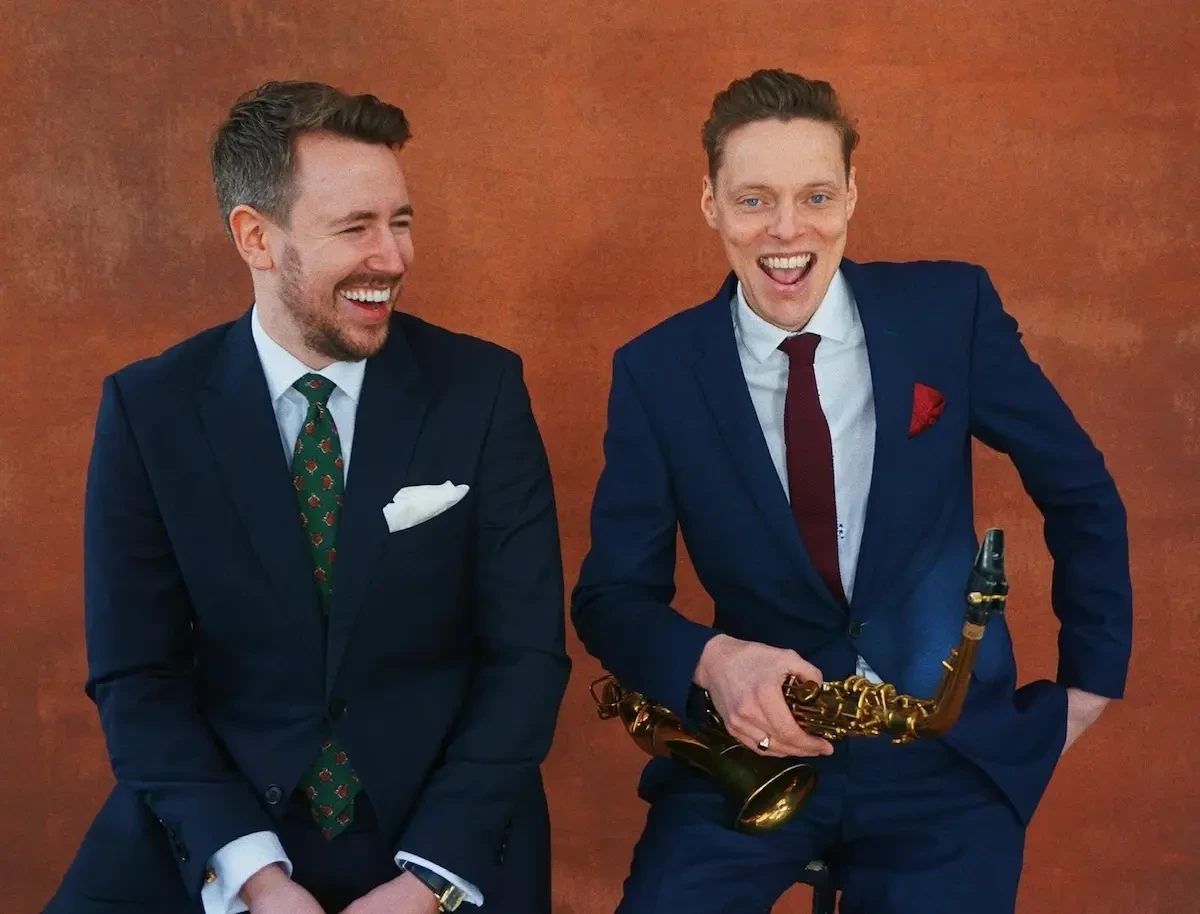
In an era dominated by streaming-era pressures to pad tracklists—where albums stretching across 14 or more tracks have become the industry standard—Sam Furlonger has made a bold, anachronistic statement. His debut independent release, Get Out And Get Under The Moon, contains a mere eight tracks and clocks in at an economical 31 minutes and 52 seconds.
This deliberate brevity is far from accidental; it serves as a direct structural homage to Frank Sinatra’s legendary early Capitol Records output, specifically his groundbreaking 10-inch vinyl long-playing albums Songs For Young Lovers and Swing Easy!, each of which famously housed eight songs.
According to comprehensive liner notes accompanying the release, Furlonger collaborated closely with arranger, pianist, and musical director Fraser Urquhart to construct a quintet explicitly modeled after the instrumental ensembles that backed Sinatra around 1962. While the ensemble initially cut their teeth performing strictly vintage Sinatra material in live settings, Urquhart has intelligently broadened the scope for this debut studio recording. The setlist now embraces a wider umbrella of popular songcraft from the era of Sinatra’s greatest commercial and artistic dominance.
The album opens with a confident traversal of the jazz standard Wrap Your Troubles In Dreams, immediately establishing Furlonger’s vocal register and stylistic allegiances. This is followed by The Right Kind Of Love and the title track, Get Out And Get Under The Moon, before the ensemble hits an undeniable instrumental and interpretive high-water mark with Cole Porter’s 1924 gem I’m In Love Again (originally composed for the Greenwich Follies). On this track, guest guitarist Harry Sankey delivers a masterclass in subtle, swinging accompaniment, while Furlonger treats listeners to a delightful musicological surprise: an extra, rarely performed chorus that rescues a forgotten verse from obscurity.
Moving into the second half of the record, Furlonger unearths Kim Gannon’s long-dormant Halfway Down The Street, dragging a forgotten relic out of the vaults of nostalgia and reminding seasoned jazz aficionados of how Sinatra’s phrasing felt during his seminal Tommy Dorsey tenure. The sequencing then moves through Keeping Out Of Mischief Now before arriving at the album’s vocal centerpiece: an unvarnished, deeply felt reading of the ballad She’s Funny That Way. Furlonger handles the standard with genuine emotional vulnerability, though he playfully upends the mood on the subsequent track with a jaunty, upbeat treatment of This Is Always—a ballad that arguably resists such an energetic, brisk interpretive approach.
TRACKLISTING: SAM FURLONGER
1. Wrap Your Troubles In Dreams
2. The Right Kind Of Love
3. Get Out And Get Under The Moon
4. I’m In Love Again
5. Half Way Down The Street
6. Keeping Out Of Mischief Now
7. She’s Funny That Way
8. This Is Always
Linda Purl: From My Heart
In stark contrast to Furlonger’s lean, historically tethered conceptualism, Linda Purl’s From My Heart (released via Lexicon Classics) is a sprawling, unapologetically eclectic enterprise. Recorded over four days at Tritone Recording in Glendale, California, the album features 13 meticulously produced tracks spanning nearly 49 minutes of music.
Purl navigates a middle-of-the-road vocal territory supported by an elite West Coast rhythm section featuring pianist Tedd Firth, bassist Kevin Axt, and drummer David Rokeach. The album is transparently designed around a "something-for-everyone" curatorial blueprint. Alongside authentic Great American Songbook staples, Purl incorporates contemporary pop-adjacent songwriting, including a surprisingly textured reading of Sting’s lesser-known masterwork If Ever I Lose My Faith In You.
The album’s trajectory is ambitious, cycling through swinging uptempo numbers, introspective jazz waltzes, and unexpected stylistic departures. However, the most notable talking point of the album’s release cycle has been its bibliographic credentials. The physical liner notes credit the song I’m All Smiles to the legendary Broadway partnership of Richard Rodgers and Lorenz Hart. In reality, the tune was written by Michael Leonard and Herbert Martin for their 1965 Broadway musical The Yearling.
This factual discrepancy highlights a broader looseness in how historical contexts are packaged in modern vocal jazz releases, especially given that Lorenz Hart passed away in 1943—some twenty-two years before I’m All Smiles was ever composed. Ironically, Purl’s eclectic sequence does feature two genuine Rodgers and Hart compositions (Bewitched, Bothered And Bewildered and I Didn’t Know What Time It Was), which sit comfortably alongside Johnny Burke and Jimmy Van Heusen’s All I Do Is Dream Of You and Blossom Dearie’s charming I Like You, You’re Nice.
The album concludes with a daring, ultra-gentle ballad arrangement of the traditional folk standard Home On The Range. While purists may find this particular stylistic choice polarizing, it stands as a testament to Purl’s willingness to push the boundaries of conventional vocal jazz programming.
TRACKLISTING: LINDA PURL
1. I’m All Smiles
2. Destination Moon
3. Bewitched, Bothered And Bewildered
4. All I Do Is Dream Of You
5. You Are There
6. I Didn’t Know What Time It Was
7. When You Find The Right One
8. Something Happens To Me
9. Everything Must Change
10. I Like You, You’re Nice
11. Dedicated To You
12. If I Ever Lose My Faith In You
13. Home On The Range
Supporting Context & Metrics
Evaluating contemporary interpretations of the Great American Songbook requires an understanding of both technical proficiency and historical lineage. Both Sam Furlonger and Linda Purl operate within a tradition that demands absolute fidelity to melodic line, rhythmic swing, and lyrical interpretation. However, their stylistic execution and career trajectories offer fascinating points of comparison.
Diction, Training, and Stylistic Lineage
In the realm of vocal performance, stylistic lineage often dictates technique. Sam Furlonger proudly emerges as an honors graduate of the Nat King Cole School of Diction—a stylistic heritage immortalized by Cole’s relaxed, conversational phrasing and effortless integration of lyrics. Yet, in a delightful twist of artistic irony, Furlonger has chosen to pay his primary respects to Frank Sinatra, a quintessential alumnus of the Mabel Mercer School of interpretive singing, where every single syllable—such as the distinct double-D articulation in Night and Day—is sharply enunciated.
Despite these pedagogical nuances, historical precedent proves that technical rigidities matter little to appreciative audiences when a vocalist possesses innate charm. Cole’s relaxed approach to articulation never diminished his immense global appeal, and Furlonger demonstrates a similarly fetching, natural way with a lyric that easily transcends academic debates over diction.
Linda Purl, meanwhile, brings a seasoned theatrical background to her musical interpretations. Her vocal delivery occupies a polished, middle-of-the-road space that prioritizes emotional accessibility over stylistic risk-taking. While her voice may not command the avant-garde edge of modern jazz innovators, her technical execution is consistently buoyed by world-class instrumental accompanists who provide a rock-solid harmonic foundation.
Production and Instrumentation Metrics
From a production standpoint, both albums reflect the pristine acoustic environments of modern boutique recording studios. Furlonger’s sessions at StudiOwz in Pembrokeshire capture an intimate, smoky club atmosphere. The ensemble—consisting of Furlonger on vocals, Fraser Urquhart on piano, Fraser Smith on tenor and alto saxophones, Darren McCarthy on bass, Harry Sankey on guitar, and Joe Dessauer on drums—utilizes natural room acoustics to simulate the warm mono-to-stereo transition era of early 1960s Capitol releases.
Conversely, Purl’s sessions at Tritone Recording in Glendale, California, lean toward a crisp, high-definition West Coast aesthetic. Producerially, the focus is placed squarely on pristine separation between Tedd Firth’s acoustic piano voicings, Kevin Axt’s woody bass tones, and David Rokeach’s brushwork on drums.
Official Statements & Critical Reception
The critical reception surrounding both releases highlights the ongoing debate over authenticity, scholarship, and curation in contemporary vocal jazz criticism.
The Furlonger Critical Discourse
Sam Furlonger’s debut has been greeted by jazz critics with a mixture of admiration and scholarly scrutiny. In a widely discussed review on the jazz portal BeBop Spoken Here, an anonymous reviewer ignited a minor online controversy by misattributing Cole Porter’s 1924 standard I’m In Love Again to Dave Bartholomew, a rhythm-and-blues pioneer best known for his work with Fats Domino.
This critical misstep prompted sharp commentary from musicologists and industry observers alike, who noted that reviewers of the Great American Songbook must maintain rigorous standards of historical research. Despite such critical turbulence, Furlonger’s artistic direction has been widely praised. Reviewers have highlighted his ability to unearth forgotten gems from the nostalgia vaults—such as Kim Gannon’s Halfway Down The Street—as a major service to the preservation of classic American popular music.
Industry Perspectives on Purl’s Curation
Linda Purl’s From My Heart has generated discussion primarily centered around its sprawling stylistic breadth. Industry commentators have debated the merits of the "something-for-everyone" programming model. While purists occasionally caution against mixing Broadway standards, contemporary pop covers by Sting, and traditional Americana like Home On The Range on a single jazz record, mainstream audiences have responded warmly to Purl’s fearless eclecticism.
Lexicon Classics released an official statement emphasizing that From My Heart was conceived as an emotional journey rather than a strict historical homage, encouraging listeners to appreciate the album as a snapshot of a seasoned performer exploring the outer boundaries of her musical influences.
Future Outlook
As the landscape of vocal jazz continues to evolve in the digital age, albums like Sam Furlonger’s Get Out And Get Under The Moon and Linda Purl’s From My Heart offer valuable insights into where the genre stands—and where it is heading.
For Furlonger, the path forward appears bright. By choosing to embrace a tight, focused conceptual framework rather than chasing commercial streaming metrics with bloated tracklists, he has established himself as a serious artist with profound respect for jazz history. Observers anticipate that his next studio outing will build upon the foundational success of this debut, potentially expanding his compositional footprint while maintaining the rigorous stylistic discipline displayed here.
For Linda Purl, the future lies in her ability to bridge disparate musical worlds. Her willingness to incorporate contemporary singer-songwriter material alongside timeless Broadway show tunes opens up lucrative crossover avenues. As long as she maintains her collaboration with world-class accompanists like Tedd Firth and Kevin Axt, her recorded output will remain a welcome fixture in the adult-contemporary and vocal jazz markets.
Ultimately, both releases prove that the Great American Songbook remains an inexhaustible wellspring of inspiration. Whether through the lens of a meticulous 1960s Sinatra homage or an expansive, genre-fluid personal journey, these vocalists demonstrate that the ghosts of the 20th-century masters still possess the power to inspire brilliant, contemporary art.